
What is the difference between open flat and original BS700MC heat treatment
Explore the critical differences between original mill-state BS700MC and open flat sheets. Understand how TMCP heat treatment and leveling processes affect mechanical performance and industrial applications.
Understanding the Core of BS700MC: The TMCP Foundation
BS700MC is a high-yield-strength cold-forming steel, strictly governed by the EN 10149-2 standard. The 'MC' suffix denotes that the material has undergone Thermomechanically Controlled Processing (TMCP). Unlike traditional quenched and tempered (Q&T) steels, the strength of BS700MC is derived from a sophisticated combination of micro-alloying and precise temperature control during the rolling process. This 'Original' state is the baseline for all performance metrics.
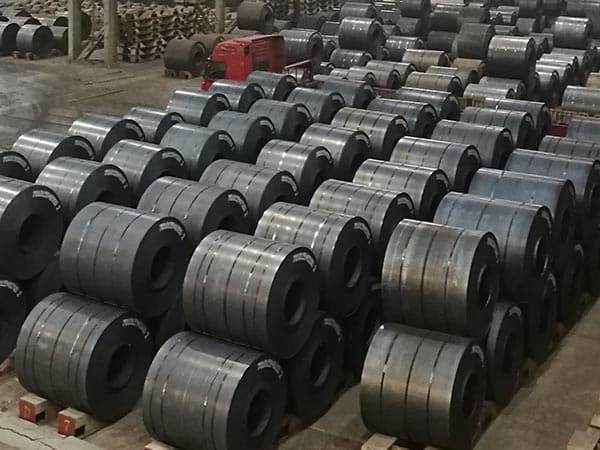
The original mill state typically refers to the steel as it exits the hot strip mill, often wound into massive coils. At this stage, the grain structure is exceptionally fine, achieved through the addition of niobium (Nb), vanadium (V), or titanium (Ti). These elements pin grain boundaries during recrystallization, ensuring that the finished product possesses both high strength and remarkable ductility. When we discuss 'heat treatment' in the context of BS700MC, we are primarily referring to this integrated rolling and cooling cycle, rather than a secondary offline process.
The Transformation to Open Flat: Mechanical Leveling Realities
The term 'Open Flat' refers to the process of decoiling the original mill-produced coil and passing it through a leveling machine to produce flat sheets or plates. While this might seem like a simple physical change, it introduces significant mechanical variables that differentiate it from the original coil state. The leveling process involves bending the steel back and forth over a series of rollers to eliminate 'coil set' and internal stresses inherent in the winding process.
During this 'opening' of the coil, the steel undergoes a degree of cold work. For a high-strength material like BS700MC, which has a yield strength of at least 700 MPa, the energy required to flatten the material is substantial. This mechanical manipulation can lead to the Bauschinger effect, where the yield strength in one direction might slightly decrease while increasing in another. Consequently, while the chemical composition remains identical, the 'Open Flat' material may exhibit subtle variations in residual stress distribution compared to the 'Original' mill-edge coil.
Mechanical Performance Comparison
Comparing the original mill state to the open flat state requires a deep dive into the tensile and impact properties. The original state is optimized for uniformity across the coil width. However, once the material is leveled into sheets, the flatness becomes the primary advantage, though at the cost of introducing new stress patterns.
| Property | Original Mill Coil (TMCP) | Open Flat Sheet (Leveled) |
|---|---|---|
| Yield Strength (MPa) | Min. 700 MPa (highly uniform) | Min. 700 MPa (potential minor local variance) |
| Tensile Strength (MPa) | 750 - 950 MPa | 750 - 950 MPa |
| Elongation (A50mm %) | Typically 12-15% | May see 1-2% reduction due to work hardening |
| Residual Stress | High 'Coil Set' memory | Lower macroscopic stress, higher microscopic localized stress |
| Surface Finish | Mill scale present | May be pickled or skin-passed during leveling |
The Impact of Heat Treatment Limitations
A common misconception is that BS700MC can be traditionally heat-treated (like annealing or normalizing) after it has been flattened. This is a critical error. Because BS700MC relies on the TMCP grain refinement, heating the material above its critical transformation temperature (Ac1) will cause grain growth and the precipitation of micro-alloying elements, leading to a drastic loss in yield strength. Whether the material is 'Original' or 'Open Flat', it must not be subjected to high-temperature stress relief.
If stress relief is required for 'Open Flat' plates—perhaps after intensive laser cutting—it must be performed at temperatures generally below 580°C. Even then, prolonged exposure can soften the matrix. The 'Original' state retains its properties better because it hasn't been subjected to the additional dislocation density introduced by the leveling rollers.
Processing Performance: Bending and Welding
The choice between original coil and open flat sheets often comes down to the fabrication process. Original coils are preferred for continuous automated lines, such as roll forming, where the material's natural curvature is managed by the machine. Open flat sheets are essential for laser cutting, plasma cutting, and press brake bending.
- Laser Cutting: Open flat material is superior for laser cutting because the leveling process reduces the likelihood of the plate 'springing' or bowing as the laser releases internal stresses.
- Cold Bending: BS700MC is designed for tight bending radii. Original mill material often has slightly better edge ductility. Open flat material, if not leveled correctly, can develop 'cross-bow' which complicates precision bending.
- Welding: Both states exhibit excellent weldability due to low carbon equivalents (Ceq). However, the original state may require more robust jigging to counteract the coil memory during long longitudinal welds.
Environmental Adaptability and Longevity
BS700MC is frequently used in environments where weight reduction is vital but structural integrity is non-negotiable. This includes mobile cranes, truck chassis, and agricultural equipment. The TMCP process provides a fine-grained structure that is inherently more resistant to brittle fracture at low temperatures compared to traditional carbon steels.
In sub-zero conditions, the 'Original' mill state often shows slightly more consistent Charpy V-notch impact values (typically tested at -20°C or -40°C). The 'Open Flat' process, if done aggressively, can create localized zones of higher hardness which might marginally affect the crack tip opening displacement (CTOD) values, although usually within the safety margins of the EN 10149-2 standard.
Strategic Selection for Industry Applications
Deciding between original mill products and open flat sheets involves balancing logistics and precision. For manufacturers of heavy-duty trailer frames, using 'Open Flat' BS700MC allows for high-precision CNC cutting of side beams, ensuring that the final assembly is perfectly straight. The leveling process 'kills' the coil memory, which is vital for maintaining tolerances in assemblies over 12 meters in length.
Conversely, for industries producing smaller components via high-speed stamping or roll forming, purchasing the 'Original' coil is more cost-effective and preserves the maximum possible ductility of the TMCP structure. The lack of a secondary leveling step ensures that the dislocation density remains exactly as the metallurgists at the mill intended, providing the most predictable performance during extreme deformation.
Technical Summary of Differences
The difference between 'Open Flat' and 'Original' BS700MC is not one of chemistry, but of mechanical state and stress profile. The 'Original' state is the pure result of the TMCP heat treatment, offering the highest level of structural integrity and ductility. The 'Open Flat' state is a processed version optimized for flatness and dimensional stability in secondary manufacturing operations. Understanding that neither should be subjected to traditional high-temperature heat treatment is the most important factor for any engineer working with this advanced high-strength steel.
Leave a message