
China grade 460 steel equivalent prices continue to decline
A comprehensive analysis of China grade 460 (Q460) steel, covering its mechanical properties, processing performance, and market price trends for global buyers.
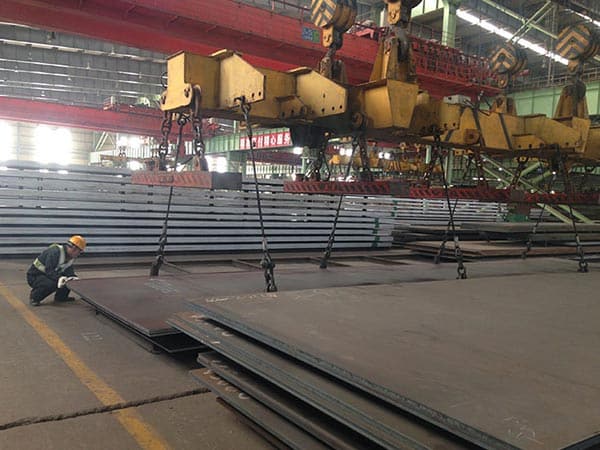
Current Market Dynamics of China Grade 460 Steel
The global steel market is witnessing a significant shift as China grade 460 steel equivalent prices continue to decline. This trend is primarily driven by optimized production efficiencies in Chinese mills and a recalibration of global supply chains. For procurement specialists and structural engineers, this price correction presents a strategic window to integrate high-strength low-alloy (HSLA) steels into large-scale projects at a lower capital expenditure.
Grade 460 steel, commonly known as Q460 under the Chinese standard GB/T 1591, represents a critical threshold in structural engineering. It balances high yield strength with manageable weldability, making it a preferred choice over standard Q235 or Q355 grades when weight reduction and structural integrity are paramount. The current price trajectory allows industries ranging from heavy machinery to renewable energy to upgrade their material specifications without exceeding budgetary constraints.
Technical Profile: Understanding Q460 and Its Equivalents
To leverage the benefits of declining prices, it is essential to understand the technical nuances of Q460. The "460" designation refers to its minimum yield strength of 460 MPa. In the international arena, this grade finds its equivalents in the European S460 (EN 10025) and various ASTM standards, though the chemical compositions vary slightly to meet regional processing preferences.
The chemical architecture of Q460 is characterized by low carbon content combined with micro-alloying elements such as Niobium (Nb), Vanadium (V), and Titanium (Ti). These elements facilitate grain refinement, which is the secret behind the material's ability to maintain high strength while retaining excellent ductility. This metallurgical balance ensures that the steel can withstand dynamic loads and seismic stresses, which is why it is frequently specified for high-rise buildings and long-span bridges.
| Standard | Grade | Yield Strength (min MPa) | Tensile Strength (MPa) | Elongation (min %) |
|---|---|---|---|---|
| GB/T 1591 | Q460C/D/E | 460 | 550 - 720 | 17 |
| EN 10025-3 | S460N/NL | 460 | 540 - 720 | 17 |
| ASTM | A572 Gr 65 (Approx) | 450 | 550 | 15 |
Mechanical Superiority and Structural Efficiency
The primary motivation for selecting 460-grade steel is the strength-to-weight ratio. By utilizing Q460 instead of Q355, engineers can reduce the thickness of structural components by approximately 20-25% while maintaining the same load-bearing capacity. This reduction cascades into lower transportation costs, reduced welding consumables, and faster assembly times on-site.
Impact toughness is another critical attribute. Q460 is available in several quality grades (C, D, and E), each defined by its impact testing temperature. Q460C is tested at 0°C, Q460D at -20°C, and Q460E at -40°C. As prices decline, the premium for higher-tier grades like Q460E has narrowed, making it more feasible for projects in arctic or high-altitude environments where brittle fracture is a constant risk.
Advanced Processing and Fabrication Characteristics
Despite its high strength, China grade 460 steel exhibits remarkable fabrication flexibility. However, the decline in material cost should not lead to complacency in processing. High-strength steels require specific parameters to ensure the integrity of the final structure.
- Welding Performance: Q460 has a relatively low carbon equivalent (Ceq), which minimizes the risk of cold cracking. Nonetheless, preheating is often recommended for thicknesses exceeding 30mm. Using low-hydrogen welding consumables is mandatory to prevent hydrogen-induced cracking.
- Cold Forming: The material allows for cold bending, but the minimum bending radius must be larger than that of lower-strength grades. The springback effect is more pronounced, requiring precision in hydraulic press settings.
- Thermal Cutting: Laser and plasma cutting are highly effective for Q460. The heat-affected zone (HAZ) is localized, preserving the mechanical properties of the surrounding base metal.
Environmental Adaptability and Longevity
Modern Q460 production often incorporates atmospheric corrosion resistance. While not a full weathering steel unless specified (like Q460NH), the dense microstructure of high-quality Q460 provides a better baseline against oxidation than generic carbon steels. In industrial environments, the ability of the steel to maintain its surface integrity under cyclic loading is vital for the longevity of equipment like crane booms and excavator arms.
Furthermore, the sustainability aspect of Q460 cannot be ignored. Using less steel to achieve the same structural goal directly reduces the carbon footprint of a project. As global regulations on "green steel" tighten, the efficiency gains provided by 460-grade steel become a core component of corporate ESG (Environmental, Social, and Governance) strategies.
Industry Applications Benefiting from Price Reductions
The current price drop is stimulating demand across several specialized sectors. In the wind energy industry, Q460 is used for the internal structures of turbine towers and offshore transition pieces. The material's fatigue resistance is crucial for withstanding the constant vibrations and wind loads associated with renewable energy infrastructure.
In the heavy machinery sector, manufacturers of mobile cranes and mining equipment are shifting toward Q460 to enhance the lifting capacity of their machines without increasing their dead weight. This allows for more mobile and fuel-efficient equipment. Similarly, in bridge engineering, the use of Q460 allows for slimmer profiles and longer spans, creating aesthetically pleasing and functionally superior structures.
Strategic Procurement in a Declining Market
Navigating the decline in China grade 460 steel prices requires a focus on quality assurance. While the cost is lower, buyers must ensure that the material complies strictly with GB/T 1591-2018 or the equivalent EN 10025 standards. Verifying the Mill Test Certificate (MTC) for chemical heat analysis and mechanical test results is non-negotiable.
Working with established suppliers who provide transparency in their manufacturing process—such as thermomechanical controlled processing (TMCP)—ensures that the steel possesses the uniform grain structure required for high-stress applications. The current market offers a rare opportunity to secure high-performance materials at prices that were previously reserved for commodity-grade steels, enabling a new era of engineering excellence and cost-efficiency.
Leave a message