
How about the cost performance of EN10149-2 S700MC hot rolled pickled t700 steel
Discover the comprehensive cost performance of EN10149-2 S700MC (T700) steel. This guide explores its mechanical properties, processing advantages, and economic value in heavy machinery and automotive sectors.
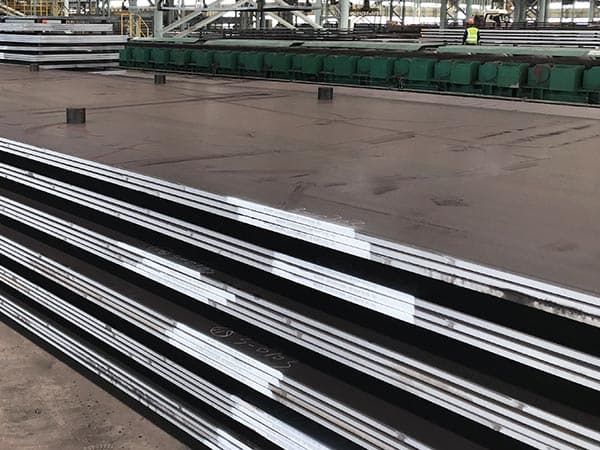
The Strategic Value of EN10149-2 S700MC in Modern Engineering
In the contemporary landscape of industrial manufacturing, the pursuit of efficiency and material optimization has led to the widespread adoption of high-strength low-alloy (HSLA) steels. Among these, EN10149-2 S700MC, often referred to in various markets as T700, stands out as a pinnacle of thermomechanically rolled steel. The cost performance of this material is not merely a reflection of its price per ton, but rather a complex calculation involving weight reduction, processing ease, and the extended lifecycle of the end product. As industries shift toward more sustainable and energy-efficient designs, understanding the multifaceted benefits of S700MC becomes essential for engineers and procurement specialists alike.
Defining the Technical Profile: S700MC and T700
The designation S700MC under the EN10149-2 standard signifies a steel with a minimum yield strength of 700 MPa, produced through a thermomechanical rolling process (indicated by the 'M' suffix) and intended for cold forming ('C'). This process involves precise temperature control during rolling to achieve an ultra-fine grain structure, which is the secret behind its exceptional strength-to-toughness ratio. The 'T700' terminology is frequently used interchangeably in Asian markets to denote a similar class of 700MPa yield strength steel, though S700MC specifically adheres to the rigorous European quality benchmarks.
By utilizing micro-alloying elements such as Niobium (Nb), Vanadium (V), and Titanium (Ti), manufacturers can achieve high strength without the high carbon content associated with traditional structural steels. This low carbon equivalent (CEV) is critical for maintaining excellent weldability and ductility, which are the primary drivers of its high cost performance.
| Chemical Element | Maximum Percentage (%) |
|---|---|
| Carbon (C) | 0.12 |
| Manganese (Mn) | 2.10 |
| Silicon (Si) | 0.60 |
| Phosphorus (P) | 0.025 | Sulfur (S) | 0.015 |
| Aluminium (Al) | 0.015 |
Mechanical Properties: The Foundation of Lightweighting
The primary appeal of S700MC lies in its mechanical performance. With a yield strength nearly double that of conventional S355 structural steel, S700MC allows for a significant reduction in material thickness while maintaining the same structural integrity. This "down-gauging" capability is the cornerstone of its economic value proposition. When a designer can replace an 8mm plate of S355 with a 5mm plate of S700MC, the weight of the component is reduced by nearly 40%.
- Yield Strength: Minimum 700 MPa, providing robust resistance to permanent deformation.
- Tensile Strength: 750 to 950 MPa, ensuring high load-bearing capacity before fracture.
- Elongation: Typically 10-12% (depending on thickness), allowing for complex cold-forming operations.
- Impact Toughness: Excellent low-temperature performance, often tested at -20°C or -40°C, making it suitable for harsh environments.
The Pickling Advantage: Surface Quality and Processing Efficiency
The "Hot Rolled Pickled" (P&O) state of S700MC adds another layer to its cost performance. Pickling involves passing the steel through an acid bath to remove the mill scale (iron oxide) formed during the hot rolling process. This is followed by oiling to prevent corrosion. For manufacturers, using pickled S700MC offers several direct advantages:
1. Enhanced Tool Life: Mill scale is extremely abrasive. By using pickled steel, manufacturers significantly reduce the wear and tear on laser cutting nozzles, bending dies, and stamping tools, leading to lower maintenance costs. 2. Superior Surface for Coating: Pickled steel provides a clean, uniform surface that is ideal for painting, powder coating, or galvanizing. This eliminates the need for expensive in-house sandblasting or shot-blasting. 3. Improved Welding Quality: Removing the scale ensures a more stable arc and reduces the risk of inclusions or porosity in the weld bead, resulting in higher-quality joints with less rework.
Weldability and Cold Forming: Minimizing Fabrication Costs
A common misconception is that higher strength leads to harder processing. However, S700MC is engineered for fabrication. Its low carbon content ensures that it can be welded using standard methods (MIG/MAG, TIG, Laser) without the need for preheating in most applications. This saves significant energy and labor time compared to high-carbon quenched and tempered steels.
In terms of cold forming, S700MC exhibits remarkable bendability. Despite its high strength, it can be bent to tight radii (typically 1.5 to 2.0 times the thickness) without cracking. This flexibility allows engineers to design more integrated components, reducing the number of individual parts and the amount of welding required, which further optimizes the total cost of production.
Economic Analysis: Comparing S700MC vs. Traditional Grades
To truly evaluate the cost performance, one must look at the "Total Cost of Ownership." While the price per kilogram of S700MC is higher than that of S355 or Q345B, the overall project cost often decreases. Consider the following comparison for a heavy-duty trailer chassis:
| Metric | Standard Steel (S355) | High Strength (S700MC) | Improvement |
|---|---|---|---|
| Thickness Required | 10 mm | 6 mm | 40% Reduction |
| Total Weight | 2,500 kg | 1,550 kg | 950 kg Saved |
| Material Cost per kg | $0.80 | $1.10 | 37.5% Increase |
| Total Material Cost | $2,000 | $1,705 | 14.7% Savings |
| Payload Capacity | Baseline | +950 kg | Increased Revenue |
As demonstrated, the reduction in weight more than offsets the higher unit price of the material. Furthermore, the lighter vehicle consumes less fuel and has a higher payload capacity, providing ongoing economic benefits to the end-user throughout the equipment's life.
Diverse Applications: Where S700MC Excels
The versatility of S700MC makes it a preferred choice across various demanding sectors. In the Automotive and Transportation industry, it is used for truck frames, chassis components, and cross members where weight reduction is critical for meeting emission standards. In Lifting and Construction Machinery, S700MC is the standard for crane booms, telescopic arms, and excavator components, where high strength allows for greater reach and lifting capacity without increasing the machine's footprint.
The Agricultural Machinery sector also benefits from S700MC's toughness. Components such as plow frames and harvester structures require resistance to both static loads and dynamic impacts. The ability of S700MC to withstand these stresses while remaining lightweight allows for larger, more efficient implements that can be pulled by smaller tractors.
Environmental Impact and Sustainability
Beyond the financial metrics, the cost performance of S700MC extends to environmental sustainability. The reduction in material usage translates directly to a lower carbon footprint during the steel manufacturing process. Furthermore, the resulting lightweight vehicles and machinery consume less energy, contributing to global decarbonization goals. In an era where carbon taxes and environmental regulations are becoming more stringent, the use of S700MC provides a strategic advantage by future-proofing products against rising environmental costs.
Technical Considerations for Implementation
While S700MC offers extraordinary benefits, successful implementation requires attention to detail. Engineers must account for "springback" during the bending process, which is more pronounced in 700MPa steels than in lower grades. Proper die selection and over-bending techniques are necessary to achieve precise geometries. Additionally, while the steel is highly weldable, the use of matching filler metals (e.g., ER110S or similar) is vital to ensure the weld zone matches the strength of the base metal.
Sourcing is another critical factor. Ensuring that the material comes from mills that adhere strictly to EN10149-2 standards guarantees the consistency of mechanical properties. This consistency is what allows for automated laser cutting and robotic welding, which are essential for high-volume, low-cost manufacturing environments.
Final Perspective on S700MC Value
The cost performance of EN10149-2 S700MC hot rolled pickled steel is exceptionally high when viewed through the lens of modern manufacturing requirements. It bridges the gap between traditional structural steels and expensive specialty alloys, offering a sweet spot of high strength, excellent processability, and significant weight-saving potential. By integrating S700MC into designs, companies can produce more competitive, durable, and efficient products that meet the rigorous demands of the global market. The initial investment in higher-grade material pays dividends through reduced fabrication costs, lower transport expenses, and superior product performance.
Leave a message