
What is the manufacturing method of s460 steel equivalent astm
Explore the manufacturing methods of S460 steel and its ASTM equivalents like A572 Grade 65. Learn about TMCP, Quenching, and alloying techniques for high-performance structural applications.
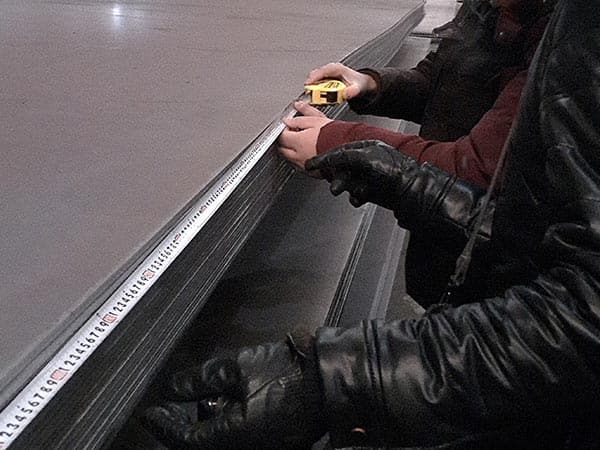
Understanding S460 steel and Its Global Equivalents
S460 steel represents a pinnacle of high-strength structural engineering, defined primarily by the European standard EN 10025. The designation S460 refers to its minimum yield strength of 460 megapascals (MPa). When engineers look for an ASTM equivalent, the most common match is ASTM A572 Grade 65 or ASTM A945 Grade 65, depending on the specific manufacturing route and weldability requirements. These steels are designed to provide superior load-bearing capacity while reducing the overall weight of structures, making them indispensable in modern infrastructure. Unlike standard carbon steels, S460 and its ASTM counterparts undergo rigorous metallurgical processing to achieve a fine-grained microstructure that balances hardness with ductility.
Primary Manufacturing Methods: TMCP vs. Quenching and Tempering
The manufacturing method of S460 steel is the primary factor that determines its sub-grade, such as S460N (normalized), S460M (thermomechanically rolled), or S460Q (quenched and tempered). Each method alters the internal crystalline structure to meet specific environmental demands.
- Thermo-Mechanical Controlled Processing (TMCP): This is the most advanced method used for S460M. It involves controlled rolling at specific temperature ranges followed by accelerated cooling. TMCP refines the grain size significantly, which enhances both yield strength and low-temperature toughness without increasing the carbon equivalent. This makes S460M exceptionally weldable.
- Quenching and Tempering (Q+T): Used for S460Q, this process involves heating the steel to an austenitic phase, rapidly cooling it in water or oil (quenching), and then reheating it to a lower temperature (tempering). This creates a tempered martensite or bainite structure, offering the highest strength levels but requiring more care during welding to avoid softening the heat-affected zone.
- Normalizing: S460N is produced by heating the steel above its critical temperature and cooling it in still air. This produces a uniform, fine-grained pearlite and ferrite structure, ensuring consistent mechanical properties throughout the plate thickness.
Chemical Composition and Micro-Alloying Strategies
To achieve the properties of S460 and its ASTM equivalents like A572 Gr 65, manufacturers utilize micro-alloying. Elements such as Vanadium (V), Niobium (Nb), and Titanium (Ti) are added in minute quantities. These elements form carbides and nitrides that pin grain boundaries during the rolling process, preventing grain growth. This grain refinement is the only mechanism that simultaneously increases strength and toughness. The carbon content is strictly limited, often below 0.20%, to ensure that the Carbon Equivalent Value (CEV) remains low, which is critical for preventing cold cracking during welding in heavy industrial applications.
Comparative Analysis: S460 vs. ASTM A572 Grade 65
When substituting S460 with an ASTM grade, it is vital to compare the mechanical thresholds. While they are often treated as interchangeable, subtle differences in testing protocols (such as impact energy temperatures) exist. The following table highlights the core specifications:
| Property | EN 10025-3 S460N | ASTM A572 Grade 65 | ASTM A945 Grade 65 |
|---|---|---|---|
| Min Yield Strength (MPa) | 460 | 450 | 450 |
| Tensile Strength (MPa) | 540 - 720 | 550 min | 550 - 690 |
| Elongation (%) | 17 min | 15 min | 18 min |
| Manufacturing Route | Normalized | As-rolled / Normalized | TMCP |
Advanced Mechanical Performance and Structural Integrity
The high yield-to-tensile ratio of S460 steel allows for the design of thinner sections that can withstand the same loads as thicker S355 or A36 steel. This reduction in material volume leads to significant cost savings in transport, foundation requirements, and welding consumables. Furthermore, the impact toughness of S460, particularly the ML or QL grades, ensures that the steel remains ductile even at temperatures as low as -50°C. This is a critical safety feature for offshore oil platforms and arctic infrastructure where brittle fracture could lead to catastrophic failure. The energy absorption capacity is tested using the Charpy V-Notch impact test, ensuring the material can withstand sudden dynamic loads.
Industrial Applications and Sector Expansion
Beyond general construction, S460 and its ASTM equivalents are finding increased use in specialized sectors. In the renewable energy sector, they are used for the massive towers of offshore wind turbines which must resist constant fatigue from wind and wave action. The heavy machinery industry utilizes these grades for crane booms and chassis where weight reduction is directly linked to operational efficiency. In bridge engineering, S460 allows for longer spans and more aesthetic, slender profiles without compromising the safety factors required for heavy traffic loads. The adaptability of the manufacturing method—whether choosing TMCP for weldability or Q+T for extreme strength—allows engineers to tailor the material to the specific stresses of the project.
Welding and Fabrication Considerations
Fabricating S460 requires an understanding of its metallurgical background. Because the strength is derived from grain refinement and micro-alloying rather than high carbon, the steel is generally weldable. However, for S460Q (Quenched and Tempering), the heat input must be strictly controlled. Excessive heat can cause "over-tempering" in the heat-affected zone (HAZ), leading to a localized loss of strength. Preheating is often recommended for thicker sections to manage the cooling rate and prevent hydrogen-induced cracking. Using low-hydrogen consumables is mandatory to maintain the integrity of the high-strength joint. When using the TMCP variant (S460M), the steel exhibits excellent resistance to cracking, often allowing for reduced preheat temperatures compared to traditional normalized steels of the same strength level.
Environmental Adaptation and Sustainability
Modern manufacturing of S460 steel also focuses on sustainability. The ability to use less steel to achieve the same structural performance reduces the carbon footprint of the entire project. Furthermore, many mills now produce S460 using the Electric Arc Furnace (EAF) route with high recycled scrap content, combined with advanced ladle metallurgy to ensure the purity required for high-strength grades. The longevity of S460 structures, combined with their recyclability, aligns with the global shift toward a circular economy in the construction and manufacturing industries. The resistance to atmospheric corrosion can also be enhanced through alloying or specialized coatings, ensuring that these high-strength structures serve their intended lifespan with minimal maintenance.
Leave a message