
automotive steel coil S600MC prices plunged
Comprehensive analysis of S600MC steel coil price drops, exploring its mechanical properties, cold forming capabilities, and strategic value in automotive lightweighting.
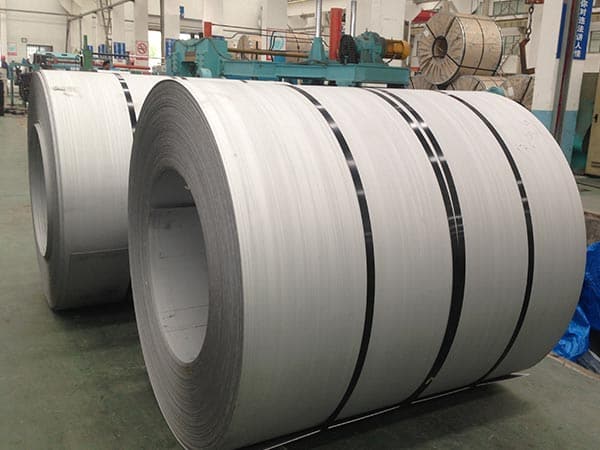
Current Dynamics of S600MC Steel Coil Market Fluctuations
The global steel market has recently witnessed a significant shift, specifically with automotive steel coil S600MC prices plunged to levels that have caught many Tier-1 and Tier-2 suppliers by surprise. S600MC, a high-strength low-alloy (HSLA) steel governed by the EN 10149-2 standard, is a cornerstone of modern vehicle manufacturing. The sudden price correction is driven by a convergence of increased production efficiency in thermomechanical rolling mills and a temporary cooling in heavy-duty commercial vehicle demand. For procurement departments, this price dip represents a strategic window to optimize material costs while maintaining the high structural integrity required for chassis and safety components.
Understanding S600MC: Beyond the Yield Strength
S600MC is not merely about its 600 MPa minimum yield strength. It is a thermomechanically rolled steel designed for cold forming. The 'MC' suffix denotes that the material has undergone controlled rolling and cooling processes to achieve a fine-grained microstructure. This micro-alloying technique—typically involving Niobium (Nb), Vanadium (V), or Titanium (Ti)—allows the steel to maintain exceptional toughness even at low temperatures, a critical factor for vehicles operating in diverse climates.
When prices for such a high-spec material drop, the value proposition shifts. Engineers can now justify replacing lower-grade steels with S600MC to achieve weight reduction without the previous cost penalty. By utilizing thinner gauges of S600MC to replace thicker sections of S355 or S420, manufacturers can reduce the overall weight of a truck frame by up to 15-20%, directly impacting fuel efficiency and payload capacity.
Mechanical Properties and Material Standards
To fully leverage S600MC during this period of price volatility, it is essential to understand the technical parameters that define its performance. The following table outlines the core mechanical requirements according to EN 10149-2:
| Property | Requirement (Value) |
|---|---|
| Yield Strength (ReH) | Min. 600 MPa |
| Tensile Strength (Rm) | 650 - 820 MPa |
| Elongation (A80mm, t < 3mm) | Min. 11% |
| Elongation (A5, t ≥ 3mm) | Min. 13% |
| Bending Radius (90°) | 1.0 x Thickness (t) |
These properties ensure that despite the high strength, the material retains enough ductility to be processed through complex stamping and bending operations. The low carbon content (typically ≤ 0.12%) is the secret behind its excellent weldability, preventing the formation of brittle martensite in the heat-affected zone (HAZ).
Superior Cold Forming and Processing Performance
One of the primary reasons S600MC remains a favorite despite market fluctuations is its unrivaled cold forming capability. Unlike traditional high-strength steels that may crack during tight radius bending, S600MC’s fine-grained structure allows for aggressive deformation. This is particularly useful for manufacturing:
- Longitudinal and transverse beams for heavy trucks.
- Cross-members and reinforcement brackets.
- Cold-pressed structural sections for agricultural machinery.
- Crane booms and lifting equipment components.
When processing S600MC, it is vital to account for springback. Although the material is highly formable, its high yield strength means it will attempt to return to its original shape more forcefully than mild steel. Modern CNC bending machines with integrated angle sensors are recommended to compensate for this behavior, ensuring dimensional precision across large production runs.
Weldability and Joining Techniques
The chemical composition of S600MC is optimized for all standard welding processes, including MAG (Metal Active Gas), laser welding, and resistance spot welding. Because the strength is derived from the thermomechanical rolling process rather than high alloy content, the Carbon Equivalent (CEV) is kept extremely low. This minimizes the risk of cold cracking and eliminates the need for pre-heating in most thicknesses.
However, users should be cautious about high heat input. Excessive heat can cause grain growth in the HAZ, slightly reducing the local yield strength. Utilizing pulsed welding technology or laser-hybrid welding can localize the heat, preserving the refined microstructure that gives S600MC its superior mechanical profile.
Environmental Adaptability and Fatigue Resistance
Automotive components are subjected to cyclic loading and harsh environmental conditions. S600MC excels in fatigue resistance due to its homogeneous grain structure. This makes it ideal for chassis components that must endure millions of vibration cycles over a vehicle's lifespan. Furthermore, while S600MC is not a corrosion-resistant steel per se, its smooth surface finish (typical of hot-rolled pickled and oiled products) provides an excellent substrate for cathodic dip painting (KTL) or galvanizing.
In cold weather environments, S600MC maintains its impact energy absorption capabilities. This is a vital safety feature for underrun protection devices and bumper beams, where the material must deform and absorb energy during a collision rather than fracturing catastrophically.
Strategic Procurement in a Volatile Market
The fact that automotive steel coil S600MC prices plunged offers a unique competitive advantage for manufacturers who can act quickly. Current market data suggests that the price drop is a result of supply chain rebalancing rather than a decrease in material quality. When sourcing, it is imperative to verify the Mill Test Certificate (MTC) to ensure compliance with EN 10149-2 and to check for precise tolerances on thickness and flatness.
Stocking up on S600MC during this period allows for more aggressive bidding on new automotive contracts. Since material costs typically represent 50-70% of the final component price, a 10-15% drop in coil prices can significantly improve profit margins or allow for more competitive pricing in the tender phase.
The Role of S600MC in the EV Revolution
As the automotive industry pivots toward Electric Vehicles (EVs), the demand for high-strength steels like S600MC is actually increasing. EVs carry heavy battery packs, requiring a stronger, more rigid chassis to support the weight while simultaneously needing to shed weight elsewhere to maximize driving range. S600MC provides the perfect balance. It allows for the construction of battery enclosures and motor mounts that are both lightweight and exceptionally strong, protecting the sensitive battery cells from external impacts.
The transition to EVs also demands materials with high recycled content and lower carbon footprints. Many modern mills producing S600MC are utilizing Electric Arc Furnace (EAF) technology or optimizing Blast Furnace (BF) routes to reduce CO2 emissions per ton of steel, aligning with the sustainability goals of major OEMs.
Technical Summary of Application Advantages
To summarize why S600MC remains a critical asset for the automotive sector, consider these three pillars:
- Mass Reduction: Enables the use of thinner sheets to achieve the same structural performance as thicker, lower-grade steels.
- Process Efficiency: Excellent punchability and edge-stretching capacity reduce scrap rates during high-speed stamping.
- Safety: High energy absorption rates and consistent mechanical properties ensure predictable performance in crash simulations.
Monitoring the S600MC price plunge is not just about saving money; it is about re-evaluating design possibilities. With lower input costs, engineers can push the boundaries of what is possible in automotive structural design, moving toward more complex, integrated components that were previously cost-prohibitive.
Leave a message