
Is s460mc mechanical properties mild steel?
Discover the critical differences between S460MC and mild steel. This expert guide analyzes mechanical properties, chemical composition, and industrial applications of S460MC.
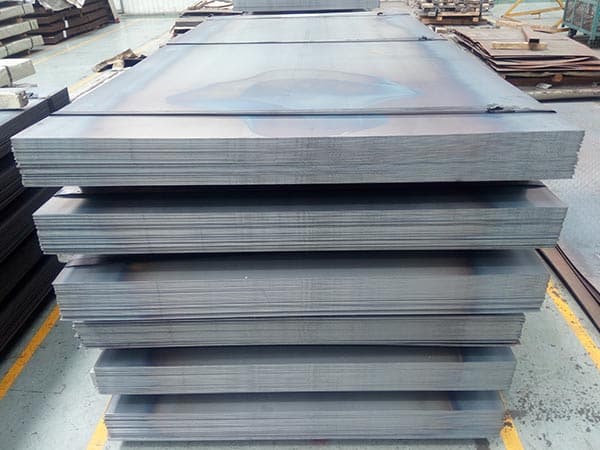
Understanding the Distinction: Is S460MC Truly Mild Steel?
The question of whether S460MC mechanical properties qualify it as mild steel requires a nuanced understanding of metallurgical classifications. In the strictest sense, S460MC is not mild steel. While mild steel typically refers to low-carbon structural steels like S235JR with yield strengths around 235 MPa, S460MC is a high-strength low-alloy (HSLA) steel. It is specifically designed for cold forming and is governed by the EN 10149-2 standard. The '460' in its designation represents a minimum yield strength of 460 MPa, which is nearly double that of traditional mild steel. This significant jump in strength places S460MC in a category of its own, optimized for weight reduction and high-load performance.
Mechanical Properties: A Leap Beyond Standard Carbon Steel
The mechanical profile of S460MC is engineered for demanding structural requirements where traditional mild steel would fail or require excessive thickness. The thermomechanical rolling process ensures a fine-grained microstructure, which is the secret behind its superior strength-to-weight ratio.
| Property | S460MC (EN 10149-2) | S235JR (Mild Steel) |
|---|---|---|
| Yield Strength (MPa) | Min 460 | Min 235 |
| Tensile Strength (MPa) | 520 - 670 | 360 - 510 |
| Elongation (A50mm %) | Min 14 (t < 3mm) | Min 24 |
| Bending Radius (90°) | 0.8t to 1.6t | 0.5t |
As illustrated, the yield strength of S460MC is substantially higher. This allows engineers to use thinner sections of steel to achieve the same structural integrity, leading to significant weight savings in vehicle chassis, crane booms, and heavy machinery. However, this higher strength comes with a trade-off in elongation; while S460MC is highly formable for its strength class, it possesses less inherent ductility than standard mild steel.
Chemical Composition and the Role of Micro-Alloying
The superior performance of S460MC is achieved through precise chemical control rather than high carbon content. Unlike mild steel, which relies on carbon for strength, S460MC maintains a very low carbon level (typically ≤ 0.12%) to ensure excellent weldability. The strength is derived from micro-alloying elements such as Niobium (Nb), Vanadium (V), and Titanium (Ti).
- Niobium (Nb): Refines the grain size during the rolling process, increasing both strength and toughness.
- Titanium (Ti): Prevents grain growth in the heat-affected zone (HAZ) during welding.
- Manganese (Mn): Enhances hardenability and tensile strength without making the steel brittle.
- Low Carbon Equivalent (CEV): Ensures that the steel can be welded using standard methods without the need for extensive pre-heating.
Superior Cold Forming and Processing Capabilities
The 'MC' suffix in S460MC indicates that the material is thermomechanically rolled (M) and intended for cold forming (C). This makes it a favorite for industries that require complex shapes without the risk of cracking. Unlike traditional high-strength steels that might be brittle, S460MC maintains a fine grain structure that allows for tight bending radii.
When processing S460MC, it is vital to consider the rolling direction. The material exhibits better bending performance when the bend axis is perpendicular to the rolling direction. Because of its high yield point, the springback effect is more pronounced than in mild steel. Fabricators must adjust their tooling and press brake settings to account for this elastic recovery, often requiring more force than what is used for S235 or S355 grades.
Weight Reduction and Environmental Sustainability
Using S460MC instead of mild steel is a strategic move for lightweighting (Down-gauging). In the automotive and transport sectors, reducing the weight of a trailer or truck frame directly translates to higher payload capacity and lower fuel consumption. This environmental benefit is a key driver for the adoption of HSLA steels.
Furthermore, S460MC offers better fatigue resistance compared to mild steel. The fine-grained structure inhibits the initiation and propagation of micro-cracks under cyclic loading. This makes it ideal for components subjected to constant vibration or fluctuating stresses, such as cross-members in heavy-duty trucks or structural supports in agricultural equipment.
Welding S460MC: Best Practices for High-Strength Joints
One common misconception is that high-strength steel is difficult to weld. Thanks to its low carbon content, S460MC exhibits excellent weldability. It can be welded using MAG (Metal Active Gas), TIG (Tungsten Inert Gas), or Laser welding techniques. However, to maintain the mechanical properties of the base metal, heat input must be carefully controlled.
Excessive heat input can lead to grain coarsening in the heat-affected zone, which may reduce the yield strength and impact toughness. Using low-hydrogen consumables is recommended to prevent hydrogen-induced cracking. Because S460MC is supplied in a thermomechanically rolled state, it should not be heat-treated (like normalizing or quenching) after fabrication, as this will destroy the specialized microstructure and significantly lower its strength.
Expanding Applications Across Modern Industries
S460MC has moved far beyond simple structural use, finding its way into precision-engineered components across various sectors:
- Automotive Industry: Used for longitudinal beams, chassis parts, and reinforcement brackets where safety and weight are paramount.
- Lifting and Handling: Telescopic booms for mobile cranes and components for forklifts benefit from the high strength-to-weight ratio.
- Construction Machinery: Excavator buckets, dumper bodies, and cold-pressed profiles.
- Renewable Energy: Structural frames for solar tracking systems that require high wind load resistance with minimal material usage.
Environmental Adaptation and Surface Protection
While S460MC provides mechanical excellence, its atmospheric corrosion resistance is similar to that of mild steel. Therefore, proper surface treatment is essential for longevity. It is highly suitable for hot-dip galvanizing, provided the silicon and phosphorus levels are monitored to avoid the Sandelin effect. It also takes powder coating and liquid paint exceptionally well due to its clean, scale-free surface often found in the pickled and oiled (O&P) condition.
In environments with high humidity or chemical exposure, the fine-grained surface of S460MC provides a consistent substrate for protective coatings, ensuring that the structural integrity is not compromised by oxidation over time. Choosing S460MC is an investment in both the immediate performance of the component and its long-term durability in the field.
Leave a message