
Effect of alloy elements on mechanical properties of S460MC steel for construction machinery
A comprehensive technical analysis of how carbon, manganese, and micro-alloying elements like Nb, V, and Ti influence the mechanical performance and industrial utility of S460MC steel in heavy machinery.
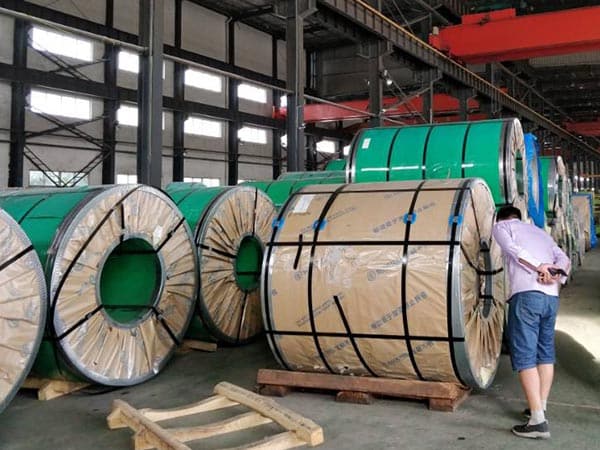
The Metallurgical Foundation of S460MC in Heavy Engineering
S460MC steel represents a pinnacle of high-strength low-alloy (HSLA) materials, specifically engineered for the demanding environments of the construction machinery industry. Governed by the EN 10149-2 standard, this thermomechanically rolled steel offers a unique combination of high yield strength, excellent cold formability, and superior weldability. The 'S' denotes structural steel, '460' indicates a minimum yield strength of 460 MPa, 'M' refers to the thermomechanical rolling process, and 'C' signifies its suitability for cold forming. The exceptional performance of S460MC is not accidental; it is the result of a meticulously balanced chemical composition where every alloying element plays a specific role in defining the final microstructure and mechanical behavior.
Chemical Composition: The Atomic Architecture of Strength
The performance of S460MC is rooted in its chemistry. Unlike traditional carbon steels that rely on high carbon content for strength, S460MC utilizes micro-alloying techniques to achieve superior properties without compromising ductility or weldability. The following table outlines the standard chemical requirements for S460MC.
| Element | Maximum Content (%) | Primary Function |
|---|---|---|
| Carbon (C) | 0.12 | Strength and Hardness |
| Manganese (Mn) | 1.60 | Solid Solution Strengthening |
| Silicon (Si) | 0.50 | Deoxidation and Strengthening |
| Phosphorus (P) | 0.025 | Impurity Control |
| Sulfur (S) | 0.015 | Inclusion Control |
| Niobium (Nb) | 0.09 | Grain Refinement |
| Vanadium (V) | 0.20 | Precipitation Hardening |
| Titanium (Ti) | 0.15 | Grain Growth Inhibition |
The Critical Influence of Carbon and Manganese
Carbon is the most fundamental strengthening element in steel. In S460MC, the carbon content is kept deliberately low (max 0.12%). This low carbon approach is essential for maintaining excellent weldability and high impact toughness. While higher carbon would increase strength, it would also lead to the formation of brittle phases and reduce the steel's ability to be cold-formed into complex shapes like crane booms or chassis frames. By keeping carbon low, the steel remains ductile and less prone to cracking during fabrication.
Manganese acts as a vital partner to carbon. With a maximum content of 1.60%, manganese provides significant solid solution strengthening. It also increases the hardenability of the steel and combines with sulfur to form manganese sulfides (MnS). In S460MC, the shape and distribution of these sulfides are often controlled to improve transverse ductility, which is critical for components that undergo multi-axial loading in excavators and loaders.
The Mastery of Micro-alloying: Nb, V, and Ti
The true secret to the high strength-to-weight ratio of S460MC lies in the synergistic effect of Niobium (Nb), Vanadium (V), and Titanium (Ti). These elements are added in minute quantities but have a transformative impact on the steel's microstructure through two primary mechanisms: grain refinement and precipitation hardening.
- Niobium (Nb): Niobium is perhaps the most critical micro-alloying element in S460MC. During the thermomechanical rolling process (TMCP), niobium inhibits the recrystallization of austenite. This allows the steel to be rolled at lower temperatures, resulting in a highly deformed austenite structure that transforms into an extremely fine-grained ferrite-pearlite microstructure upon cooling. According to the Hall-Petch relationship, a finer grain size directly increases yield strength while simultaneously improving low-temperature toughness.
- Vanadium (V): Vanadium contributes primarily through precipitation hardening. As the steel cools, vanadium forms fine carbides and nitrides [V(C,N)] within the ferrite matrix. These precipitates act as barriers to dislocation movement, further increasing the strength of the material without the significant loss of ductility associated with high carbon levels.
- Titanium (Ti): Titanium is used to form stable titanium nitrides (TiN) at very high temperatures. These particles remain stable even during the high heat of welding, pinning the grain boundaries and preventing grain coarsening in the Heat Affected Zone (HAZ). This ensures that the welded joints of construction machinery remain as tough as the base metal.
Mechanical Properties and Performance Metrics
The interaction of these elements results in a material that excels under the heavy static and dynamic loads typical of construction environments. The mechanical properties of S460MC are designed to allow engineers to reduce the weight of structures without sacrificing safety.
| Property | Value (Thickness ≤ 16mm) |
|---|---|
| Yield Strength (MPa) | Min 460 |
| Tensile Strength (MPa) | 520 - 670 |
| Elongation A80mm (%) | Min 14 |
| Min. Bending Radius (90°) | 1.0 x Thickness |
The high yield strength allows for the design of thinner sections, which reduces the overall weight of mobile machinery. This weight reduction translates directly into higher fuel efficiency, increased payload capacity, and reduced transport costs. Furthermore, the high elongation and low bending radius requirements ensure that S460MC can be processed using standard workshop equipment without the risk of edge cracking or springback issues.
Environmental Adaptability and Fatigue Resistance
Construction machinery operates in some of the harshest environments on Earth, from sub-zero arctic temperatures to humid tropical sites. The grain refinement provided by Niobium ensures that S460MC maintains its toughness even at low temperatures, preventing brittle fractures in cold climates. Additionally, the clean chemistry (low sulfur and phosphorus) reduces the presence of non-metallic inclusions, which are often the starting points for fatigue cracks. In components like excavator arms that undergo millions of load cycles, this high fatigue resistance is paramount for ensuring a long service life.
Fabrication Excellence: Welding and Cutting
The low carbon equivalent (CEV) of S460MC makes it exceptionally easy to weld. Most standard welding processes, such as MAG, MIG, and submerged arc welding, can be used without the need for extensive preheating. This is a significant advantage in the mass production of machinery frames. The stability of the micro-alloying elements ensures that the mechanical properties are preserved across the weldment. Furthermore, the consistent chemical composition and fine grain structure make S460MC an ideal candidate for precision laser and plasma cutting, resulting in clean edges and minimal distortion.
Strategic Application in Modern Machinery
The adoption of S460MC has revolutionized the design of several key components in the construction industry. Crane manufacturers utilize S460MC for telescopic booms where high strength is required to prevent buckling under load while keeping the boom light enough for mobile transport. In the truck industry, S460MC is the standard choice for longitudinal chassis members, providing the necessary stiffness and strength to handle uneven terrain and heavy loads. Agricultural equipment, such as large-scale plows and harvesters, also benefits from the impact resistance and durability of this steel grade.
The evolution of S460MC steel demonstrates the power of metallurgical precision. By moving away from simple carbon-based strengthening and embracing the complex interactions of Niobium, Vanadium, and Titanium, the industry has gained a material that is not only stronger but also more versatile and easier to process. As construction machinery continues to grow in size and complexity, the role of S460MC as a foundational material will only become more prominent, driving innovation in engineering and efficiency across the globe.
Leave a message