
How to choose the S420MC construction-machinery high-strength steel thickness
Comprehensive guide on selecting S420MC high-strength steel thickness for construction machinery, focusing on mechanical properties, forming, and structural efficiency.
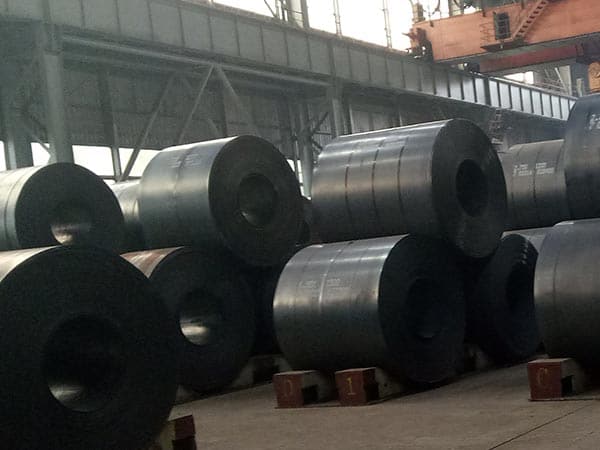
Understanding S420MC: The Backbone of Modern Construction Machinery
S420MC is a high-strength low-alloy (HSLA) steel grade governed by the EN 10149-2 standard. It is specifically designed for cold-forming applications where weight reduction and high load-bearing capacity are paramount. The "S" denotes structural steel, "420" represents the minimum yield strength of 420 MPa, and "MC" indicates that the material is thermomechanically rolled (M) and intended for cold forming (C). Choosing the correct thickness for S420MC is not merely a matter of following a blueprint; it involves a sophisticated balance of metallurgical properties, fabrication limits, and the dynamic stresses encountered in heavy-duty environments.
In the context of construction machinery—such as crane booms, truck chassis, and excavator components—thickness selection directly impacts the power-to-weight ratio. Using a thinner section of S420MC compared to traditional s355jr can reduce structural weight by up to 20-30%, but this requires a deep understanding of how thickness influences the material's behavior under stress and during manufacturing.
Mechanical Property Variations Across Thickness Ranges
While the nominal yield strength of S420MC is 420 MPa, the actual mechanical performance can exhibit subtle variations depending on the gauge of the sheet or plate. Thermomechanical rolling processes create a fine-grained microstructure that provides both strength and toughness. However, as thickness increases, the cooling rate during the rolling process may vary, which can influence the uniformity of the grain structure.
When selecting thickness, engineers must consult the specific mechanical requirements for different ranges. Typically, S420MC is available in thicknesses ranging from 1.5mm to 20mm. For thinner gauges (under 3mm), the material exhibits exceptional ductility, making it ideal for complex pressed parts. For thicker sections (above 8mm), the focus shifts to maintaining impact energy absorption at low temperatures.
| Thickness Range (mm) | Min Yield Strength (MPa) | Tensile Strength (MPa) | Min Elongation (%) | Bending Radius (90°) |
|---|---|---|---|---|
| t ≤ 3 | 420 | 480 - 620 | 16 | 0.5t |
| 3 < t ≤ 6 | 420 | 480 - 620 | 19 | 0.9t |
| t > 6 | 420 | 480 - 620 | 19 | 1.1t |
The Role of Cold Forming and Bending Radius
One of the primary reasons for choosing S420MC is its superior cold-forming capability. However, thickness is the most critical variable in determining the minimum bending radius. If the chosen thickness is too great for the required geometry, the outer fibers of the bend may exceed the material's tensile limit, leading to micro-cracking or "orange peel" effects.
Bending Physics: As thickness increases, the internal strain during bending grows exponentially. For S420MC, the standard suggests a bending radius of 0.5 times the thickness (0.5t) for very thin sheets, increasing to 1.1t or more for thicker plates. When designing construction machinery components like U-beams or C-channels, selecting a thickness that allows for a tight bend without compromising structural integrity is essential for compact design and weight distribution.
Using S420MC allows for tighter bends compared to standard carbon steels of the same strength level, thanks to its low carbon equivalent and fine-grained structure. This enables manufacturers to use thicker plates in smaller spaces, which is a frequent requirement in hydraulic assembly housings.
Welding Considerations and Heat-Affected Zone (HAZ)
Thickness plays a pivotal role in the welding metallurgy of S420MC. Because this steel gains its strength from thermomechanical rolling rather than high alloy content, it has an exceptionally low carbon equivalent (CEV). This makes it highly weldable without the need for extensive preheating.
- Heat Dissipation: Thicker sections act as a larger heat sink. When welding S420MC plates above 12mm, the cooling rate of the weld pool increases, which can potentially lead to localized hardening in the HAZ if the heat input is not carefully managed.
- Joint Design: For thicknesses below 5mm, simple butt welds or lap welds are common. For thicker structural components, multi-pass V-groove or J-groove preparations are necessary to ensure full penetration while maintaining the grain refinement benefits of the base metal.
- Softening Risk: Excessive heat input on thinner S420MC sections can cause a slight drop in yield strength in the HAZ. Selecting the right thickness often involves calculating the "t8/5" cooling time to ensure the weld maintains at least 90% of the base metal's strength.
Fatigue Life and Dynamic Loading in Machinery
Construction machinery is rarely subject to static loads. Excavator arms, crane booms, and chassis frames undergo millions of cycles of stress. The thickness of S420MC significantly influences the fatigue life of these components. A common mistake is to over-engineer by choosing an excessively thick plate, which increases the self-weight of the machine and actually raises the stress ranges during operation.
The Lightweighting Paradox: By using a thinner, high-strength S420MC plate instead of a thick S355 plate, the overall mass of the moving part is reduced. This reduction in mass decreases the inertial forces, which can actually extend the fatigue life of the joints. However, the designer must ensure that the thinner section does not suffer from local buckling. S420MC’s high yield-to-tensile ratio provides a safety buffer against permanent deformation during peak transient loads.
Environmental Adaptation and Low-Temperature Toughness
Construction equipment often operates in extreme environments, from arctic mines to tropical construction sites. S420MC is designed to maintain its toughness at low temperatures. When selecting thickness, it is vital to consider the Charpy V-notch impact test values. Thicker plates generally have a higher risk of brittle fracture at low temperatures due to the triaxial stress state created at the notch or crack tip.
Standard S420MC typically guarantees impact energy at -20°C. If the machinery is intended for use in sub-zero climates, choosing a thickness that has been verified through longitudinal and transverse impact testing is critical. The fine grain structure of S420MC, achieved through controlled rolling, ensures that even at thicknesses of 15mm or 20mm, the material remains ductile and resistant to crack propagation.
Optimizing Thickness for Cost-Efficiency
Material cost is a significant factor in high-volume machinery production. S420MC offers a unique value proposition: although the price per ton might be higher than S355, the total cost per component is often lower due to material savings.
Processing Costs: Thicker plates require more energy to cut (laser or plasma), more force to bend, and more filler material to weld. By optimizing the thickness down to the minimum required by structural analysis (FEA), manufacturers can reduce these downstream costs. For example, switching from a 10mm S355 plate to an 8mm S420MC plate maintains the same load capacity while reducing weight by 20% and significantly cutting welding time.
Practical Application: Truck Chassis and Crane Booms
In the production of truck chassis, S420MC is often used in thicknesses of 4mm to 8mm. This range provides the necessary stiffness to resist torsion while remaining light enough to maximize the vehicle's payload. For crane booms, where the weight of the boom itself limits the lifting capacity, S420MC in 6mm to 12mm thicknesses is a standard choice for the telescopic sections.
When selecting the thickness for these applications, the interaction between the steel and the surface treatment must also be considered. S420MC has a low silicon content, which makes it highly suitable for hot-dip galvanizing. The thickness of the steel will determine the immersion time and the resulting zinc layer thickness, which is crucial for long-term corrosion protection in outdoor construction environments.
Final Technical Considerations for Thickness Selection
The selection of S420MC thickness should follow a systematic approach: start with the maximum expected load and apply a safety factor consistent with the machinery's service class. Use Finite Element Analysis (FEA) to identify high-stress concentrations where a slightly thicker plate might be needed, or where reinforcements can be welded.
Always verify the tolerances on thickness provided by the mill. For S420MC, these are usually governed by EN 10051. Tight tolerances are essential for automated welding processes where a variation of even 0.5mm in thickness can affect the precision of the weld bead and the overall geometry of the assembly. By focusing on the synergy between material strength, fabrication technology, and operational demands, the choice of S420MC thickness becomes a strategic advantage in the competitive construction machinery market.
Leave a message