
S420MC steel for car safety parts prices plunged
Explore the technical advantages and market dynamics of S420MC steel as prices for automotive safety parts drop. Learn about its mechanical properties, weldability, and industrial applications.
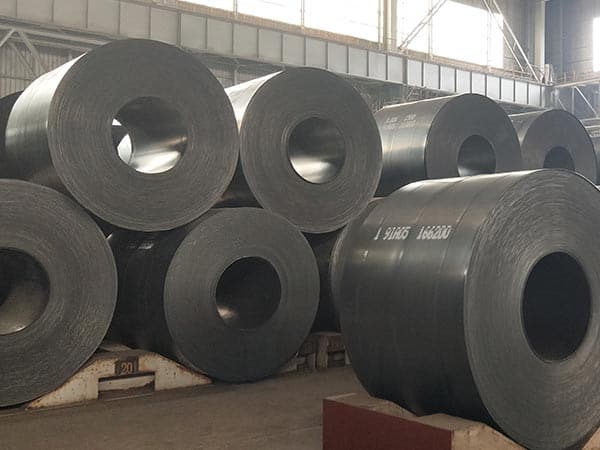
The Economic Shift: Why S420MC Steel Prices for Safety Parts are Volatile
The global automotive supply chain is currently witnessing a significant correction in the pricing of high-strength low-alloy (HSLA) steels, particularly the S420MC grade. As a staple in the production of safety-critical components, the recent price plunge of S420MC steel offers a strategic opening for Tier 1 and Tier 2 suppliers to optimize their material costs without compromising structural integrity. This downward trend is driven by a combination of stabilized raw material inputs, such as iron ore and coking coal, and an increase in production capacity among leading steel mills in Asia and Europe. For procurement managers and automotive engineers, understanding the technical depth of this material is essential to capitalize on these market fluctuations while maintaining the high standards required for vehicle safety.
Technical Profile of S420MC: The EN 10149-2 Standard
S420MC is a thermomechanically rolled steel specifically designed for cold forming. Governed by the EN 10149-2 standard, it represents a class of materials that balance high yield strength with exceptional ductility. The 'S' denotes structural steel, '420' refers to the minimum yield strength of 420 MPa, and 'MC' indicates it is intended for cold forming (M) and has a controlled rolling process (C). This grade is engineered to provide weight reduction in vehicle architectures, contributing to better fuel efficiency and lower emissions, which are critical metrics in the current transition toward electric mobility.
| Element | Carbon (C) % | Manganese (Mn) % | Silicon (Si) % | Phosphorus (P) % | Sulfur (S) % | Aluminium (Al) % |
|---|---|---|---|---|---|---|
| Max Content | 0.12 | 1.60 | 0.50 | 0.025 | 0.015 | 0.015 |
The chemical composition is meticulously controlled to ensure low carbon equivalents. By limiting carbon to a maximum of 0.12%, the steel achieves superior weldability and prevents the formation of brittle phases in the heat-affected zone (HAZ). Micro-alloying elements like Niobium (Nb), Vanadium (V), and Titanium (Ti) are added to refine the grain structure, which is the primary mechanism for achieving high strength without sacrificing toughness.
Mechanical Performance in Safety-Critical Applications
Automotive safety parts, such as bumper beams, seat frames, and chassis cross members, require materials that can absorb high amounts of energy during an impact. S420MC excels in these scenarios due to its specific mechanical properties:
- Yield Strength: Minimum 420 MPa, providing the necessary resistance to permanent deformation under load.
- Tensile Strength: Ranges between 480 and 620 MPa, ensuring the material can withstand significant stress before fracturing.
- Elongation: With a minimum elongation of 16% to 19% (depending on thickness), S420MC allows for complex shaping and energy dissipation during collisions.
- Impact Toughness: The fine-grained structure ensures that the material remains ductile even at lower temperatures, a vital attribute for vehicles operating in diverse climates.
Processing Advantages: Cold Forming and Weldability
One of the primary reasons S420MC is preferred for car safety parts is its exceptional processing performance. The thermomechanical rolling process creates a very fine grain size, which directly translates to excellent cold-forming properties. Manufacturers can achieve tight bending radii without the risk of cracking or surface defects. For a typical S420MC sheet, the minimum recommended bending radius is often as low as 0.5 to 1.0 times the material thickness, depending on the orientation relative to the rolling direction.
In terms of joining technologies, S420MC is highly compatible with modern automated welding processes. Whether using Metal Active Gas (MAG) welding, laser welding, or resistance spot welding, the low carbon content minimizes the risk of cold cracking. The stability of the micro-alloyed structure ensures that the mechanical properties of the joint remain consistent with the base metal, which is a non-negotiable requirement for safety components like B-pillars or longitudinal beams.
Environmental Adaptation and Fatigue Resistance
Vehicles are exposed to harsh environments, including road salts, moisture, and extreme temperature cycles. S420MC steel exhibits reliable atmospheric corrosion resistance, though it is typically used with protective coatings such as zinc galvanizing or E-coating in automotive applications. Its fatigue resistance is another critical attribute. Components like chassis members undergo millions of stress cycles during the vehicle's lifespan. The refined grain structure of S420MC inhibits the initiation and propagation of fatigue cracks, extending the service life of the vehicle's structural skeleton.
Expanding Industry Applications Beyond Safety Parts
While the current price drop is heavily impacting the safety parts segment, the utility of S420MC extends across the broader manufacturing landscape. The versatility of this grade makes it an attractive option for various high-stress applications:
- Truck and Trailer Frames: Where high load-bearing capacity and weight savings are paramount.
- Crane and Lifting Equipment: Utilizing the high yield strength to reduce the dead weight of telescopic booms.
- Agricultural Machinery: Providing durability for components subjected to high mechanical wear and impact.
- Solar Mounting Systems: Offering a cost-effective, high-strength solution for large-scale structural installations.
Strategic Procurement During Price Plunges
The current market environment where S420MC prices have plunged creates a unique opportunity for "material upgrading." Manufacturers currently using lower grades like S355MC may find that the price gap has narrowed sufficiently to justify a switch to S420MC. This transition allows for thinner gauges to be used while maintaining the same structural performance, leading to further weight savings and overall cost reduction per unit. However, such a shift requires careful recalibration of stamping dies and welding parameters to account for the higher springback and strength levels of S420MC.
Working with a specialized steel partner is crucial during these periods of price volatility. Real-time market intelligence combined with deep technical support ensures that the material selected not only meets the budgetary constraints but also adheres to the rigorous safety standards of the automotive industry. As the industry moves toward more complex vehicle designs, the role of S420MC as a reliable, high-performance, and now more affordable material cannot be overstated.
Future Outlook for High-Strength Steels
The trajectory of S420MC is closely tied to the evolution of automotive engineering. As crash test requirements become more stringent, the demand for materials that offer both strength and ductility will continue to grow. The current price dip should be viewed as a tactical window to secure long-term supply contracts or to initiate R&D projects that leverage the superior properties of HSLA steels. By integrating S420MC into the design phase of new vehicle platforms, engineers can achieve the delicate balance of safety, performance, and cost-efficiency that defines modern automotive excellence.
Leave a message