
What is the best quality S500MC steel complete specifications?
Explore the comprehensive specifications of S500MC high-strength steel. This guide covers chemical composition, mechanical properties, processing advantages, and industry applications for superior engineering results.
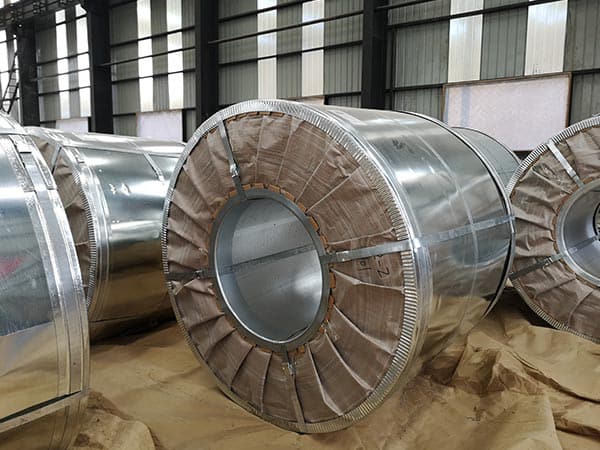
Understanding the Essence of S500MC High-Strength Steel
S500MC is a high-yield strength, cold-forming steel produced through the thermomechanically rolled (TMCP) process, governed by the European standard EN 10149-2. The 'S' denotes structural steel, '500' represents the minimum yield strength of 500 MPa, and 'MC' indicates that the material is thermomechanically rolled for cold forming. Unlike traditional carbon steels, S500MC achieves its superior strength and toughness through a fine-grained microstructure achieved by precise temperature control during the rolling process and the addition of micro-alloying elements like Niobium (Nb), Vanadium (V), and Titanium (Ti).
Engineers and manufacturers prioritize S500MC when seeking a balance between weight reduction and structural integrity. By utilizing higher strength steel, the thickness of components can be reduced without compromising safety, leading to lighter vehicles, lower fuel consumption, and increased payload capacities in transport sectors.
Chemical Composition: The Science of Micro-Alloying
The performance of S500MC is rooted in its chemical makeup. The low carbon content ensures excellent weldability, while the micro-alloying elements provide grain refinement and precipitation hardening. Below is the typical chemical composition according to EN 10149-2:
| Element | Maximum Content (%) |
|---|---|
| Carbon (C) | 0.12 |
| Manganese (Mn) | 1.60 |
| Silicon (Si) | 0.50 |
| Phosphorus (P) | 0.025 |
| Sulfur (S) | 0.015 |
| Aluminum (Al) total | 0.015 |
| Niobium (Nb) | 0.09 |
| Vanadium (V) | 0.20 |
| Titanium (Ti) | 0.15 |
The sum of Nb, V, and Ti is usually restricted to 0.22% to maintain optimal ductility. This lean chemistry is a key factor in why S500MC remains easy to process despite its high strength levels.
Mechanical Properties and Structural Reliability
The mechanical specifications of S500MC are designed to withstand high stress while allowing for complex shaping. The thermomechanical rolling process ensures that the properties are consistent across the entire length and width of the steel coil or plate.
| Property | Value |
|---|---|
| Yield Strength (ReH) | Min. 500 MPa |
| Tensile Strength (Rm) | 550 - 700 MPa |
| Elongation (A80mm, t < 3mm) | Min. 12% |
| Elongation (A5, t ≥ 3mm) | Min. 14% |
Beyond these standard metrics, S500MC exhibits remarkable impact toughness at low temperatures, which is critical for equipment operating in harsh climates. Although EN 10149-2 does not always mandate impact testing for 'MC' grades unless specified, many high-quality suppliers provide materials that meet 27J or 40J at -20°C or -40°C upon request.
Cold Forming and Bending Performance
One of the standout features of S500MC is its exceptional cold-forming capability. Despite its 500 MPa yield strength, it can be bent to tight radii without cracking. This is vital for manufacturing chassis frames, brackets, and structural profiles. The recommended minimum bending radius (for a 90° bend) depends on the thickness (t) of the material:
- For thickness ≤ 3mm: 0.5t
- For 3mm < thickness ≤ 6mm: 1.0t
- For thickness > 6mm: 1.5t
Using high-quality S500MC ensures that the springback effect is predictable, allowing for high-precision automated manufacturing processes. Proper lubrication and tool maintenance are recommended to maximize the lifespan of forming dies when working with these high-strength grades.
Weldability and Joining Technologies
S500MC is highly compatible with all standard welding methods, including MIG/MAG, TIG, and submerged arc welding. Because of its low carbon equivalent (CEV), it does not typically require preheating, which significantly reduces production time and costs. However, to maintain the integrity of the Heat Affected Zone (HAZ), it is crucial to control the heat input.
Excessive heat can lead to grain coarsening in the HAZ, potentially reducing the local yield strength. It is recommended to use welding consumables that match the strength of the base metal (e.g., E80S class fillers). Laser welding and plasma cutting are also highly effective, as the material's clean chemical composition results in minimal dross and high-quality cut edges.
Environmental Adaptability and Fatigue Resistance
In dynamic structural applications, fatigue resistance is often more important than static strength. S500MC's fine-grained structure provides a natural barrier to crack initiation and propagation. This makes it an ideal choice for components subjected to cyclic loading, such as truck frames and crane booms.
While S500MC is not a weathering steel, its smooth surface finish (achieved through pickling and oiling if required) provides an excellent substrate for protective coatings. Whether it is hot-dip galvanizing, powder coating, or KTL (cathodic dip painting), the material bonds well with various anti-corrosion systems, ensuring long-term durability in corrosive environments.
Strategic Applications Across Key Industries
The versatility of S500MC allows it to be integrated into numerous high-performance sectors. Its adoption is driven by the need for efficiency and material optimization.
- Heavy Transport: Used extensively for longitudinal beams, cross members, and chassis components in trucks and trailers.
- Construction Machinery: Essential for crane arms, telescopic booms, and excavator frames where high lifting capacity and low self-weight are required.
- Agricultural Equipment: Found in plow frames, trailers, and harvesting machinery that must endure high stress in outdoor conditions.
- Renewable Energy: Utilized in the structural supports for solar tracking systems and wind turbine internal components.
- Storage Solutions: High-load racking systems and cold-formed sections for warehouse infrastructure.
Identifying the Best Quality S500MC
To ensure you are procuring the best quality S500MC, it is important to look beyond the basic data sheet. Premium quality is defined by tight tolerances on thickness and flatness, which reduces waste during laser cutting and ensures consistency in robotic welding. Certification is also key; always demand a Mill Test Certificate (MTC) to EN 10204 3.1.
Top-tier manufacturers utilize advanced ladle metallurgy to ensure extremely low inclusion levels, which improves the material's isotropic properties—meaning the steel performs consistently whether it is stressed along or across the rolling direction. When evaluating suppliers, consider their ability to provide pickled and oiled (P&O) surfaces, which protect the steel from oxidation during storage and provide a cleaner surface for subsequent processing.
Processing Tips for Maximizing Material Value
When transitioning from standard S235 or S355 grades to S500MC, certain adjustments in the workshop are beneficial. Due to the higher strength, the cutting forces required for shearing and the pressing forces for bending will be higher. Ensure that machinery is rated for high-strength low-alloy (HSLA) steels.
Furthermore, when laser cutting S500MC, the consistency of the silicon content is vital for a stable cutting process. High-quality S500MC with controlled silicon levels allows for higher cutting speeds and cleaner edges, reducing the need for secondary grinding operations. By optimizing these parameters, manufacturers can fully realize the cost-saving potential of this advanced steel grade.
Leave a message