
What is the scope of appearance inspection of S460MC steel for car parts
Explore the comprehensive scope of appearance inspection for S460MC high-strength steel in automotive manufacturing. Learn about surface quality standards, defect identification, and mechanical performance requirements.
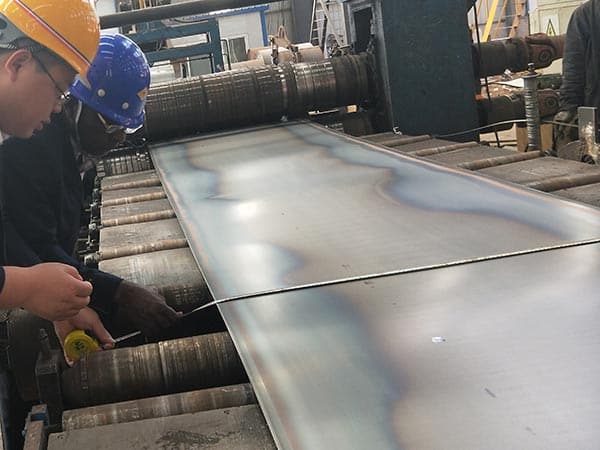
Defining the Standard for S460MC Surface Quality
S460MC is a high-yield-strength, thermomechanically rolled steel specifically designed for cold forming applications in the automotive industry. Given its critical role in structural components such as truck frames, chassis cross members, and safety reinforcements, the appearance inspection scope is far more than a cosmetic check. It is a fundamental safety protocol. The integrity of the surface directly correlates with the material's fatigue resistance and its ability to withstand extreme stress during the vehicle's lifecycle. Appearance inspection must ensure that the steel is free from defects that could compromise its structural performance or its response to subsequent processing like bending and welding.
Primary Surface Defect Categories
The scope of inspection begins with identifying macro-defects that occur during the rolling or cooling process. These include slivers, scabs, and pits. Slivers are thin pieces of metal rolled into the surface, often originating from ingot defects or rolling mill damage. In S460MC, which is often used in high-stress environments, a sliver can act as a stress concentrator, leading to premature fatigue failure. Scabs, or shell-like defects, are usually caused by splashing during casting. These must be strictly monitored because they can peel off during the stamping process, damaging expensive dies and creating uneven thickness in the final car part.
Pitting and rolling marks are also critical. While S460MC is a thermomechanically rolled (TMCP) steel, it can exhibit small indentations if the rollers are not perfectly maintained. For automotive parts that require painting or coating, these pits can trap air or moisture, leading to localized corrosion beneath the protective layer. The inspection scope defines the allowable depth of such pits, typically requiring them to be less than a small percentage of the nominal thickness to ensure the design strength is not compromised.
Edge Quality and Micro-Cracking Inspection
The edges of S460MC coils or sheets are high-risk areas, especially for parts that undergo significant cold bending. The inspection scope includes checking for edge cracks and burrs. Because S460MC has a high yield strength of at least 460 MPa, the internal stresses during slitting or shearing are substantial. If the cutting tools are dull, they can induce micro-cracks at the edge. During the manufacturing of a chassis beam, these micro-cracks can propagate into macro-cracks when the steel is bent, leading to a complete structural failure of the component.
- Burr Height: Excessive burrs can interfere with the precision of automated welding systems used in car assembly lines.
- Edge Waviness: This can lead to misalignment in the stamping die, causing uneven stress distribution.
- Laminations: Internal separations that reach the edge must be rejected immediately as they indicate poor metallurgical bonding.
Dimensional and Shape Consistency
While often categorized under dimensional checks, the flatness and shape of the steel are verified during appearance inspection. For S460MC, maintaining a high degree of flatness is essential for the high-speed laser cutting and automated stamping used in modern automotive plants. Any coil set or cross-bow that exceeds the tolerances specified in EN 10149-2 can cause the steel to jam in the feeders or result in inaccurate part dimensions. The inspection scope utilizes specialized sensors or manual straight-edge tests to ensure the material meets the stringent flatness requirements of the automotive sector.
| Property Type | S460MC Requirement | Impact on Appearance/Processing |
|---|---|---|
| Yield Strength (ReH) | min. 460 MPa | Higher resistance to deformation; requires smooth surface to avoid crack initiation. |
| Tensile Strength (Rm) | 520 - 670 MPa | Determines the energy absorption capacity in crash zones. |
| Elongation (A80) | min. 14% | Surface integrity is vital to prevent necking during deep drawing. |
| Surface Finish | Uncoated / Oiled | Must be free from rust and heavy scale to ensure weld quality. |
Oxidation and Scale Adhesion
The thermomechanical rolling process of S460MC produces a specific type of oxide scale. The inspection scope must evaluate the adhesion and uniformity of this scale. In many automotive applications, the steel is used in its hot-rolled state or after pickling. If the scale is loose or "flaky," it can interfere with the welding arc, leading to porosity or lack of fusion in the weld bead. Furthermore, non-uniform scale can result in an uneven surface profile after pickling, which affects the aesthetic and functional quality of the final car part. Cleanliness is a paramount factor; any oil, grease, or foreign matter on the surface must be identified, as these contaminants can lead to carbonization during heat treatment or welding, embrittling the steel.
Impact of Surface Quality on Mechanical Fatigue
Automotive structural parts are subjected to cyclic loading. The surface roughness (Ra) of S460MC is a key focus of the inspection scope. A rough surface with deep grinding marks or scratches acts as a series of notches. Under the high-stress cycles experienced by a truck frame, these notches are where fatigue cracks originate. High-quality S460MC should have a uniform, fine-grained surface appearance. Inspectors look for localized overheating marks or discoloration, which might indicate a change in the microstructure (such as localized grain growth) that would lower the fatigue limit of the material at that specific point.
Environmental Adaptability and Storage Inspection
The scope also extends to how the steel has been handled and stored. White rust (on galvanized versions) or red rust (on hot-rolled S460MC) is a major cause for rejection. Since S460MC is often used for parts that are not visible but are critical for safety, any signs of pitting corrosion must be scrutinized. Unlike uniform surface rust, pitting can penetrate deep into the 460MPa matrix, significantly reducing the effective load-bearing cross-section. Inspection protocols require that any stored S460MC be checked for moisture ingress between the sheets or coils, which can cause "stain" defects that are difficult to remove and can affect the adhesion of E-coatings used in the automotive industry.
Advanced Inspection Technologies in Automotive Steel
Modern automotive supply chains are moving beyond manual visual inspection. The scope now includes the use of Automated Optical Inspection (AOI) systems. These systems use high-resolution cameras and AI algorithms to scan 100% of the surface of S460MC coils at high speeds. They can detect defects as small as 0.1mm, categorizing them into slivers, holes, or scale issues automatically. This technological integration ensures that the S460MC steel used for car parts meets the zero-defect philosophy required by major automotive OEMs. By quantifying the defect density, manufacturers can predict the performance of the steel in complex forming operations, reducing scrap rates and enhancing overall vehicle safety.
Practical Application: Chassis and Structural Components
When S460MC is used for longitudinal beams, the inspection scope emphasizes the uniformity of thickness across the width. Variations in thickness, even if within general industrial standards, can lead to "springback" issues during cold forming. An inspector will look for rolling ridges—longitudinal lines of slightly increased thickness—which can cause the beam to twist during the stamping process. By ensuring a pristine surface and consistent geometry, the manufacturer guarantees that the S460MC part will integrate perfectly with the rest of the vehicle's structural frame, maintaining the intended crashworthiness and load distribution.
Leave a message