
EN10149-2 S700MC price continues to weaken
Explore the reasons behind the weakening price of EN10149-2 S700MC and discover its superior mechanical properties, welding capabilities, and diverse industrial applications.
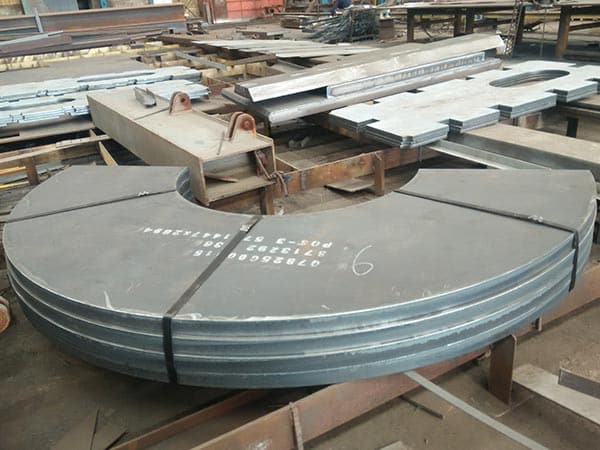
Current Market Dynamics of EN10149-2 S700MC
The global steel market is currently witnessing a notable shift as the EN10149-2 S700MC price continues to weaken. This downward trend is not merely a reflection of cyclical volatility but is deeply rooted in the interplay between raw material costs, shifting demand from heavy machinery sectors, and the optimization of global supply chains. For procurement specialists and structural engineers, this price correction presents a strategic window to integrate high-performance materials into projects that previously faced budget constraints. Understanding the intrinsic value of S700MC requires a look beyond the price tag, focusing on how its thermomechanically rolled (TMCP) nature provides a competitive edge in modern engineering.
Technical Essence: The TMCP Advantage
S700MC is a high-yield strength, hot-rolled steel designed specifically for cold forming. The 'M' in its designation signifies its production via Thermomechanical Controlled Processing. Unlike traditional normalized steels, TMCP involves precise temperature control during the rolling process, followed by rapid cooling. This technique refines the grain structure to a microscopic level, resulting in a material that possesses both high strength and exceptional toughness. This fine-grained microstructure is the secret behind its ability to maintain structural integrity even under extreme mechanical stress, making it a preferred choice for weight-sensitive applications.
Mechanical Properties and Structural Efficiency
The primary appeal of S700MC lies in its impressive yield strength of 700 MPa. This allows for significant 'lightweighting'—the practice of reducing the thickness of steel components without compromising their load-bearing capacity. By switching from standard s355jr to S700MC, engineers can often reduce the weight of a structure by up to 30-40%, which directly translates to lower fuel consumption in transport equipment and reduced carbon footprints.
| Mechanical Property | Value (Thickness ≤ 8mm) |
|---|---|
| Minimum Yield Strength (ReH MPa) | 700 |
| Tensile Strength (Rm MPa) | 750 - 950 |
| Minimum Elongation (A80mm %) | 10 |
| Minimum Elongation (A5 %) | 12 |
Beyond the raw numbers, the ductility of S700MC is remarkable. Despite its high strength, it retains sufficient elongation to allow for complex cold-forming operations, such as tight-radius bending and flanging, which are essential in the manufacturing of chassis frames and telescopic booms.
Chemical Composition and Weldability
One of the most critical factors for fabricators is how a steel grade behaves during welding. S700MC features a low carbon equivalent (CEV) compared to traditional quenched and tempered steels. This low alloy content ensures that the material is less susceptible to cold cracking in the heat-affected zone (HAZ). Fabrication shops can often eliminate or significantly reduce pre-heating requirements, which speeds up production cycles and reduces energy costs.
| Element | Maximum Percentage (%) |
|---|---|
| Carbon (C) | 0.12 |
| Manganese (Mn) | 2.10 |
| Silicon (Si) | 0.60 |
| Phosphorus (P) | 0.025 |
| Sulphur (S) | 0.015 |
| Aluminium (Al) | 0.015 |
The controlled addition of micro-alloying elements like Niobium (Nb), Vanadium (V), and Titanium (Ti) contributes to the precipitation hardening effect, further stabilizing the material's properties during thermal processing.
Process Performance: Bending and Laser Cutting
For manufacturers, the processability of S700MC is as important as its strength. When the EN10149-2 S700MC price continues to weaken, it becomes an even more attractive option for high-volume production lines using automated laser cutting and CNC bending.
- Laser Cutting: Due to its clean surface and consistent internal chemistry, S700MC is exceptionally well-suited for high-speed laser cutting. It produces clean edges with minimal dross, reducing the need for secondary grinding operations.
- Cold Bending: The material is designed for cold forming. For a thickness (t), the recommended minimum bending radius is typically 2.0t for a 90-degree bend. This allows for compact designs in hydraulic components and structural brackets.
- Springback Management: While S700MC is formable, its high yield strength means it exhibits more 'springback' than milder steels. Modern CNC press brakes with angle-sensing systems are ideal for compensating for this characteristic, ensuring high precision in the final part.
Expanding Industry Applications
The weakening price trend of S700MC is encouraging its adoption across a broader spectrum of industries. Historically reserved for high-end mobile cranes, it is now finding its way into more common applications where durability and weight reduction are paramount.
Transportation and Logistics: In the commercial vehicle sector, S700MC is the gold standard for truck chassis, cross members, and side guards. Reducing the dead weight of a trailer allows for a higher payload, directly increasing the operational efficiency of transport fleets.
Lifting and Construction Equipment: Mobile cranes, crawler cranes, and concrete pump booms rely on the high strength-to-weight ratio of S700MC to reach greater heights and distances. The material's ability to withstand dynamic loads makes it indispensable for these safety-critical components.
Agricultural Machinery: Modern farming equipment, such as large-scale plows and harvesters, faces punishing environments. S700MC provides the necessary fatigue resistance to handle uneven terrain and high-torque operations while keeping the overall machine weight low to prevent soil compaction.
Environmental Adaptability and Sustainability
In an era where environmental impact is a key metric, S700MC offers a clear path toward sustainability. The logic is simple: higher strength leads to less steel used per structure. Less steel means lower energy consumption during the melting and rolling phases. Furthermore, the lightweight structures built with S700MC consume less fuel throughout their entire operational life. As global regulations on carbon emissions tighten, the transition to high-strength steels like S700MC is no longer just a financial decision but a regulatory necessity.
Strategic Procurement in a Weakening Market
As the market price for EN10149-2 S700MC softens, businesses should evaluate their inventory strategies. This is an opportune time to upgrade existing designs from lower-grade steels to S700MC. However, it is vital to source from reputable mills that provide full EN 10204 3.1 or 3.2 certification. Consistency in the TMCP process is what separates premium S700MC from substandard alternatives. Buyers should pay close attention to the impact test values, especially if the steel will be used in low-temperature environments, as S700MC can be specified with guaranteed toughness at -20°C or -40°C.
Navigating the complexities of the steel market requires a balance of technical knowledge and commercial timing. With the current price trends, S700MC stands out as a high-value material that can drive innovation and cost-efficiency across the global manufacturing landscape.
Leave a message