
The difference between A36 and S700MC high strength car beam steel
A detailed comparison between A36 carbon steel and S700MC high-strength automotive steel, covering mechanical properties, metallurgy, and applications.
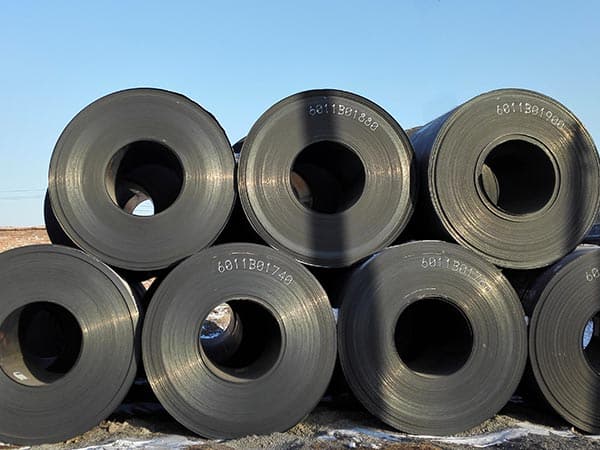
The Evolution of Structural Materials: From General Purpose to Specialized High-Strength Steel
In the landscape of modern engineering, selecting the right steel grade is not merely a matter of cost, but a critical decision that impacts structural integrity, weight efficiency, and manufacturing feasibility. Two grades often discussed in different contexts are ASTM A36 and EN 10149-2 S700MC. While A36 has been the backbone of the construction industry for decades, S700MC represents the pinnacle of thermomechanically rolled high-strength low-alloy (HSLA) steels specifically designed for the demanding requirements of the automotive and heavy machinery sectors. Understanding the chasm between these two materials requires a deep dive into their metallurgical DNA and their performance under stress.
Metallurgical Composition and Manufacturing Processes
The fundamental difference between A36 and S700MC begins at the molecular level. ASTM A36 is a classic carbon structural steel. Its chemistry is relatively simple, relying primarily on carbon (around 0.25-0.29%) and manganese to provide its strength. It is typically produced via traditional hot-rolling processes. Because it lacks significant alloying elements, its grain structure is relatively coarse compared to modern high-strength steels, which limits its yield strength but makes it exceptionally easy to produce and weld in general environments.
In contrast, S700MC is a product of advanced metallurgical engineering. The 'MC' suffix denotes that it is thermomechanically rolled (M) and designed for cold forming (C). Its carbon content is kept remarkably low (often below 0.12%) to ensure superior weldability and toughness. The high strength of S700MC is achieved through micro-alloying with elements such as Niobium (Nb), Vanadium (V), and Titanium (Ti). These elements, combined with the precise temperature control during the TMCP (Thermomechanical Controlled Process) rolling, result in an extremely fine-grained microstructure. This grain refinement is the secret behind its ability to offer triple the yield strength of A36 without becoming brittle.
Mechanical Property Comparison: The Strength-to-Weight Ratio
When evaluating these steels for automotive beams or structural frames, mechanical properties are the most visible differentiator. A36 offers a minimum yield strength of approximately 250 MPa (36,000 psi). This is sufficient for stationary structures like buildings and bridges where weight is often a secondary concern to volume and cost. However, in the automotive world, every kilogram saved translates to better fuel efficiency and higher payload capacity.
S700MC, as the name suggests, provides a minimum yield strength of 700 MPa. This massive leap in strength allows engineers to use significantly thinner sections to carry the same load. For example, a truck chassis beam made of S700MC can be up to 40-50% lighter than one made of A36 while maintaining the same structural safety margins. This makes S700MC the preferred choice for high-stress components such as longitudinal beams, cross members, and crane booms.
| Property | ASTM A36 | S700MC (EN 10149-2) |
|---|---|---|
| Yield Strength (Min) | 250 MPa | 700 MPa |
| Tensile Strength | 400 - 550 MPa | 750 - 950 MPa |
| Elongation (Min) | 20-23% | 10-12% (depending on thickness) |
| Carbon Content (Max) | ~0.26% | 0.12% |
| Primary Application | General Construction | Automotive Chassis / Heavy Lifting |
Cold Forming and Fabrication Flexibility
A common misconception is that higher strength leads to poorer workability. While S700MC is significantly harder than A36, it is specifically engineered for cold forming. The fine-grained structure allows for tight bending radii without the risk of cracking, provided the manufacturer follows the recommended internal bending radius (typically 1.0 to 1.5 times the thickness). This formability is crucial for automotive beams that require complex geometries to clear engine components or suspension mounts.
A36 is also highly formable, but because it is thicker for the same strength requirement, the forces needed to bend it are often higher than those needed for a thinner S700MC sheet. Furthermore, A36 does not have the same guaranteed tight-radius bending performance as S700MC, which can lead to unpredictable springback or surface tearing in precision automotive applications.
Weldability and Heat Affected Zone (HAZ) Considerations
Welding is a critical stage in the production of automotive beams. A36 is famous for its "weld-anything" nature. Its chemistry is forgiving, and it can be joined using almost any standard welding process without extensive pre-heating or post-weld heat treatment. However, the high carbon content can occasionally lead to issues in very thick sections.
S700MC, despite its high strength, exhibits excellent weldability due to its low Carbon Equivalent (CEV). Because the strength is derived from grain refinement and micro-alloying rather than high carbon, the risk of cold cracking is minimized. However, fabricators must be cautious about the heat input. Excessive heat during welding can cause "grain growth" in the heat-affected zone (HAZ), which may locally reduce the yield strength back toward the levels of lower-grade steels. Using low-heat input processes and appropriate filler metals is essential to maintaining the integrity of an S700MC automotive beam.
Environmental Adaptation and Fatigue Resistance
Automotive beams are subjected to dynamic loads and harsh environmental conditions. Fatigue resistance is where S700MC truly shines. The fine-grained structure is more resistant to the initiation and propagation of fatigue cracks compared to the coarser structure of A36. In a vehicle chassis that experiences millions of vibration cycles over its lifespan, the fatigue life of S700MC ensures long-term reliability and safety.
From an environmental perspective, both steels require protection against corrosion, such as galvanizing or painting. However, because S700MC allows for thinner designs, the surface-area-to-weight ratio is higher, making high-quality coating processes even more vital to prevent structural thinning over time due to rust.
Application Industry Expansion: Where Each Grade Dominates
A36 remains the king of static structural applications. It is found in the base plates of buildings, simple brackets, storage tanks, and walkways. Its low cost and universal availability make it the default choice when weight and space are not constrained. If a project requires a massive amount of steel and the weight does not penalize the operation, A36 is the most economical route.
S700MC is the specialist for the transport and lifting industries. Beyond car beams and truck chassis, it is widely used in the manufacturing of mobile cranes, trailer frames, agricultural equipment, and waste handling vehicles. In these industries, reducing the "dead weight" of the machine directly increases the "live load" it can carry, creating a clear economic incentive to move away from traditional carbon steels like A36.
Economic Impact: Initial Cost vs. Lifecycle Value
On a per-ton basis, S700MC is more expensive than A36 due to the micro-alloying elements and the sophisticated TMCP rolling process. However, a professional analysis must look at the total cost of the system. By using S700MC, a manufacturer can reduce the total weight of steel required by nearly half. This leads to lower shipping costs, less welding filler material, and faster assembly times. For the end-user, the reduced vehicle weight leads to significant fuel savings and lower carbon emissions over the life of the vehicle. When these factors are calculated, S700MC often proves to be the more cost-effective solution for any component that moves.
Choosing the Right Path
The choice between A36 and S700MC is a choice between traditional reliability and modern efficiency. For a stationary warehouse frame, A36 is unbeatable. But for the backbone of a modern long-haul truck or a high-performance automotive beam, S700MC provides the mechanical properties necessary to meet today's standards for safety, efficiency, and performance. Engineers must weigh the processing requirements and material costs against the long-term benefits of weight reduction and fatigue life to determine which steel will drive their project forward.
Leave a message