
What grade is equal to the s700mc steel density
Discover the technical nuances of S700MC steel density and its equivalent grades. This comprehensive guide covers mechanical properties, welding, and industrial applications for high-strength steel.
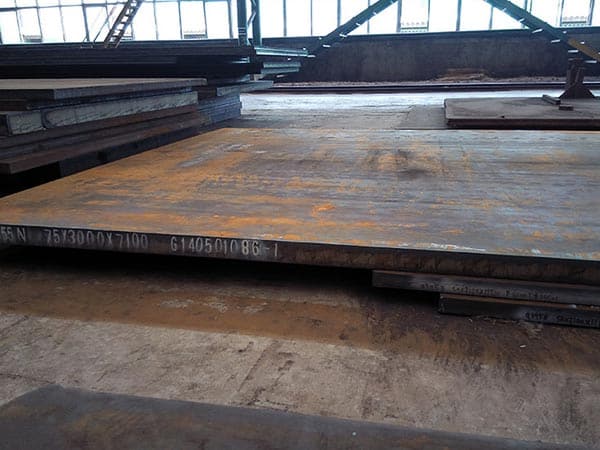
Understanding the Density and Physical Fundamentals of S700MC Steel
When engineers ask what grade is equal to the s700mc steel density, the technical answer is rooted in the fundamental physics of carbon steel. S700MC, a high-yield strength cold-forming steel governed by the EN 10149-2 standard, possesses a density of approximately 7.85 g/cm³ (7850 kg/m³). This value is consistent across almost all low-alloy and carbon steel grades, including standard structural steels like S235JR or S355J2. Therefore, in terms of pure mass per unit volume, S700MC is equal to virtually every other structural steel grade on the market.
However, the real value of S700MC lies not in its physical density, but in its strength-to-weight ratio. While the density remains constant, the yield strength of 700 MPa allows designers to use thinner sections to carry the same load as thicker, heavier sections of lower-grade steel. This effectively reduces the total weight of a structure without compromising its integrity, a concept often referred to in the industry as 'lightweighting'.
Equivalent Grades and International Standards for S700MC
Identifying equivalent grades requires looking beyond density and focusing on mechanical properties and chemical composition. S700MC is a thermomechanically rolled (MC) steel, which distinguishes it from quenched and tempered (QT) steels. Below is a comparison of equivalent or similar grades across different international standards:
| Standard | Equivalent Grade | Key Characteristic |
|---|---|---|
| GB/T 1591 (China) | Q700MC | High-strength low-alloy (HSLA) with similar cold-forming properties. |
| ASTM (USA) | Grade 100 (Type Q or S) | Often compared, though ASTM grades may follow different processing routes. |
| ISO 6930 | HSE 700 | International standard for high yield strength flat products. |
| Proprietary Brands | Strenx 700MC / Domex 700MC | High-end commercial brands that meet or exceed EN 10149-2. |
While these grades share the same 7.85 g/cm³ density, their micro-alloying elements (such as Niobium, Vanadium, and Titanium) are precisely balanced to ensure fine-grain structures, which provide the high strength and excellent toughness characteristic of the S700MC designation.
Mechanical Performance and Chemical Synergy
The performance of S700MC is a result of its low carbon content and thermomechanical rolling process. Unlike traditional steels that rely on high carbon for strength, S700MC maintains a low carbon equivalent (CEV), which significantly enhances its weldability and ductility.
- Yield Strength: Minimum 700 MPa (for thicknesses ≤ 8mm).
- Tensile Strength: 750 to 950 MPa.
- Elongation: Minimum 10-12% (depending on thickness and orientation).
- Impact Toughness: Often specified at -20°C or -40°C to ensure performance in cold climates.
The fine-grain microstructure achieved during the rolling process allows S700MC to resist crack propagation more effectively than standard structural steels. This makes it an ideal candidate for dynamic load environments where fatigue resistance is paramount.
Advanced Processing: Welding, Bending, and Cutting
Processing S700MC requires an understanding of its metallurgical state. Because it is a thermomechanically rolled steel, excessive heat input can potentially soften the heat-affected zone (HAZ). However, its low alloy content makes it more forgiving than many other high-strength steels.
Welding Considerations: S700MC can be welded using all conventional methods (MAG, MMA, TIG, Laser). To maintain the 700 MPa yield strength in the joint, it is crucial to use matching consumables and control the cooling rate (t8/5 time). Preheating is generally not required for thinner sections due to the low carbon equivalent, which reduces the risk of cold cracking.
Cold Forming and Bending: Despite its high strength, S700MC is designed for cold forming. It features excellent bendability, provided the minimum inside bend radius is respected. Typically, for a 90-degree bend, a radius of 1.5 to 2.0 times the material thickness is recommended. This allows for the fabrication of complex shapes like U-beams and C-channels without surface cracking.
Environmental Adaptability and Long-term Durability
S700MC exhibits standard atmospheric corrosion resistance similar to other carbon steels. However, its high-strength nature means that any loss of cross-section due to rust can have a more significant impact on the structural safety factor compared to thicker, lower-grade plates. Therefore, protective measures such as hot-dip galvanizing, painting, or powder coating are highly recommended for outdoor applications.
In terms of temperature adaptability, S700MC maintains its mechanical integrity across a wide range. Its low-temperature toughness ensures that it does not become brittle in sub-zero environments, which is critical for transport machinery operating in northern latitudes. Conversely, at elevated temperatures (above 400°C), the strength begins to decline more rapidly than in heat-resistant alloys, so it is primarily intended for ambient temperature structural use.
Expanding Industrial Applications
The shift toward S700MC is driven by the global demand for energy efficiency and payload optimization. By utilizing a steel with the same density as S355 but twice the strength, manufacturers can reduce the weight of components by up to 30-40%.
- Automotive and Transport: Chassis frames, cross members, and side protection beams for trucks and trailers.
- Lifting Equipment: Telescopic cranes, mobile crane booms, and aerial work platforms where weight reduction at height is critical.
- Agricultural Machinery: Heavy-duty plows, trailers, and harvesting equipment that require high durability without excessive weight.
- Waste Management: Refuse collection vehicles and containers that undergo frequent stress cycles.
By integrating S700MC into these designs, companies not only save on material costs but also reduce fuel consumption and CO2 emissions during the lifecycle of the vehicle or machine. The density might be the same as any other steel, but the engineering possibilities are significantly expanded.
Conclusion on Material Selection
When evaluating what grade is equal to the s700mc steel density, it is essential to look at the broader picture of material efficiency. While S235, S355, and S700MC all share the 7.85 g/cm³ constant, S700MC stands alone in its ability to deliver high-performance structural solutions with minimal mass. Choosing S700MC or its equivalents like Q700MC or Strenx 700 is a strategic decision to prioritize strength, weldability, and weight optimization in modern engineering projects.
Leave a message