
S700MC oiled steel coil plate prices continue to be weak and downward
Comprehensive analysis of S700MC oiled steel coil price trends, mechanical properties, welding performance, and industrial applications amidst a weakening market.
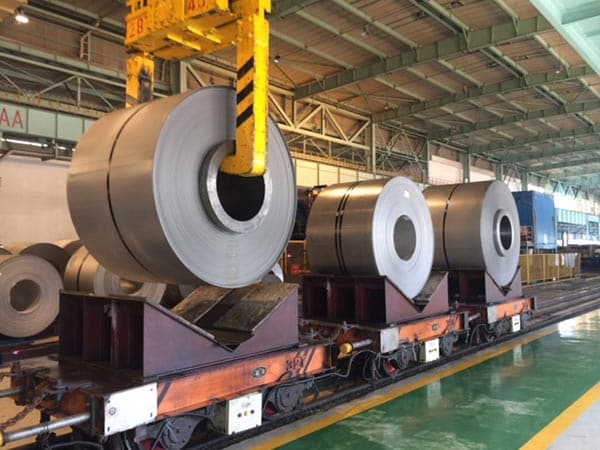
Current Dynamics of S700MC Oiled Steel Coil Prices
The global steel market is currently navigating a complex landscape where S700MC oiled steel coil plate prices continue to be weak and downward. This trend is not merely a reflection of cyclical fluctuations but is deeply rooted in the interplay between macroeconomic pressures, shifting industrial demand, and optimized production capacities. As a high-strength low-alloy (HSLA) steel grade, S700MC is highly sensitive to the performance of the heavy machinery and automotive sectors. When these downstream industries face cooling investment or inventory adjustments, the immediate impact is felt in the pricing structures of premium grades like S700MC.
Market observers note that the abundance of supply from major steel mills, combined with relatively high stock levels at service centers, has created a buyer-led environment. The 'oiled' finish, which provides critical short-term corrosion protection during transit and storage, remains a preferred specification for manufacturers who prioritize surface integrity. However, even this value-added feature has not fully insulated the product from the broader downward price pressure seen across the hot-rolled high-strength spectrum.
Understanding S700MC: Chemical Composition and Strengthening Mechanisms
S700MC is governed by the EN 10149-2 standard, designed for cold-forming applications where high yield strength is paramount. The '700' denotes a minimum yield strength of 700 MPa, while 'MC' indicates a thermomechanically rolled (M) steel suitable for cold forming (C). The secret to its performance lies in its precise chemical makeup, which balances strength, ductility, and weldability without the heavy alloying costs associated with traditional quenched and tempered steels.
| Element | Max Content (%) | Role in S700MC |
|---|---|---|
| Carbon (C) | 0.12 | Ensures strength while maintaining excellent weldability. |
| Manganese (Mn) | 2.10 | Provides solid solution strengthening and improves hardenability. |
| Silicon (Si) | 0.60 | Deoxidizer and contributes to strength. |
| Niobium (Nb) | 0.09 | Grain refinement through carbonitride precipitation. |
| Titanium (Ti) | 0.22 | Fixes nitrogen and contributes to fine-grained microstructure. |
By utilizing Thermo-Mechanical Controlled Processing (TMCP), manufacturers achieve an extremely fine grain structure. This grain refinement is the primary reason why S700MC can offer such high strength while remaining remarkably thin and light, facilitating the 'lightweighting' trend in modern engineering.
Exceptional Mechanical Properties and Engineering Advantages
The primary appeal of S700MC lies in its weight-saving potential. Compared to conventional structural steels like S355, using S700MC can reduce the weight of structural components by up to 30-40% without compromising load-bearing capacity. This is crucial for mobile equipment where every kilogram saved translates into higher payloads or lower fuel consumption.
- Yield Strength: Minimum 700 MPa, providing a robust safety margin for high-stress applications.
- Tensile Strength: Typically ranges between 750 and 950 MPa.
- Elongation: Despite its high strength, it maintains a minimum elongation of 10-12% (depending on thickness), allowing for complex forming.
- Low-Temperature Toughness: Often specified with impact testing at -20°C or -40°C, ensuring reliability in harsh climates.
The oiled surface treatment plays a vital role here. By applying a thin layer of protective oil immediately after the pickling or rolling process, the steel is shielded from oxidation (rust). This is particularly important for S700MC, as any surface pitting could act as a stress concentrator, potentially leading to fatigue failure in high-strength applications.
Processability: Cold Forming and Bending Precision
One of the most significant advantages of S700MC is its superior cold-forming capability. Engineers can design intricate shapes with tight bending radii that would be impossible with lower-grade steels of similar thickness. However, the high yield strength means that 'springback' is more pronounced than with softer steels. Fabricators must account for this by over-bending or using advanced CNC press brakes with integrated angle measurement systems.
When bending S700MC, it is recommended to maintain a minimum bending radius (r) relative to the plate thickness (t). For S700MC, a typical ratio is 2.0t for transverse bending and 2.5t for longitudinal bending. Using the oiled version of the coil plate also assists in the forming process, as the oil acts as a mild lubricant, reducing friction between the sheet and the die, which minimizes surface scratching and tool wear.
Welding Performance and Heat Affected Zone (HAZ) Management
S700MC is designed for excellent weldability. Due to its low carbon equivalent (Cev), it can be welded using all standard methods, including MAG, TIG, and laser welding. However, because the strength of S700MC is derived from the TMCP process rather than high alloy content, excessive heat input during welding can lead to grain growth in the Heat Affected Zone (HAZ), resulting in a localized loss of strength.
To maintain the integrity of the 700 MPa yield strength, it is critical to control the cooling time (t8/5). Low heat input welding techniques and multi-pass welding are often preferred over high-heat single-pass methods. The oiled surface must be thoroughly cleaned before welding to prevent hydrogen-induced cracking or porosity, as the oil can decompose into hydrogen and carbon under the intense heat of the arc.
Strategic Applications Across Key Industries
The demand for S700MC, though currently soft in terms of pricing, remains fundamentally strong in sectors that prioritize efficiency and durability. The downward price trend offers a strategic window for companies to upgrade their material specifications at a lower cost basis.
Automotive and Transportation: S700MC is widely used for truck chassis, cross members, and side beams. The high strength-to-weight ratio allows for thinner gauges, which reduces the vehicle's curb weight and increases fuel efficiency.
Lifting and Excavation: Crane booms, telescopic arms, and support structures for heavy machinery rely on S700MC to handle immense loads while remaining light enough for mobile operation. The material's fatigue resistance is a key factor in the longevity of these components.
Renewable Energy: In the construction of wind turbine components and solar tracking systems, S700MC provides the necessary rigidity to withstand high wind loads while minimizing the amount of steel required, thus lowering the overall project footprint.
Environmental Adaptability and Sustainability
Beyond its mechanical prowess, S700MC contributes significantly to environmental sustainability. The reduction in material volume required for a given structure directly lowers the carbon footprint associated with steel production, transportation, and eventual recycling. Furthermore, the oiled finish is often chosen over more permanent coatings like galvanizing for parts that will be painted or further processed, as it is easier to remove and produces less chemical waste during the pre-treatment phase.
In regions with high humidity or during long-distance maritime shipping, the oiled protection ensures that the S700MC plates arrive at the fabrication site in pristine condition, ready for immediate use. This reduces the need for costly and energy-intensive rust removal processes like sandblasting.
Navigating the Market: Procurement Strategies
Given that S700MC oiled steel coil plate prices continue to be weak and downward, procurement departments should look beyond the sticker price. This market phase allows for the negotiation of better terms on high-quality coils from top-tier mills. It is an opportune time to establish long-term supply agreements or to transition designs from lower-strength steels to S700MC, effectively 'future-proofing' products against rising energy costs and stricter emissions regulations.
Technical buyers should focus on verifying the mill test certificates (MTCs), ensuring that the actual yield and tensile values are well within the upper range of the specification. In a weak market, the quality spread between different producers can vary, and securing premium-grade S700MC at current prices represents a significant competitive advantage for manufacturers of high-performance equipment.
The current price weakness in S700MC oiled steel coil plates is a temporary market correction in a long-term trajectory toward higher-performance materials. By understanding the deep technical attributes of this steel—from its micro-alloyed grain structure to its precise forming requirements—industry players can make informed decisions that leverage the current pricing environment to enhance their engineering output and operational efficiency.
Leave a message