
What is the BBNSteel s700mc steel equivalent in india application
Explore the Indian equivalent of S700MC steel, focusing on IS 2062 E700, its mechanical properties, chemical composition, and diverse industrial applications in the Indian market.
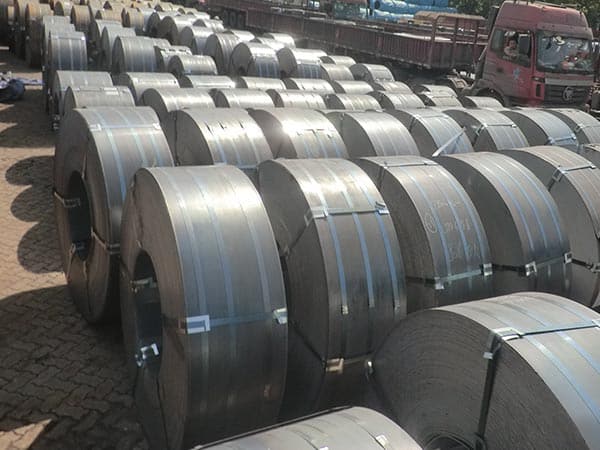
Understanding the Global Significance of S700MC Structural Steel
S700MC is a high-strength, hot-rolled, structural steel produced through thermo-mechanical rolling processes. Defined by the European standard EN 10149-2, this material is engineered for cold forming and offers a minimum yield strength of 700 MPa. In the context of global engineering, S700MC represents a pinnacle of weight-to-strength efficiency, allowing designers to reduce the thickness of structural components without compromising load-bearing capacity. As Indian industries modernize, particularly in the sectors of heavy transportation, lifting equipment, and infrastructure, the demand for S700MC and its domestic equivalents has surged. This material is not merely a commodity but a strategic asset for manufacturers aiming to enhance fuel efficiency and structural integrity.
The Primary Indian Equivalent: IS 2062 Grade E700
In India, the Bureau of Indian Standards (BIS) governs the specifications for structural steel under the IS 2062 framework. For engineers seeking a direct equivalent to S700MC, IS 2062 Grade E700 is the most relevant benchmark. While S700MC is specifically a thermo-mechanically rolled product (denoted by the 'MC' suffix), IS 2062 E700 provides comparable mechanical performance in terms of yield and tensile strength. It is important to note that IS 2062 E700 is often supplied in different quality levels, such as Quality C or D, which specify impact testing requirements at low temperatures, mirroring the toughness characteristics of the European S700MC grade.
| Property | EN 10149-2 S700MC | IS 2062 E700 (Equivalent) |
|---|---|---|
| Yield Strength (min MPa) | 700 | 700 |
| Tensile Strength (MPa) | 750 - 950 | 750 - 950 |
| Elongation (min %) | 10 - 12 (depending on thickness) | 12 |
| Impact Energy (Charpy V) | 40J at -20°C (Optional) | 25J to 40J (Grade dependent) |
Chemical Composition: The Science of Micro-Alloying
The exceptional performance of S700MC and its Indian counterparts like IS 2062 E700 stems from a sophisticated chemical profile. Unlike traditional carbon steels, these high-strength low-alloy (HSLA) steels utilize micro-alloying elements such as Niobium (Nb), Vanadium (V), and Titanium (Ti). These elements facilitate grain refinement during the thermo-mechanical rolling process, which simultaneously increases strength and improves toughness. The carbon content is kept strictly low, usually below 0.12%, which is critical for ensuring excellent weldability and preventing the formation of brittle phases in the heat-affected zone (HAZ).
- Carbon (C): Low levels ensure superior weldability and ductility.
- Manganese (Mn): Enhances hardenability and solid solution strengthening.
- Silicon (Si): Acts as a deoxidizer and contributes to strength.
- Micro-alloys (Nb, V, Ti): Essential for grain size control and precipitation hardening.
Mechanical Properties and Structural Advantages
The most compelling reason for choosing S700MC or IS 2062 E700 in Indian applications is the drastic reduction in dead weight. With a yield strength of 700 MPa, this steel is more than twice as strong as standard S355 or IS 2062 E250 steel. This allows for a reduction in plate thickness by up to 40-50% in certain designs. For the Indian logistics sector, where axle load regulations are stringent, using S700MC in trailer chassis means higher payloads and lower fuel consumption. The high tensile strength (750-950 MPa) ensures that the material can withstand extreme dynamic loads without catastrophic failure.
Processing Performance: Cold Forming and Welding
A common concern for Indian fabricators is whether high-strength steel can be processed using existing machinery. S700MC is specifically designed for cold forming. Despite its high strength, it maintains excellent bendability. For a plate thickness (t), the minimum recommended bending radius is typically 2.0t to 2.5t, depending on the orientation relative to the rolling direction. This makes it ideal for manufacturing complex profiles such as U-beams and C-channels used in vehicle frames.
Welding is another critical area where S700MC excels. Due to its low Carbon Equivalent Value (CEV), it can be welded using standard methods like MIG/MAG, MMA, or submerged arc welding. Preheating is generally not required for thinner sections, which streamlines the production process in Indian workshops. However, it is vital to control the heat input to avoid excessive grain growth in the HAZ, which could lead to a localized reduction in strength.
Key Applications in the Indian Industrial Landscape
The adoption of S700MC equivalent steels in India is visible across several high-growth sectors. The push for modern infrastructure and efficient logistics has made these materials indispensable.
- Heavy Commercial Vehicles (HCV): Manufacturers of truck chassis, trailers, and tippers use S700MC to build lighter, more durable frames. This is essential for meeting the BS-VI emission norms by reducing vehicle weight.
- Mobile Cranes and Lifting Equipment: The boom sections of telescopic cranes require the high strength-to-weight ratio provided by S700MC to achieve greater reach and lifting capacity.
- Construction and Mining: Excavator buckets, dump bodies, and support structures in mining equipment benefit from the high yield strength and abrasion resistance of HSLA steels.
- Agricultural Machinery: High-end tractors and harvesters utilize these grades for structural components that must endure harsh field conditions while remaining light enough to prevent soil compaction.
Environmental Adaptability and Longevity
India's diverse climate, ranging from humid coastal regions to the dry heat of the interior, requires materials with reliable environmental adaptability. S700MC equivalents offer good atmospheric corrosion resistance compared to standard carbon steels, although protective coatings are still recommended for extreme environments. The low-temperature toughness of these steels is also a significant factor for equipment used in the northern mountainous regions, where sub-zero temperatures can induce brittleness in inferior steel grades. By ensuring high impact energy absorption, S700MC provides a safety margin against sudden fractures.
Economic Impact: Cost-Benefit Analysis for Indian Projects
While the per-ton price of S700MC or IS 2062 E700 is higher than that of mild steel, the total project cost often decreases. The reduction in material volume leads to lower shipping costs, fewer welding consumables, and reduced labor hours for fabrication. Furthermore, the long-term operational savings for the end-user—primarily through increased payload and reduced maintenance—make S700MC a highly economical choice for the Indian market. As BBNSteel continues to supply these high-performance grades, the Indian engineering sector is well-positioned to transition toward more sustainable and efficient structural designs.
Leave a message