
What is the difference between s700mc hardness sheet & plate steel?
A comprehensive guide comparing S700MC sheet and plate steel, focusing on hardness, mechanical properties, manufacturing processes, and industrial applications for high-strength engineering.
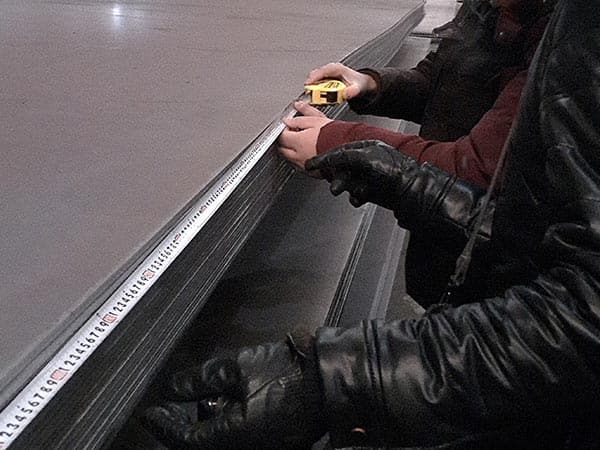
The Fundamentals of S700MC High-Strength Steel
S700MC is a high-strength low-alloy (HSLA) structural steel specifically designed for cold forming. The 'S' stands for structural steel, '700' denotes a minimum yield strength of 700 MPa, and 'MC' indicates that the material is thermomechanically rolled (M) and suitable for cold forming (C). This steel grade is governed by the European standard EN 10149-2. In the modern industrial landscape, the choice between S700MC sheet and plate often dictates the efficiency, weight, and durability of the final product.
While both sheet and plate variants share the same chemical DNA, their physical characteristics, surface finishes, and dimensional tolerances vary significantly due to the rolling processes employed. Understanding these nuances is critical for engineers who must balance weight reduction with structural integrity. S700MC is prized for its ability to provide high load-bearing capacity while maintaining a relatively low profile, making it a staple in the production of mobile cranes, truck chassis, and agricultural equipment.
Hardness Profile: S700MC Sheet vs. Plate
When discussing the hardness of S700MC, it is important to clarify that this steel is primarily classified by its yield strength rather than its Brinell or Rockwell hardness. However, hardness is a natural byproduct of the grain refinement achieved through thermomechanical rolling. Typically, S700MC exhibits a hardness range between 210 and 250 HBW (Brinell Hardness).
The difference in hardness between a 'sheet' (usually defined as thickness under 8mm or 10mm) and a 'plate' (thicker sections) often stems from the cooling rate during the thermomechanical control process (TMCP). Sheets, being thinner, undergo more rapid and uniform cooling, which can lead to a slightly more homogenous grain structure. Plates, due to their thickness, may exhibit a very slight gradient in hardness from the surface to the core, although modern TMCP technology minimizes this variance. In practical application, the hardness of S700MC provides excellent resistance to surface deformation compared to standard S355 grades, though it is not a 'wear-resistant' steel like the AR400 or AR500 series.
Mechanical Properties and Performance Metrics
The mechanical prowess of S700MC is what sets it apart from conventional structural steels. The thermomechanical rolling process involves precise temperature control and deformation during rolling, which creates a fine-grained microstructure without the need for expensive alloying elements or subsequent heat treatment.
| Property | Value (Minimum/Range) |
|---|---|
| Yield Strength (ReH) | 700 MPa (min) |
| Tensile Strength (Rm) | 750 - 950 MPa |
| Elongation (A5) | 10% - 12% (depending on thickness) |
| Hardness (Typical) | 210 - 250 HBW |
| Bending Radius (90°) | 1.0t to 1.5t (t = thickness) |
These properties ensure that S700MC can withstand extreme stress without permanent deformation. The high yield-to-tensile ratio is a hallmark of this grade, allowing for the design of lighter components that do not sacrifice safety. For instance, replacing S355 with S700MC can result in a weight reduction of up to 30-40% in certain structural applications.
Chemical Composition and Grain Refinement
The secret to S700MC’s performance lies in its low carbon content and the addition of micro-alloying elements like Niobium (Nb), Vanadium (V), and Titanium (Ti). These elements promote grain refinement and precipitation hardening during the rolling process.
| Element | Maximum Percentage (%) |
|---|---|
| Carbon (C) | 0.12 |
| Manganese (Mn) | 2.10 |
| Silicon (Si) | 0.50 |
| Phosphorus (P) | 0.025 |
| Sulfur (S) | 0.015 |
| Aluminium (Al) | 0.015 (min) |
The low carbon equivalent (CEV) is particularly beneficial for weldability. Unlike traditional high-strength steels that require extensive preheating, S700MC can often be welded at room temperature, reducing fabrication time and costs. The fine grain structure also contributes to its superior impact toughness, even at low temperatures down to -20°C or -40°C, depending on the specific sub-grade (e.g., S700MC vs. S700QL).
Manufacturing Distinctions: Sheet vs. Plate
The distinction between S700MC sheet and plate is often a matter of the production line. S700MC 'sheet' is typically produced on a continuous hot strip mill and is often supplied in coils or decoiled into specific lengths. This process yields excellent surface quality and tighter thickness tolerances. Because it is decoiled, the internal stress profile might differ slightly from 'plate' steel.
S700MC 'plate' (sometimes referred to as heavy plate) may be produced on a quarto mill if the thickness exceeds the capabilities of a strip mill. Plates are generally flatter and available in much larger widths and thicknesses. For S700MC, the thickness usually ranges from 2mm up to 20mm, though some specialized mills can push this further. The choice between the two depends on the scale of the component:
- S700MC Sheet: Preferred for automated laser cutting, high-volume stamping, and cold-formed profiles like C-channels or Z-sections.
- S700MC Plate: Ideal for heavy structural members, large crane booms, and base plates where flatness and thickness are paramount.
Processing and Fabrication Excellence
One of the primary reasons engineers specify S700MC is its exceptional cold-forming capability. Despite its high hardness and strength, it can be bent to tight radii without cracking. This is achieved through the ultra-clean steel-making process which limits inclusions that could act as stress concentrators.
Bending and Folding: When bending S700MC, it is vital to account for springback, which is more pronounced than in lower-strength steels. Using a larger die opening and ensuring the bending line is perpendicular to the rolling direction can optimize results.Welding: S700MC is compatible with all standard welding processes, including GMAW (MIG/MAG), GTAW (TIG), and submerged arc welding. Due to the TMCP nature of the steel, it is recommended to keep the heat input low to avoid softening the heat-affected zone (HAZ).Laser Cutting: The consistent chemical composition and clean surface of S700MC make it an ideal candidate for high-speed laser cutting. It produces clean edges with minimal dross, reducing the need for secondary finishing.
Environmental Adaptability and Longevity
In harsh environments, S700MC performs admirably. While it is not a stainless steel, its fine-grained structure provides a slightly better resistance to atmospheric corrosion than standard carbon steels. However, for long-term exposure, protective coatings such as galvanizing or high-performance painting are recommended.
The steel's fatigue resistance is another critical factor. In dynamic applications like truck trailers or lifting arms, the material must withstand millions of stress cycles. S700MC’s high yield strength directly correlates to a higher fatigue limit, allowing structures to last longer under cyclic loading. This durability is a key driver for its use in the transportation sector, where equipment downtime is costly.
Diverse Industrial Applications
The versatility of S700MC allows it to bridge the gap between structural engineering and heavy-duty machinery. Its high strength-to-weight ratio is utilized in various sectors:
- Automotive and Transport: Chassis frames, cross members, and bumper reinforcements. By using S700MC, manufacturers can reduce vehicle weight, thereby increasing fuel efficiency and payload capacity.
- Lifting and Handling: Telescopic booms for mobile cranes, aerial work platforms, and forklift components. The material allows for longer reach and higher lift capacities.
- Agriculture: Plow frames, trailer bodies, and harvesting equipment where high strength is needed to resist the rigors of soil interaction and heavy loads.
- Construction: Support structures for scaffolding, bridge components, and heavy-duty piling equipment.
Selecting S700MC involves more than just looking at a datasheet; it requires an understanding of how the material will behave during fabrication and throughout its service life. Whether choosing the precision of a sheet or the robustness of a plate, S700MC remains a premier choice for modern engineering challenges that demand the highest levels of performance and reliability.
Leave a message