
EU demand for S460MC automobile structure steel coil will increase this year
Analysis of the surging demand for S460MC automobile structure steel in the EU market, covering its mechanical properties, processing benefits, and role in lightweighting.
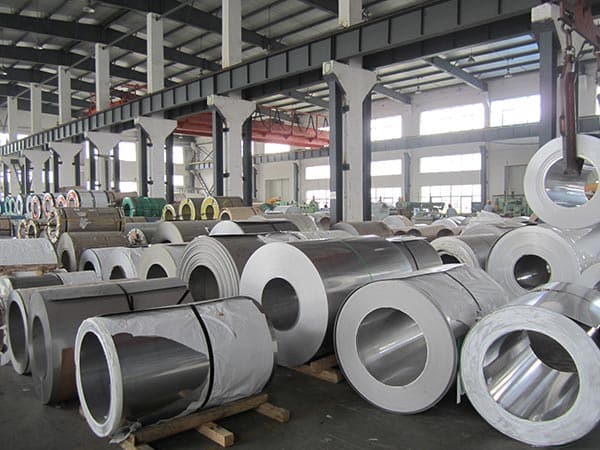
The Strategic Shift Toward S460MC in European Automotive Engineering
The European automotive landscape is undergoing a radical transformation. As manufacturers pivot toward more efficient internal combustion engines and accelerate the rollout of electric vehicles (EVs), the selection of structural materials has become a critical competitive factor. S460MC steel, a high-yield-strength cold-forming steel governed by the EN 10149-2 standard, is emerging as a cornerstone of this shift. This year, the demand for S460MC steel coils is projected to hit new highs across the EU, driven by a convergence of regulatory pressure for lower emissions and the technical necessity for lighter, stronger vehicle architectures.
Engineers are increasingly moving away from traditional S355MC grades in favor of S460MC because it offers a superior strength-to-weight ratio without the prohibitive costs or processing difficulties associated with ultra-high-strength steels (UHSS). This balance makes it ideal for structural components that must endure high stress while minimizing the overall mass of the vehicle.
Understanding the Material Composition and Thermomechanical Processing
The performance of S460MC is not accidental; it is the result of precise thermomechanical rolling processes. Unlike traditional normalized steels, S460MC achieves its fine-grained microstructure through controlled rolling at specific temperatures, followed by rapid cooling. This process refines the grain size, which simultaneously improves both strength and toughness.
The chemical composition is meticulously balanced to ensure weldability and formability. By keeping carbon levels low and utilizing micro-alloying elements like niobium (Nb), vanadium (V), and titanium (Ti), the steel attains its 460 MPa minimum yield strength. These elements form fine precipitates that pin grain boundaries, preventing grain growth during welding and ensuring the heat-affected zone (HAZ) retains its structural integrity.
| Chemical Element | Maximum Percentage (%) |
|---|---|
| Carbon (C) | 0.12 |
| Manganese (Mn) | 1.60 |
| Silicon (Si) | 0.50 |
| Phosphorus (P) | 0.025 |
| Sulfur (S) | 0.015 |
| Aluminium (Al) | 0.015 (min) |
Mechanical Properties: Why 460 MPa is the Modern Benchmark
The primary appeal of S460MC lies in its mechanical profile. With a minimum yield strength of 460 MPa, it provides a significant upgrade over standard structural steels. This allows for the use of thinner gauges in components like truck chassis, cross members, and longitudinal beams without sacrificing the load-bearing capacity or safety margins of the vehicle.
- Yield Strength: Minimum 460 MPa, providing robust resistance to permanent deformation.
- Tensile Strength: Ranging between 520 and 670 MPa, ensuring the material can withstand extreme tension before failure.
- Elongation: Excellent ductility for a high-strength steel, typically around 14% to 17% depending on thickness, allowing for complex cold-forming operations.
- Impact Toughness: Maintains reliability even in low-temperature environments, a crucial factor for vehicles operating in Northern Europe.
Exceptional Cold Forming and Fabrication Capabilities
One of the reasons EU manufacturers are favoring S460MC is its ease of integration into existing production lines. Despite its high strength, S460MC exhibits remarkable cold-forming properties. It can be bent, flanged, and cold-pressed into intricate shapes that would typically cause cracking in lower-quality high-strength steels.
Bending Radius: For thicknesses less than 3mm, the recommended internal bending radius is extremely tight, often 0.5 to 1.0 times the material thickness. This allows for compact designs in tight engine bays or chassis configurations. Weldability: Because of its low carbon equivalent (CEV), S460MC is compatible with all standard welding methods, including MAG, laser, and resistance welding. This reduces the need for pre-heating, thereby shortening cycle times and lowering energy consumption in the factory.
The Role of S460MC in the Electric Vehicle (EV) Revolution
The weight of battery packs in EVs presents a unique engineering challenge. To maintain range and performance, every other component in the vehicle must be as light as possible. S460MC is being utilized extensively in battery enclosures and support structures. Its ability to absorb energy during a collision makes it a preferred choice for safety-critical parts that protect the battery cells.
Furthermore, the environmental adaptability of S460MC is significant. As the EU pushes for a circular economy, the high recyclability of HSLA (High Strength Low Alloy) steels like S460MC aligns with corporate sustainability goals. The reduction in material volume required for a vehicle directly translates to lower CO2 emissions during both the steel production phase and the vehicle's operational lifespan.
Comparative Analysis: S460MC vs. S355MC and S500MC
Choosing the right grade involves balancing performance with cost. While S355MC is ubiquitous, it often requires thicker sections to meet safety standards, adding unnecessary weight. Conversely, while S500MC or S700MC offer even higher strength, they require more sophisticated tooling and have tighter limits on formability.
| Grade | Yield Strength (min) | Formability | Primary Application |
|---|---|---|---|
| S355MC | 355 MPa | Excellent | General structural parts, brackets |
| S460MC | 460 MPa | High | Chassis frames, longitudinal beams |
| S500MC | 500 MPa | Moderate | Heavy-duty truck components |
Market Drivers for Increased Demand in the EU
Several factors are converging to boost S460MC consumption this year. First, the recovery of the European commercial vehicle market is driving demand for truck chassis materials. Second, the Euro 7 emission standards are forcing manufacturers to look for every possible gram of weight saving. Third, supply chain stabilization in the EU has allowed manufacturers to commit to higher-specification materials that were previously difficult to source consistently.
Steel service centers across Germany, Italy, and Poland are reporting an uptick in inquiries for S460MC in coil form, as automated decoiling and laser-cutting systems become the norm. The precision of these modern systems works best with the consistent flatness and surface quality of S460MC coils, leading to less scrap and higher productivity.
Processing Performance and Tool Life
From a manufacturing perspective, S460MC offers a "sweet spot" for tool wear. While harder than mild steel, it does not exhibit the extreme abrasiveness of some ultra-high-strength grades. This means that stamping dies and cutting tools maintain their edge for longer periods, reducing maintenance downtime. For high-volume automotive production, this reliability is just as important as the material's mechanical properties.
Laser cutting S460MC also yields exceptional results. The clean edges and minimal heat distortion allow for parts to move directly from the cutting table to the welding station without the need for secondary grinding or edge preparation. This streamlined workflow is essential for EU manufacturers looking to offset high labor costs through efficiency.
Future Outlook and Industrial Expansion
The trend toward S460MC is not limited to passenger cars and trucks. We are seeing an expansion into agricultural machinery, trailers, and even specialized construction equipment. Any industry where mobile equipment must carry a payload while minimizing its own weight is a candidate for S460MC. The EU's focus on "Green Steel" initiatives will likely further enhance the appeal of this grade, as producers look to offer S460MC with a lower carbon footprint through hydrogen-based reduction or electric arc furnace (EAF) production methods.
As we move through the year, the integration of S460MC into more diverse vehicle platforms will solidify its position as a primary structural material. Its unique combination of high strength, excellent formability, and superior weldability ensures that it remains the material of choice for an industry focused on efficiency, safety, and sustainability.
Leave a message