
How is the performance of S700MC high yield strength auto steel
A comprehensive analysis of S700MC high yield strength steel, covering its chemical composition, mechanical properties, processing characteristics, and industrial applications for lightweight automotive design.
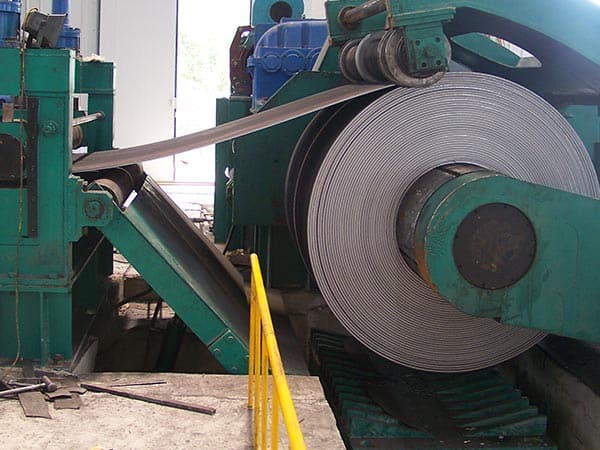
The Evolution of S700MC in Modern Structural Engineering
S700MC stands as a pinnacle of high-strength low-alloy (HSLA) steel technology, specifically engineered to meet the rigorous demands of the automotive and heavy machinery industries. Defined by the European standard EN 10149-2, this thermomechanically rolled steel offers a unique combination of extreme yield strength and excellent cold-forming properties. The "S" denotes structural steel, "700" signifies its minimum yield strength of 700 MPa, and "MC" indicates its thermomechanically rolled (M) and cold-forming (C) suitability. Unlike traditional high-strength steels that achieve their properties through complex heat treatments, S700MC relies on a precise rolling process and micro-alloying strategy, making it a cost-effective and high-performance solution for modern lightweighting initiatives.
Metallurgical Foundation: Micro-alloying and TMCP Process
The exceptional performance of S700MC is rooted in its sophisticated metallurgical design. By utilizing Thermomechanical Control Process (TMCP), manufacturers can refine the grain structure of the steel to a degree that is impossible with conventional hot rolling. This process involves controlled deformation at specific temperature ranges followed by accelerated cooling. The result is a fine-grained ferrite-bainite microstructure that provides both strength and toughness.
Chemical composition plays a critical role in this structural refinement. S700MC maintains a very low carbon content (typically ≤ 0.12%), which is the primary reason for its superior weldability. To compensate for the low carbon and reach the 700 MPa threshold, micro-alloying elements such as Niobium (Nb), Vanadium (V), and Titanium (Ti) are added. These elements form fine precipitates that pin grain boundaries during the rolling process, preventing grain growth and enhancing the material's yield strength through precipitation hardening and grain size refinement.
| Element | C (max) | Mn (max) | Si (max) | P (max) | S (max) | Al (min) | Nb+V+Ti (max) |
|---|---|---|---|---|---|---|---|
| Content (%) | 0.12 | 2.10 | 0.50 | 0.025 | 0.015 | 0.015 | 0.22 |
Mechanical Properties: Balancing Strength and Ductility
The most striking feature of S700MC is its high yield-to-tensile ratio. While it offers a minimum yield strength of 700 MPa, its tensile strength typically ranges between 750 and 950 MPa. This narrow gap indicates a material that is highly optimized for load-bearing applications where deformation must be minimized. Despite its high strength, S700MC retains a surprising amount of ductility, with elongation values (A5) often exceeding 12% for thicknesses less than 3mm and higher for thicker plates.
Impact toughness is another critical metric, especially for vehicles operating in cold climates. S700MC is often tested at -20°C or -40°C to ensure it does not undergo brittle fracture. This low-temperature resilience is vital for safety-critical components like truck chassis and crane booms, where sudden impact loads are common. The fine-grained structure inherent to the MC process ensures that the ductile-to-brittle transition temperature remains well below standard operating conditions.
| Property | Yield Strength (ReH MPa) | Tensile Strength (Rm MPa) | Elongation (A5 %) | Min. Bending Radius (90°) |
|---|---|---|---|---|
| Value | ≥ 700 | 750 - 950 | ≥ 12 | 1.5t - 2.0t |
Superior Cold Forming and Fabrication Performance
Fabricators often favor S700MC because it bridges the gap between ultra-high strength and ease of processing. Its cold-forming capabilities are exceptional for a 700 MPa grade. It can be bent to tight radii without cracking, provided the bending axis is perpendicular to the rolling direction. For a 90-degree bend, a typical minimum radius of 1.5 to 2 times the material thickness (t) is achievable. This allows for the design of complex, space-saving structural profiles that would be impossible with more brittle high-strength steels.
Laser and plasma cutting are highly efficient with S700MC. Due to its low alloy content and clean internal structure (low sulfur and phosphorus), the cut edges are smooth and require minimal post-processing. This cleanliness also translates to a reduced risk of edge cracking during subsequent forming operations. Engineers must account for springback, which is more pronounced in S700MC than in S355 or S235 steels. Advanced CNC bending machines with real-time angle measurement are typically used to compensate for this elastic recovery.
Weldability and Heat-Affected Zone (HAZ) Integrity
Welding S700MC is straightforward due to its low Carbon Equivalent (CEV). It can be welded using all standard methods, including MAG, MIG, and Laser welding. Unlike traditional quenched and tempered steels, S700MC does not generally require preheating for thicknesses under 10mm, which significantly reduces production time and energy costs.
However, the thermomechanical treatment that gives the steel its strength is sensitive to excessive heat. If the heat input during welding is too high, the Heat-Affected Zone (HAZ) may experience grain coarsening or softening, leading to a localized reduction in yield strength. To maintain the integrity of the joint, it is recommended to use low heat input welding techniques and multi-pass welding with controlled interpass temperatures. The selection of filler metals is equally important; usually, wires with matching or slightly over-matching strength are used to ensure the weld joint is not the weakest link in the structure.
Environmental Adaptability and Sustainability
From an environmental perspective, S700MC is a key enabler of the "Green Steel" movement. Its primary contribution is through lightweighting. By replacing traditional S355 steel with S700MC, engineers can reduce the weight of a structural component by up to 30-40% without sacrificing load-bearing capacity. In the automotive sector, this weight reduction directly translates to lower fuel consumption and reduced CO2 emissions. For electric vehicles, the weight savings help extend battery range, a critical factor in consumer adoption.
The material also exhibits good fatigue resistance. In dynamic loading environments, such as the oscillating stresses experienced by a trailer frame on a highway, S700MC performs exceptionally well. Its fine grain structure hinders the initiation and propagation of fatigue cracks, leading to a longer service life for the vehicle. While S700MC is not inherently corrosion-resistant like stainless steel, its smooth surface finish provides an excellent substrate for modern zinc-rich primers and powder coatings, ensuring long-term durability in corrosive environments.
Strategic Applications Across Industries
The versatility of S700MC has led to its widespread adoption across several high-stakes industries:
- Automotive Industry: Used for chassis frames, cross members, bumper brackets, and longitudinal beams. It provides the necessary strength for crash safety while keeping the vehicle light.
- Lifting and Transportation: Mobile cranes, truck-mounted cranes, and aerial work platforms utilize S700MC for telescopic booms. The high strength-to-weight ratio allows for longer reaches and higher lifting capacities.
- Heavy Duty Trailers: The side walls and main beams of trailers made from S700MC allow for higher payloads, directly increasing the profitability of logistics operations.
- Agricultural Equipment: Used in the frames of large-scale harvesters and plows where durability and weight are competing requirements.
Optimizing Design for S700MC Utilization
To fully realize the benefits of S700MC, designers must shift their mindset from traditional thick-walled structures to thin-walled, high-efficiency profiles. Utilizing finite element analysis (FEA), engineers can identify high-stress areas and strategically use S700MC where its strength is most needed. This targeted approach not only saves material costs but also simplifies the assembly process. Furthermore, the use of S700MC allows for the consolidation of parts; instead of welding multiple S355 components together, a single, complex S700MC cold-formed part can often do the job, reducing the number of weld seams and potential failure points.
Economic considerations also favor S700MC. While the price per ton is higher than standard structural steel, the reduction in total material weight, lower welding costs (due to lack of preheating), and increased performance of the final product often result in a lower total cost of ownership. For manufacturers looking to stay competitive in a market that increasingly values efficiency and sustainability, S700MC represents a strategic material choice that delivers on both performance and profitability.
Leave a message