
What is en 10025 S500MC high yield strength alloy steel
A comprehensive expert guide to S500MC high-yield steel, exploring its chemical composition, mechanical properties, welding performance, and industrial applications.
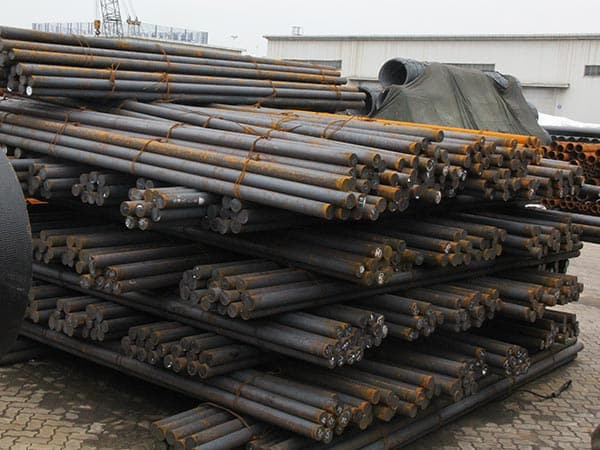
Understanding the Essence of S500MC High Yield Strength Steel
S500MC is a high-strength, low-alloy (HSLA) steel grade that has become a cornerstone in modern structural engineering and heavy-duty manufacturing. While frequently discussed alongside the EN 10025 series, it is technically governed by the EN 10149-2 standard, which specifies hot-rolled flat products made of high yield strength steels for cold forming. The designation S500MC provides a clear map of its capabilities: 'S' stands for structural steel, '500' represents a minimum yield strength of 500 MPa, 'M' indicates its thermomechanically rolled condition, and 'C' signifies its suitability for cold forming processes.
The primary appeal of S500MC lies in its ability to offer exceptional strength without the weight penalties associated with traditional carbon steels. By utilizing advanced metallurgical techniques, manufacturers can produce plates and strips that are thinner yet stronger, enabling the design of lightweight structures that do not compromise on safety or durability. This characteristic makes it a preferred choice for industries where payload optimization and fuel efficiency are critical factors.
The Metallurgy Behind S500MC: Chemical Composition
The superior performance of S500MC is rooted in its precise chemical balance. Unlike conventional structural steels that rely heavily on high carbon content for strength—which can lead to brittleness and poor weldability—S500MC utilizes a low-carbon philosophy combined with micro-alloying elements. Elements such as Niobium (Nb), Vanadium (V), and Titanium (Ti) are added in minute quantities to refine the grain structure and provide precipitation hardening.
| Element | Maximum Content (%) |
|---|---|
| Carbon (C) | 0.12 |
| Manganese (Mn) | 1.60 |
| Silicon (Si) | 0.50 |
| Phosphorus (P) | 0.025 |
| Sulfur (S) | 0.015 |
| Aluminum (Al) | 0.015 (min) |
| Nb + V + Ti | 0.22 |
The low carbon equivalent (CEV) is a standout feature of S500MC. By keeping carbon levels below 0.12%, the steel maintains excellent weldability and ductility. The addition of Manganese enhances hardenability and tensile strength, while the micro-alloying trio (Nb, V, Ti) acts as a grain refiner during the thermomechanical rolling process. This fine-grained microstructure is the secret to achieving a yield strength of 500 MPa while maintaining high impact toughness at low temperatures.
Mechanical Properties and Performance Metrics
The mechanical profile of S500MC is engineered for high-stress environments. It offers a significant step up from the ubiquitous S355 grade, providing nearly 40% higher yield strength. This allows engineers to reduce material thickness in structural components, leading to significant cost savings in both raw materials and transportation.
| Property | Value (Thickness ≤ 16mm) |
|---|---|
| Minimum Yield Strength (ReH) | 500 MPa |
| Tensile Strength (Rm) | 550 - 700 MPa |
| Minimum Elongation (A80mm) | 12% - 14% (varies by thickness) |
| Bending Radius (90°) | 1.0t to 1.5t |
Beyond the raw numbers, the ductility of S500MC is noteworthy. Despite its high strength, it retains sufficient elongation to allow for complex forming operations. The thermomechanical rolling process (TMCP) ensures that these properties are consistent throughout the entire plate, reducing the risk of localized weak spots that could lead to structural failure under dynamic loads.
Processing Performance: Cold Forming and Cutting
The 'C' in S500MC highlights its optimized cold-forming properties. For manufacturers, this means the steel can be bent, pressed, and folded with high precision. However, due to its high yield strength, S500MC exhibits more 'springback' than softer steels. Fabricators must account for this by over-bending slightly or using specialized tooling. The recommended minimum bending radius is typically 1.0 times the thickness for plates up to 3mm and increases slightly for thicker sections.
When it comes to cutting, S500MC responds exceptionally well to modern techniques. Laser cutting, plasma cutting, and waterjet cutting are all effective. Because of the low impurity levels and fine grain structure, laser-cut edges are clean and require minimal post-processing. It is important to note that while thermal cutting is effective, the heat-affected zone (HAZ) should be monitored to ensure the localized mechanical properties remain within the desired range.
Welding Characteristics of S500MC
Welding S500MC is remarkably straightforward compared to other high-strength alloys. Its low carbon equivalent means it is not prone to cold cracking, and preheating is generally not required for standard thicknesses. Standard welding processes such as MIG/MAG (GMAW), TIG (GTAW), and submerged arc welding (SAW) are all compatible.
- Filler Metals: It is critical to use filler materials that match or slightly exceed the yield strength of the base metal to ensure the integrity of the joint.
- Heat Input: While the steel is robust, excessive heat input should be avoided to prevent grain coarsening in the heat-affected zone, which could reduce toughness.
- Cleanliness: As with all high-performance steels, ensuring the weld area is free from oil, moisture, and scale is essential for preventing porosity and inclusions.
The ability to weld S500MC without extensive pre- or post-weld heat treatment significantly reduces production cycles and labor costs, making it a highly economical choice for large-scale fabrication projects.
Industrial Applications and Strategic Advantages
The versatility of S500MC has led to its widespread adoption across several high-stakes industries. Its primary role is often found in the transportation and logistics sector. Truck chassis, trailer frames, and cross-members benefit immensely from the weight reduction S500MC offers. By switching from S355 to S500MC, a trailer manufacturer can reduce the frame weight by up to 20%, directly translating into higher payloads and lower fuel consumption for the end-user.
In the lifting and mobile equipment industry, S500MC is used for crane booms, telescopic arms, and agricultural machinery. The high strength-to-weight ratio allows for longer reach and higher lifting capacities without increasing the overall footprint of the machine. Furthermore, its excellent cold-forming ability allows for the creation of complex, aerodynamic shapes in automotive components, contributing to both structural rigidity and aesthetic design.
The construction and energy sectors also utilize S500MC for racking systems, cold-formed sections, and structural supports. In these applications, the steel's environmental adaptability is a key factor. Its fine-grained structure provides a natural resistance to brittle fracture, even in cold climates, ensuring that outdoor structures remain safe in sub-zero temperatures.
Environmental Adaptability and Sustainability
Modern engineering is increasingly focused on sustainability, and S500MC aligns perfectly with these goals. The 'M' (Thermomechanical) process is more energy-efficient than traditional Quench and Temper (Q+T) methods, as it utilizes the heat from the rolling process to achieve the desired properties. Furthermore, the ability to use less steel to achieve the same structural integrity reduces the carbon footprint of the entire lifecycle of a product—from raw material extraction and smelting to transportation and eventual recycling.
The long-term durability of S500MC is also a factor in its environmental profile. Its resistance to fatigue and high yield point mean that components have a longer service life, reducing the frequency of replacements and repairs. When combined with modern coating technologies, S500MC structures can withstand harsh atmospheric conditions for decades.
Choosing S500MC for Your Next Project
Selecting S500MC is a strategic decision that balances performance, cost, and manufacturability. It offers a unique middle ground between standard structural steels and ultra-high-strength grades like S700MC. For projects requiring a minimum yield strength of 500 MPa, S500MC provides the most reliable and fabricator-friendly solution available on the market today. Whether you are designing a more efficient heavy-duty vehicle or a more resilient structural frame, S500MC provides the mechanical foundation necessary for innovation and excellence.
Leave a message