
How long will S550MC, QStE460TM high yield strength steel last not rust outside?
Explore the atmospheric corrosion resistance and lifespan of S550MC and QStE460TM high yield strength steels in outdoor environments, including mechanical properties and protection strategies.
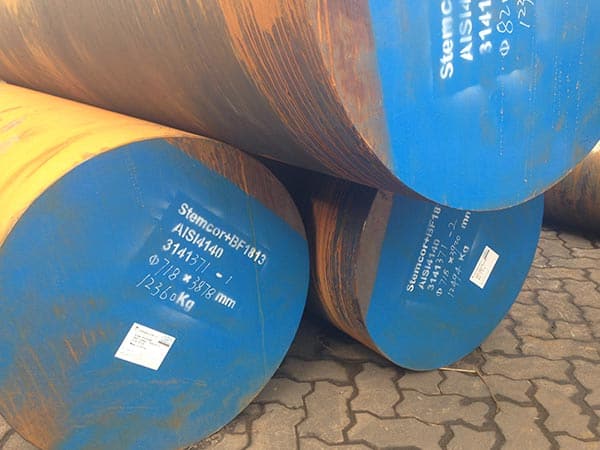
Understanding the Nature of S550MC and QStE460TM High Yield Strength Steels
When evaluating the outdoor performance of high-strength steels like S550MC (under EN 10149-2) and its German equivalent QStE460TM (under SEW 092), the primary concern for engineers is the trade-off between weight reduction and environmental durability. These materials are thermomechanically rolled, fine-grain steels designed for cold forming. While they offer exceptional yield strength—550 MPa and 460 MPa respectively—they are fundamentally carbon-manganese steels, not corrosion-resistant alloys like stainless steel.
The question of how long these steels will last before rusting outside is not a simple fixed number. It depends heavily on the microstructure, the surface finish, and the specific atmospheric conditions of the installation site. Without protective coatings, these steels will begin to develop a visible oxide layer (rust) within hours or days if exposed to moisture and oxygen. However, the structural integrity of the component might remain intact for years depending on the thickness of the material and the corrosion rate of the environment.
Chemical Composition and Its Impact on Oxidation
The chemical makeup of S550MC and QStE460TM is optimized for weldability and formability. These steels typically contain very low carbon levels (often below 0.12%) to ensure toughness, supplemented by micro-alloying elements like niobium (Nb), vanadium (V), and titanium (Ti). These elements create a fine-grained structure that provides strength but does not provide a passive layer against oxidation.
| Element (Max %) | S550MC (EN 10149-2) | QStE460TM (SEW 092) |
|---|---|---|
| Carbon (C) | 0.12 | 0.12 |
| Manganese (Mn) | 1.80 | 1.60 |
| Silicon (Si) | 0.50 | 0.50 |
| Phosphorus (P) | 0.025 | 0.030 |
| Sulfur (S) | 0.015 | 0.025 |
| Al (Total) | 0.015 | 0.015 |
Because these steels lack significant amounts of Chromium (Cr) or Nickel (Ni), they do not form a protective "patina" like weathering steels (e.g., Corten). The iron oxide that forms on S550MC is porous, allowing moisture and oxygen to penetrate deeper into the substrate over time, leading to progressive material loss.
Predicting the Rusting Timeline in Different Environments
To determine how long these steels will last outside, we must refer to the ISO 9223 corrosion categories. The "time to rust" refers to the appearance of initial surface oxidation, while the "service life" refers to the time until the steel loses its structural capacity.
- C1 (Very Low): Indoor environments with clean air. S550MC can remain rust-free for years if humidity is kept below 60%.
- C2 (Low): Rural areas with low pollution. Bare S550MC will show surface rust within a few weeks of rain exposure. The corrosion rate is typically 0.1 to 1.1 ̆m per year.
- C3 (Medium): Urban and industrial atmospheres. Rusting occurs almost immediately upon exposure. Corrosion rates range from 11 to 25 ̆m per year.
- C4 (High): Industrial areas and coastal regions with moderate salinity. Structural degradation becomes a concern within 5-10 years if the steel is thin.
- C5 (Very High): Offshore or high-humidity industrial zones. The steel can lose significant cross-sectional area within a few years, potentially leading to structural failure.
Mechanical Performance and Structural Integrity
The primary advantage of S550MC and QStE460TM is their high yield-to-tensile ratio. This allows for the design of lighter components without sacrificing load-bearing capacity. However, rust acts as a stress concentrator. Pitting corrosion on a high-strength steel beam can lead to premature fatigue failure, which is more critical in S550MC than in standard S235 structural steel because high-strength materials are often used in thinner sections.
| Property | S550MC Value | QStE460TM Value |
|---|---|---|
| Yield Strength (MPa) | Min 550 | Min 460 |
| Tensile Strength (MPa) | 600 - 760 | 520 - 670 |
| Elongation (A80mm %) | Min 12 | Min 14 |
| Bending Radius (90°) | 1.5 x t | 1.0 x t |
While the mechanical properties are robust, the presence of rust reduces the effective thickness. For a 3mm sheet of S550MC used in a truck chassis, a corrosion loss of 0.5mm is a significant percentage of the total strength, whereas the same loss on a 10mm S235 plate is less critical. This is why corrosion protection is non-negotiable for high-yield steels in outdoor applications.
The Role of Processing and Fabrication in Corrosion
How the steel is handled during manufacturing affects its outdoor longevity. Cold forming introduces internal stresses. In S550MC, areas with tight bends may be more susceptible to stress corrosion cracking if exposed to aggressive chemical environments. Furthermore, welding alters the heat-affected zone (HAZ). While S550MC is designed for excellent weldability, the HAZ can sometimes have a slightly different electrochemical potential than the base metal, leading to localized galvanic corrosion if the area is not properly treated.
Laser cutting and plasma cutting also leave oxide scales on the edges. If these scales are not removed before painting or galvanizing, they can flake off, taking the protective coating with them and exposing the bare S550MC to the elements, leading to rapid edge rust.
Effective Protection Strategies for Outdoor Use
To ensure S550MC and QStE460TM last for decades rather than months, several surface treatment options are standard across the industry:
- Hot-Dip Galvanizing: This is the most effective method. The zinc coating provides sacrificial protection. Even if the coating is scratched, the zinc corrodes instead of the S550MC. In a C3 environment, a standard galvanizing layer can protect the steel for over 20 years.
- Cathodic E-Coating: Frequently used in the automotive industry for QStE460TM components. It provides a uniform primer layer that is highly resistant to salt spray.
- Powder Coating: Provides a thick, durable barrier. However, it must be applied over a pre-treated surface (like phosphating) to prevent "creep" rust under the coating.
- Zinc-Nickel Plating: Used for smaller high-strength components that require high precision and excellent corrosion resistance in harsh environments.
Industry-Specific Applications and Longevity Expectations
In the heavy transport sector, S550MC is used for trailer chassis and crane arms. These components are subjected to road salts and mechanical abrasion. When properly painted with high-quality epoxy systems, these structures typically have a design life of 15-20 years. Regular maintenance and touch-ups of stone-chip damage are essential to prevent localized rusting.
In agricultural machinery, where equipment is often stored outdoors, QStE460TM is used for its balance of strength and cost. If left bare, the equipment will look aged and rusty within one season. However, the structural failure of thick-walled sections (above 6mm) would likely take decades of constant outdoor exposure, though the aesthetic and functional degradation (seized joints, thinning) would occur much sooner.
For renewable energy structures, such as solar racking systems, S550MC is often pre-galvanized (Z275 or Magnelis coatings). These coatings are specifically designed to last 25 years in outdoor environments, matching the lifespan of the solar panels themselves. The high yield strength allows for thinner, more cost-effective profiles that can still withstand wind and snow loads.
Managing Environmental Factors for Maximum Lifespan
The longevity of S550MC is ultimately a battle against the local micro-climate. Stagnant water is the greatest enemy. When designing parts with QStE460TM, engineers must ensure proper drainage. Water traps or "pockets" where mud and moisture can collect will accelerate corrosion rates by a factor of ten. By implementing smart geometric designs that allow for airflow and water runoff, the natural lifespan of the steel—even with minimal coating—can be significantly extended.
In summary, while S550MC and QStE460TM are superior in terms of weight-to-strength ratios and processing efficiency, they possess no inherent "rust-proof" qualities. Their outdoor survival is entirely dependent on the synergy between material thickness, environmental severity, and the quality of the protective surface treatment applied during fabrication.
Leave a message