
What is the S500MC hot rolled automotive steel coil inventory price export to Thailand
Comprehensive guide on S500MC hot rolled automotive steel coil prices for the Thailand market, covering technical specs, processing advantages, and export logistics.
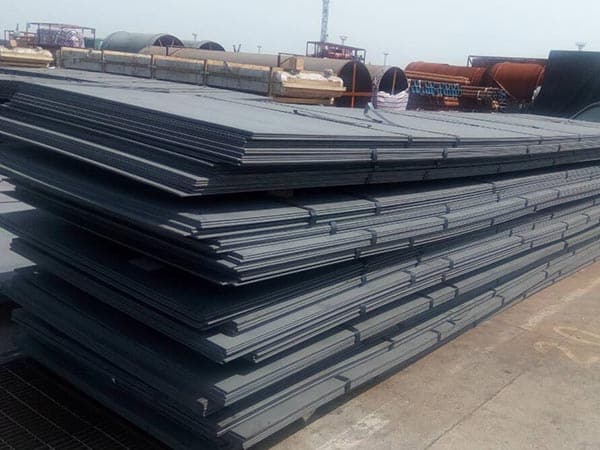
The Strategic Importance of S500MC Steel in the Thai Automotive Market
Thailand has long been recognized as the "Detroit of Asia," serving as a massive hub for automotive manufacturing and assembly. Within this competitive landscape, the demand for high-strength, low-alloy (HSLA) steels like S500MC has surged. This grade, defined under the EN 10149-2 standard, is a thermomechanically rolled steel designed specifically for cold forming. For manufacturers exporting to Thailand, understanding the S500MC hot rolled automotive steel coil inventory price requires a deep dive into its technical superiority and the logistical nuances of the Southeast Asian trade corridor.
The pricing of S500MC is not merely a reflection of raw material costs; it is a composite of its exceptional yield strength, its ability to reduce vehicle weight (lightweighting), and its consistent performance in high-stress structural components. As Thai OEMs (Original Equipment Manufacturers) shift toward more fuel-efficient and safer vehicle designs, S500MC has become a staple in chassis parts, longitudinal beams, and cross members.
Technical Specifications: The Foundation of S500MC Value
The value proposition of S500MC starts with its chemical composition and mechanical properties. Unlike standard carbon steels, S500MC utilizes micro-alloying elements such as Niobium (Nb), Vanadium (V), and Titanium (Ti) to achieve high strength without sacrificing ductility. This allows for thinner gauges to be used in place of thicker, heavier mild steels, directly impacting the inventory value for Thai importers.
| Mechanical Property | Requirement (Value) |
|---|---|
| Yield Strength (ReH) | Min. 500 MPa |
| Tensile Strength (Rm) | 550 - 700 MPa |
| Elongation (A80mm) | Min. 12% (t < 3mm) |
| Elongation (A5) | Min. 14% (t ≥ 3mm) |
| Bending Radius (180°) | 0.5t to 1.0t (depending on thickness) |
These properties ensure that S500MC can withstand the rigorous stamping and forming processes typical in Thai automotive plants. When calculating the export price to Thailand, the precision of these mechanical values often dictates the premium over standard S235 or S355 grades.
Processing Performance and Manufacturing Efficiency
One of the primary reasons Thai automotive suppliers prioritize S500MC is its superior weldability. Due to its low carbon equivalent (CEV), S500MC can be welded using all standard methods, including MIG/MAG, laser welding, and resistance welding, without the need for preheating. This reduces energy consumption and speeds up production lines, providing a hidden cost-saving benefit that offsets the initial purchase price.
- Cold Forming Excellence: S500MC is engineered for complex geometries. Its fine-grained structure prevents cracking during tight radius bending.
- Surface Quality: For automotive applications, surface finish is critical. Inventory for export usually features a pickled and oiled (P&O) surface to prevent rust during sea transit to Laem Chabang or Bangkok ports.
- Laser Cutting Precision: The consistency of S500MC coils ensures that automated laser cutting systems can operate at peak efficiency with minimal dross or distortion.
Factors Influencing S500MC Export Prices to Thailand
The inventory price for S500MC is highly volatile, influenced by global iron ore trends, energy costs, and specific regional dynamics. For the Thai market, several unique factors come into play:
1. Anti-Dumping and Safeguard Duties: Thailand frequently reviews its trade policies regarding hot rolled steel. Importers must stay updated on whether the S500MC coils are subject to specific duties based on the country of origin (e.g., China, Vietnam, or Japan). Using the ASEAN-China Free Trade Area (ACFTA) or RCEP certificates can significantly lower the landed cost.
2. TISI Certification: The Thai Industrial Standards Institute (TISI) has strict requirements for steel used in the automotive sector. S500MC coils must often meet or exceed local standards that align with international benchmarks. Inventory that is already pre-certified for TISI compliance commands a higher price but guarantees smooth customs clearance.
3. Logistics and Packaging: Since steel is prone to corrosion in the humid tropical climate of Thailand, export-grade packaging is non-negotiable. This includes VCI (Volatile Corrosion Inhibitor) paper, plastic lining, and robust steel strapping. These protective measures are factored into the final C&F (Cost and Freight) price.
Environmental Adaptability and Fatigue Resistance
Automotive components in Thailand are subject to high humidity and varied road conditions. S500MC offers excellent fatigue resistance, which is vital for the longevity of heavy-duty pickup trucks—a dominant vehicle segment in the Thai market. The steel's ability to absorb energy during impact also makes it a critical material for enhancing vehicle safety ratings (NCAP).
Furthermore, the trend toward "Green Steel" is reaching Southeast Asia. Many Thai manufacturers are now inquiring about the carbon footprint of the S500MC they import. Coils produced via EAF (Electric Arc Furnace) or those with verified EPDs (Environmental Product Declarations) are becoming increasingly attractive, even at a slight price premium.
Sourcing Strategy: Inventory Management for Thai Buyers
For businesses looking to secure S500MC inventory for the Thai market, timing is everything. Steel prices fluctuate based on mill lead times and seasonal demand. Maintaining a local buffer stock in Thailand can mitigate risks associated with shipping delays, but it requires significant capital. Therefore, many Thai distributors look for reliable export partners who can offer flexible shipment sizes and consistent quality across different batches.
When evaluating a quote for S500MC, buyers should look beyond the per-ton price. Consider the following:
- Thickness Tolerance: Automotive precision requires tight tolerances (e.g., ½ EN 10051).
- Coil Weight: Ensuring the coil weight matches the uncoiling capacity of the Thai factory's press line.
- Chemical Uniformity: Consistency in Niobium and Titanium levels to ensure uniform welding parameters.
Market Outlook and Price Trends
As of the current quarter, S500MC prices for export to Thailand remain sensitive to the recovery of the global automotive supply chain. While raw material costs have stabilized, freight rates continue to be a variable factor. However, the intrinsic value of S500MC—its strength-to-weight ratio and processing ease—ensures it remains the most cost-effective choice for structural automotive applications compared to heavier alternatives or more expensive aluminum alloys.
By focusing on high-grade S500MC, Thai manufacturers can ensure their products meet international safety and efficiency standards, securing their place in the global automotive value chain. For exporters, providing transparent technical data and logistical support is the key to building long-term partnerships in this vibrant market.
Leave a message