
Does S550MC steel coil rust easily?
A comprehensive analysis of S550MC steel coil corrosion characteristics, mechanical properties, and industrial applications for engineers and buyers.
Understanding the Nature of S550MC Steel Coil
S550MC is a high-yield strength, thermomechanically rolled steel specifically designed for cold forming. Governed by the EN 10149-2 standard, this material is prized for its exceptional strength-to-weight ratio. However, a common question among procurement managers and structural engineers is whether S550MC steel coil rusts easily. To answer this, we must examine its chemical composition and the metallurgical processes that define its surface characteristics.
Unlike stainless steel, which contains high levels of chromium to form a protective oxide layer, S550MC is a low-alloy steel. Its primary goal is mechanical performance—specifically a minimum yield strength of 550 MPa. While it contains micro-alloying elements like Niobium (Nb), Vanadium (V), and Titanium (Ti), these are added for grain refinement and precipitation hardening rather than for atmospheric corrosion resistance. Consequently, without proper surface treatment, S550MC will oxidize when exposed to moisture and oxygen, similar to standard carbon steels.
Chemical Composition and Its Impact on Oxidation
The chemical makeup of S550MC plays a dual role in its performance. While the low carbon content (typically below 0.12%) enhances weldability and ductility, it does not provide a barrier against rust. The presence of Manganese (up to 1.80%) and Silicon (up to 0.50%) improves strength but has a negligible effect on preventing iron oxide formation.
| Element | Maximum Percentage (%) | Role in Performance |
|---|---|---|
| Carbon (C) | 0.12 | Ensures weldability and cold formability. |
| Manganese (Mn) | 1.80 | Increases hardness and tensile strength. |
| Silicon (Si) | 0.50 | Deoxidizer and solid solution strengthener. |
| Phosphorus (P) | 0.025 | Maintained at low levels to prevent brittleness. |
| Sulphur (S) | 0.015 | Reduced to improve internal cleanliness. |
| Aluminium (Al) | 0.015 (min) | Grain size control. |
Because the alloy lacks a significant 'passive layer' (which requires at least 10.5% Chromium), the iron atoms on the surface of S550MC remain reactive. In humid environments, the formation of Fe2O3 (red rust) is an inevitable chemical progression unless an external barrier is applied.
Surface Finish Options: Hot Rolled vs. Pickled and Oiled
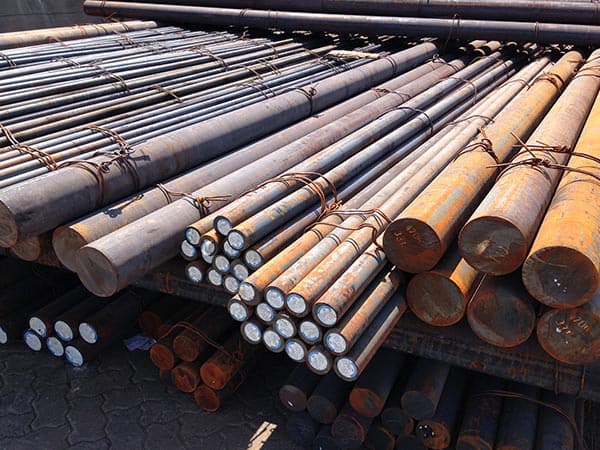
The susceptibility of S550MC to rust often depends on its surface condition upon delivery. Most S550MC is produced as hot-rolled steel. During the cooling process, a dark layer of iron oxide known as 'mill scale' forms on the surface. While mill scale provides a very temporary barrier against light moisture, it is brittle and often cracks, allowing moisture to seep underneath and cause localized pitting corrosion.
For applications requiring better surface quality and immediate rust protection, manufacturers offer S550MC+PO (Pickled and Oiled). The pickling process involves passing the steel through an acid bath to remove mill scale, followed by the application of a thin layer of protective oil. This oil serves as a temporary rust inhibitor during transit and storage. However, this protection is not permanent; once the oil evaporates or is cleaned off for welding or painting, the steel becomes vulnerable to the atmosphere once again.
Mechanical Properties and Structural Integrity
While corrosion is a concern, the primary reason for selecting S550MC is its mechanical prowess. The thermomechanical rolling process (indicated by the 'M' in S550MC) creates a fine-grained microstructure that allows for high strength without sacrificing toughness. This makes it ideal for components that must withstand high stress while remaining lightweight.
- Yield Strength: Minimum 550 MPa, providing excellent load-bearing capacity.
- Tensile Strength: 600 to 760 MPa, ensuring the material can withstand significant pulling forces before failure.
- Elongation: Minimum 12% to 14% (depending on thickness), allowing for complex cold-bending operations.
- Impact Strength: Often tested at low temperatures (e.g., -20°C or -40°C) to ensure performance in cold climates.
The high strength of S550MC allows for the use of thinner gauges compared to traditional S355 steel, which reduces the overall weight of the structure. This is particularly valuable in the transportation industry, where weight reduction directly translates to fuel efficiency.
Factors Accelerating Rust in S550MC Applications
Several environmental and processing factors can accelerate the rusting process of S550MC steel coils:
- Humidity and Condensation: High relative humidity (above 60%) provides the electrolyte necessary for the electrochemical process of rusting. Condensation during storage is a major cause of 'white rust' or 'red rust' on coils.
- Salinity: In coastal areas or regions where road salts are used, chloride ions penetrate any surface film and accelerate the oxidation rate significantly.
- Industrial Pollutants: Sulfur dioxide (SO2) from industrial exhaust can react with moisture to form weak acids, which aggressively attack the steel surface.
- Heat-Affected Zones (HAZ): During welding, the area surrounding the weld undergoes thermal changes. This can disrupt any existing surface protection and alter the local grain structure, making the HAZ more susceptible to corrosion if not properly treated post-weld.
Effective Strategies for Rust Prevention
To maximize the lifespan of S550MC steel components, several protection strategies are commonly employed across various industries:
1. Protective Coatings and PaintingApplying a high-quality primer and topcoat is the most common method of protecting S550MC. Because S550MC has a clean surface after pickling, it provides excellent adhesion for paints. Powder coating is also frequently used for automotive parts and machinery frames, providing a thick, durable barrier against the elements.
2. GalvanizationHot-dip galvanizing or zinc-nickel plating provides sacrificial protection. Even if the coating is scratched, the zinc will corrode preferentially, protecting the underlying S550MC steel. However, engineers must account for the potential impact of the high-temperature galvanizing bath on the mechanical properties of thermomechanically rolled steels, although S550MC generally handles this process well.
3. VCI Packaging and Controlled StorageDuring shipping and storage, Volatile Corrosion Inhibitor (VCI) paper or film is used to wrap S550MC coils. VCI molecules form a molecular layer on the steel surface that inhibits the electrochemical reaction of rust. Coils should always be stored in climate-controlled warehouses with low humidity and no direct contact with the ground.
Processing Performance: Bending and Welding
S550MC is specifically engineered for excellent cold forming. It can be bent to tight radii without cracking, provided the bending direction and tool geometry are correctly managed. The fine grain structure ensures that the material flows uniformly during deformation. When welding S550MC, standard methods like MAG (Metal Active Gas) or laser welding are highly effective. Due to the low carbon equivalent, the risk of cold cracking is minimal. However, to maintain corrosion resistance across the entire assembly, all weld seams must be cleaned of slag and coated immediately after inspection.
Diverse Industry Applications
The unique combination of high strength and formability makes S550MC a staple in several demanding sectors:
- Automotive Industry: Used for chassis parts, cross members, and longitudinal beams where weight reduction is critical for emissions compliance.
- Heavy Machinery: Employed in the construction of crane arms, excavator buckets, and agricultural equipment frames that require high yield strength to handle dynamic loads.
- Structural Engineering: Utilized in cold-pressed profiles, racking systems, and high-strength tubing for industrial buildings.
- Transport Logistics: Trailer frames and container components benefit from the weight savings offered by S550MC without compromising structural safety.
Evaluating the long-term durability of S550MC requires a balanced view of its mechanical advantages and its chemical limitations. While it does rust as easily as other non-alloyed steels when unprotected, its compatibility with modern coating technologies and its superior strength make it an indispensable material in modern engineering. By implementing rigorous storage protocols and appropriate surface finishes, the risk of corrosion can be effectively managed, allowing the high-performance characteristics of S550MC to shine in even the most challenging environments.
Leave a message