
What are the main process characteristics of S315MC automotive steel coil
Discover the comprehensive process characteristics of S315MC automotive steel coil, focusing on its thermomechanical rolling, cold forming, and welding properties for modern vehicle manufacturing.
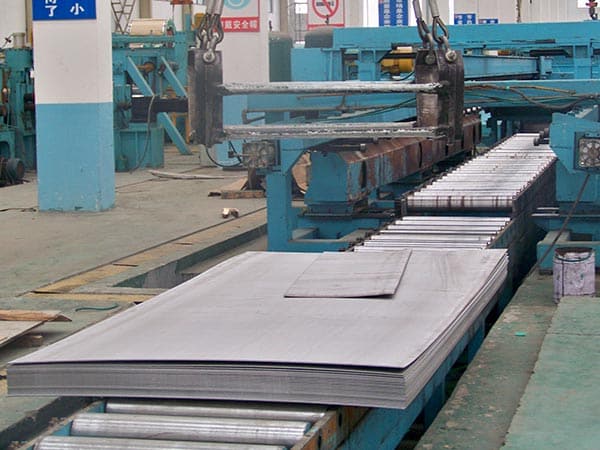
The Essence of S315MC in Modern Automotive Engineering
S315MC is a high-yield strength, hot-rolled steel designed specifically for cold forming applications, governed by the EN 10149-2 standard. The 'S' denotes structural steel, '315' represents the minimum yield strength in megapascals (MPa), and 'MC' indicates that the material has undergone thermomechanical rolling (M) and is suitable for cold forming (C). This steel grade has become a cornerstone in the automotive industry, where the demand for weight reduction without compromising safety is paramount. By utilizing micro-alloying elements and precision rolling techniques, S315MC offers a unique balance of strength, ductility, and weldability that traditional carbon steels cannot match.
Thermomechanical Rolling: The Core Process Characteristic
The defining characteristic of S315MC is the thermomechanical rolling process. Unlike traditional hot rolling followed by heat treatment, thermomechanical rolling integrates deformation and temperature control into a single sequence. This process occurs at specific temperature ranges where recrystallization is either delayed or prevented. The result is an exceptionally fine-grained ferrite-pearlite microstructure. This grain refinement is the primary mechanism behind the high yield strength and superior toughness of the steel. By controlling the cooling rate after the final rolling pass, manufacturers can ensure a uniform distribution of precipitates, which stabilizes the mechanical properties across the entire length and width of the coil.
Chemical Composition and Micro-Alloying Precision
The performance of S315MC is rooted in its low carbon content and the strategic addition of micro-alloying elements such as Niobium (Nb), Vanadium (V), and Titanium (Ti). These elements serve two main purposes: grain refinement and precipitation hardening. The carbon content is typically kept below 0.12%, which significantly enhances weldability and prevents the formation of brittle phases during cooling. Manganese (Mn) is used to improve hardenability and solid solution strengthening, while Silicon (Si) helps in deoxidation. The low Sulfur (S) and Phosphorus (P) levels are critical for maintaining high ductility and preventing lamellar tearing during complex forming operations.
| Element | Carbon (C) max % | Manganese (Mn) max % | Silicon (Si) max % | Phosphorus (P) max % | Sulfur (S) max % | Aluminium (Al) min % |
|---|---|---|---|---|---|---|
| S315MC | 0.12 | 1.30 | 0.50 | 0.025 | 0.020 | 0.015 |
Superior Cold Forming and Bending Capabilities
For automotive manufacturers, the ability to shape steel into complex geometries is vital. S315MC excels in cold forming processes such as bending, flanging, and cold pressing. Because of its fine-grained structure, the material exhibits minimal springback and high resistance to edge cracking. The minimum bending radius for S315MC is remarkably tight, often allowing for a 0.5t radius (where t is the thickness) for plates thinner than 3mm. This allows for the design of compact and intricate structural components like longitudinal beams, cross members, and chassis frames. The consistent yield-to-tensile ratio ensures that the material deforms predictably under the press, reducing scrap rates and improving production efficiency.
Welding Performance and Heat-Affected Zone (HAZ) Integrity
Welding is an indispensable process in vehicle assembly, and S315MC is engineered to be compatible with all standard welding methods, including MAG (Metal Active Gas), TIG (Tungsten Inert Gas), and Laser welding. Due to its low carbon equivalent (CEV), the steel is not prone to cold cracking in the heat-affected zone. However, it is crucial to manage the heat input during welding to avoid excessive grain growth in the HAZ, which could locally reduce the yield strength. When proper parameters are maintained, the welded joints of S315MC demonstrate fatigue resistance comparable to the base metal, ensuring the long-term structural integrity of the vehicle's skeleton.
Mechanical Properties and Strength-to-Weight Optimization
The primary motivation for switching from standard S235 or S275 grades to S315MC is the potential for weight reduction. With a minimum yield strength of 315 MPa, engineers can reduce the thickness of components while maintaining the same load-bearing capacity. This "down-gauging" directly contributes to improved fuel efficiency and reduced CO2 emissions. The elongation properties of S315MC, typically exceeding 20% (for thicknesses < 3mm), provide a safety buffer during unforeseen overloads, as the material will undergo plastic deformation rather than sudden brittle fracture.
| Property | Yield Strength (MPa) | Tensile Strength (MPa) | Elongation A80mm (%) | Elongation A5 (%) |
|---|---|---|---|---|
| S315MC Values | min 315 | 390 - 510 | min 20 (t < 3mm) | min 24 (t ≥ 3mm) |
Environmental Adaptability and Fatigue Resistance
Automotive components are subjected to harsh environments, including cyclic loading and temperature fluctuations. S315MC exhibits excellent fatigue resistance, a byproduct of its homogenous microstructure and low inclusion content. This makes it ideal for parts like suspension arms and axle housings that endure millions of stress cycles. Furthermore, its low-temperature toughness is superior to standard hot-rolled steels, ensuring that the material remains ductile even in sub-zero climates, which is a critical safety requirement for global vehicle platforms.
Surface Quality and Coating Compatibility
The surface of S315MC coils is typically processed to be free of scale and defects, facilitating subsequent coating operations. Whether the final part requires phosphating, E-coating (electrophoretic painting), or hot-dip galvanizing, the chemistry of S315MC provides an excellent substrate. The low silicon content (often specified even lower for certain galvanizing requirements) ensures a controlled reaction with zinc, resulting in a uniform and adherent protective layer. This corrosion protection is essential for the longevity of underbody components exposed to road salt and moisture.
Expanding Industry Applications
While the automotive sector is the primary consumer, the process characteristics of S315MC make it highly attractive for other industries. In the heavy machinery sector, it is used for crane arms and excavator frames where high strength and low weight are required for mobile equipment. The logistics industry utilizes S315MC for cold-formed profiles in shelving and racking systems, as well as in the manufacturing of shipping containers. Its reliability and ease of processing have made it a preferred choice for any application requiring a high-performance structural steel that can be easily formed and welded into final shapes.
Optimizing Manufacturing Throughput with S315MC
Integrating S315MC into a production line often leads to secondary economic benefits. The material's high consistency means that CNC bending machines and automated welding cells require fewer adjustments between batches. The reduced thickness of the parts leads to lower transport costs for raw materials and finished goods. Additionally, the high ductility allows for more aggressive forming stages, potentially reducing the number of hits required in a progressive die setup. By understanding and leveraging the specific process characteristics of S315MC, manufacturers can achieve a more streamlined, cost-effective, and high-quality production cycle.
Leave a message