
How to distinguish hot rolled S600MC high strength low alloy steel and cold rolled steel by naked eyes
Professional guide on visually identifying hot rolled S600MC HSLA steel versus cold rolled steel through surface texture, color, edges, and dimensional precision.
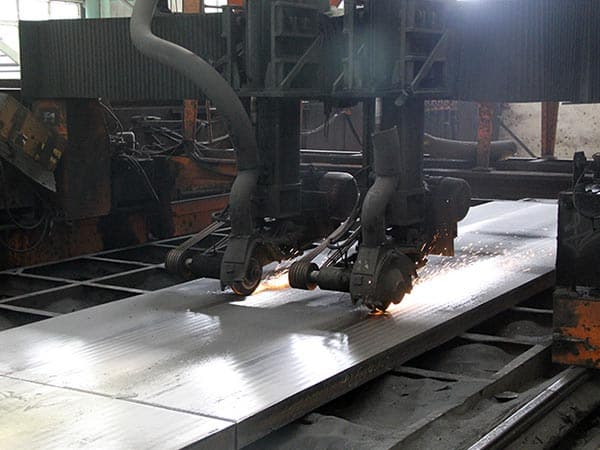
The Fundamental Visual Disparity Between S600MC and Cold Rolled Steel
Identifying steel grades and processing methods through visual inspection is a critical skill for quality control inspectors, warehouse managers, and procurement specialists. S600MC is a high-strength low-alloy (HSLA) steel produced via thermomechanical rolling, adhering to the EN 10149-2 standard. In contrast, cold rolled steel (often referred to as CR or CRS) undergoes a secondary processing stage where hot rolled pickled coils are reduced in thickness at room temperature. The difference in their thermal history and mechanical reduction creates distinct physical signatures that can be identified without laboratory equipment.
Surface Texture and Mill Scale Analysis
The most immediate differentiator is the surface texture. S600MC, being a hot rolled product, typically features a layer of iron oxide known as mill scale. This scale forms during the cooling process after the steel passes through the finishing stands at temperatures exceeding 800°C. The scale on S600MC is often tight and uniform due to its specific alloying elements like niobium (Nb) and titanium (Ti), which refine the grain structure. Visually, this appears as a slightly rough, matte finish that may feel somewhat abrasive to the touch.
Cold rolled steel, however, has had its mill scale removed through a process called pickling (acid bath) before being rolled at ambient temperatures. This results in a surface that is exceptionally smooth, often described as having a "silky" or "oily" feel. If the cold rolled steel has been skin-passed, it may exhibit a very fine matte finish or a bright, reflective mirror-like appearance. When you run your fingernail across cold rolled steel, it glides effortlessly, whereas on S600MC, you will feel the microscopic peaks and valleys of the oxide layer.
Color Profiles and Light Reflectivity
Color is a primary indicator for naked-eye identification. Hot rolled S600MC usually displays a dark gray, bluish-black, or even a brownish-tinted surface. This coloration is a direct result of the oxidation layer. In some cases, where the steel has been stored in humid environments, you might see light reddish-brown oxidation (rust) spots, as the mill scale is not a permanent corrosion barrier.
Cold rolled steel presents a vastly different palette. It typically appears as a bright, metallic silver or a light, consistent gray. Because the surface is so smooth, it reflects light much more predictably than S600MC. If you hold a piece of cold rolled steel under a fluorescent light, you will see sharp, defined reflections of the light source. Doing the same with S600MC will result in diffused, scattered light with no clear reflection, owing to the light-scattering properties of the mill scale.
Edge Quality and Geometric Precision
Examining the edges of the steel sheet or plate provides significant clues. S600MC is often supplied with "mill edges," which are slightly rounded, irregular, and may have a slight taper. Even if the S600MC has been slit, the edges will often show a darker color consistent with the rest of the plate. Because S600MC is a high-strength material, the shearing process might leave slightly more pronounced burrs or a rougher cut face compared to softer mild steels.
Cold rolled steel is characterized by its geometric precision. The edges are typically very sharp, square, and clean. Since cold rolling is used to achieve tight dimensional tolerances, the thickness of a cold rolled sheet is remarkably uniform from the center to the edge. If you observe a stack of sheets, the cold rolled stack will look perfectly rectangular and uniform, while an S600MC stack might show slight variations in thickness (crown) and less precise edge alignment.
Dimensional Cues and Thickness Ranges
While not strictly a "visual" attribute in the sense of color, the thickness of the material often dictates its processing. S600MC is a thermomechanically rolled steel usually available in thicknesses ranging from 1.5mm to 20mm. If you are looking at a plate that is 6mm thick, it is almost certainly hot rolled S600MC rather than cold rolled, as cold rolling becomes prohibitively expensive and difficult at higher thicknesses. Cold rolled steel is most commonly found in the 0.5mm to 3.0mm range. If the material is exceptionally thin (e.g., 0.8mm), it is almost certainly cold rolled.
Technical Comparison: S600MC vs. Standard Cold Rolled Steel
| Feature | Hot Rolled S600MC (HSLA) | Cold Rolled Steel (e.g., DC01/SPCC) |
|---|---|---|
| Surface Finish | Matte, rough, contains mill scale | Smooth, oily, or bright/reflective |
| Color | Dark gray, blue-black, or dull charcoal | Bright silver, light gray, metallic |
| Edge Profile | Rounded or slightly irregular (Mill Edge) | Sharp, square, and precise (Slit Edge) |
| Thickness Tolerance | Moderate (Standard hot roll tolerances) | Very High (Tight tolerances) |
| Common Thickness | 1.5mm - 20mm | 0.3mm - 3.0mm |
| Typical Applications | Truck chassis, crane arms, structural parts | Automotive body panels, appliances, furniture |
Visual Indicators of High Strength in S600MC
S600MC is engineered for a minimum yield strength of 600 MPa. While strength is a mechanical property, it manifests visually in how the material reacts to processing. If the steel has been bent or formed, S600MC will show very little "orange peel" effect compared to standard hot rolled steel, due to its fine-grained structure. However, because of its high strength, the bend radii are typically larger. If you see a part with very tight, sharp 90-degree bends without cracking, it is more likely to be a lower-strength cold rolled grade. S600MC requires more generous radii to maintain structural integrity.
Another visual cue is the presence of stenciling and marking. S600MC coils and plates are almost always marked with the "MC" designation, which stands for thermomechanically rolled (M) and cold forming suitability (C). Cold rolled steels are more likely to have markings like "CR," "DC01," or "SPCC." Checking the inkjet-printed tracking codes on the surface is the most foolproof "naked eye" method available.
Environmental Reaction and Corrosion Patterns
The way the two steels age in a warehouse environment can also be a giveaway. Cold rolled steel is highly susceptible to rust because it lacks the protective oxide layer of hot rolled steel. Consequently, it is almost always supplied with a thin coating of rust-preventative oil. If the steel feels greasy and looks shiny, it is likely cold rolled. S600MC, while it can be oiled, is often stored "dry." The mill scale on S600MC provides a temporary barrier; when it does rust, the rust tends to be darker and more localized, whereas cold rolled steel develops a uniform, bright orange flash rust very quickly if exposed to moisture.
Identifying Through Application Context
Understanding where these steels are used helps in identification. If you are looking at heavy-duty structural components, such as the chassis of a heavy truck, a telescopic crane boom, or a large agricultural trailer frame, you are likely looking at S600MC. These applications require the high strength-to-weight ratio that HSLA steels provide. Conversely, if the steel is used for a computer case, a refrigerator door, or a small automotive bracket with complex deep-drawn shapes, it is almost certainly cold rolled steel. The superior surface finish of cold rolled steel is required for consumer-facing products that will be painted or plated.
Summary of Naked Eye Inspection Steps
- Check the Surface: Look for the presence of dark mill scale (S600MC) versus a clean, metallic shine (Cold Rolled).
- Touch the Material: Feel for roughness (S600MC) versus extreme smoothness or oiliness (Cold Rolled).
- Inspect the Edges: Look for rounded mill edges (S600MC) versus sharp, slit edges (Cold Rolled).
- Measure Thickness: If it is over 3mm, the probability of it being S600MC increases significantly.
- Observe Light Reflection: Diffused light suggests S600MC; sharp reflections suggest Cold Rolled.
- Read the Markings: Look for the "EN 10149" or "S600MC" stamp versus "DC" or "CR" series markings.
By combining these visual and tactile observations, one can accurately distinguish between hot rolled S600MC and cold rolled steel in most industrial settings. While laboratory testing is the only way to confirm chemical composition and exact yield strength, these physical characteristics provide a reliable primary assessment for daily operations.
Leave a message