
What is the effect of s550mc high strength steel equivalent surface treatment on its properties
A comprehensive analysis of how various surface treatments, including galvanizing and pickling, influence the mechanical, chemical, and process properties of S550MC high-strength steel.
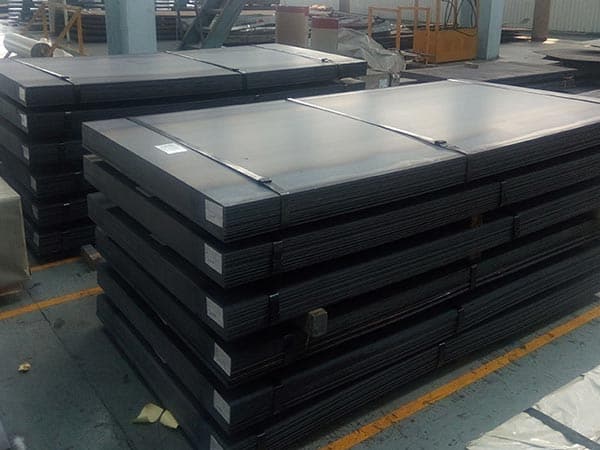
The Fundamental Characteristics of S550MC High-Strength Steel
S550MC is a high-strength low-alloy (HSLA) steel grade specifically designed for cold-forming applications, governed by the EN 10149-2 standard. Its micro-alloyed structure, containing precise amounts of niobium (Nb), vanadium (V), and titanium (Ti), provides a refined grain size that balances high yield strength with excellent ductility. This steel is a staple in the manufacturing of structural components where weight reduction is critical without compromising load-bearing capacity. The thermomechanical rolling process used to produce S550MC ensures a consistent microstructure, but this also makes the material sensitive to subsequent thermal and chemical surface treatments. Understanding how surface modifications interact with this delicate micro-alloyed balance is essential for engineers and manufacturers.
Chemical Composition and Mechanical Baseline
Before examining surface treatments, it is vital to establish the baseline properties of S550MC. The following table outlines the typical chemical composition and mechanical requirements that define this grade.
| Element/Property | Value (Max %) / Minimum Value |
|---|---|
| Carbon (C) | 0.12% |
| Manganese (Mn) | 1.80% |
| Silicon (Si) | 0.50% |
| Niobium (Nb) | 0.09% |
| Yield Strength (ReH) | 550 MPa |
| Tensile Strength (Rm) | 600-760 MPa |
| Elongation (A80) | 12% |
These properties provide the foundation for the steel's performance. However, once the steel undergoes surface treatments like pickling, galvanizing, or coating, these baseline values can shift due to chemical interactions or thermal cycles.
The Impact of Pickling and Oiling on S550MC
Pickling is often the first surface treatment S550MC undergoes to remove the mill scale (iron oxides) formed during the thermomechanical rolling process. This involves immersion in an acid bath, typically hydrochloric acid (HCl). While effective for cleaning, pickling can introduce hydrogen into the steel lattice. For high-strength steels like S550MC, hydrogen embrittlement is a significant concern. If the pickling time is not strictly controlled, hydrogen atoms can migrate to grain boundaries, leading to sudden, brittle failures under stress.
Following pickling, oiling is applied to prevent flash rusting. This thin layer of oil does not significantly alter mechanical properties but is crucial for maintaining the surface integrity during transport and storage. For high-precision cold-forming, the consistency of the oil film acts as a lubricant, reducing friction during bending or stamping operations, which indirectly preserves the steel's ductility by preventing localized overheating during deformation.
Hot-Dip Galvanizing: Thermal and Structural Considerations
Hot-dip galvanizing (HDG) is a common method to enhance the corrosion resistance of S550MC, especially for outdoor structural components. However, the process involves dipping the steel into molten zinc at temperatures around 450°C. This temperature range can trigger several phenomena in HSLA steels:
- Liquid Metal Embrittlement (LME): High-strength steels are susceptible to LME when exposed to molten zinc under stress. Micro-cracks can initiate at the surface and propagate through the refined grain structure.
- Sandelin Effect: The silicon and phosphorus content in S550MC influences the growth of the zinc-iron alloy layer. If the silicon content is within the Sandelin range (0.03% to 0.12%), the coating can become excessively thick and brittle, which may flake off during subsequent forming.
- Mechanical Softening: While 450°C is generally below the tempering temperature for most HSLA steels, prolonged exposure can cause a slight reduction in yield strength due to the recovery of dislocations created during the rolling process.
Despite these risks, HDG provides cathodic protection that is unmatched by organic coatings. When the process parameters are optimized—specifically by controlling the immersion time and cooling rate—S550MC retains its structural integrity while gaining decades of environmental durability.
Electro-Galvanizing and Its Precision Benefits
Unlike hot-dip galvanizing, electro-galvanizing is a cold process. This eliminates the risk of thermal softening or LME. For S550MC, electro-galvanizing provides a much thinner and more uniform zinc layer, typically ranging from 2.5 to 10 micrometers. This is ideal for components requiring tight tolerances and high-quality surface finishes, such as automotive body parts or intricate brackets.
The primary effect on properties here is the maintenance of the original cold-forming characteristics. Because the steel is not heated, the yield-to-tensile ratio remains unchanged. However, the risk of hydrogen embrittlement is still present due to the electrolytic process. Baking the steel after plating is a standard procedure to drive out any trapped hydrogen, ensuring the high-strength properties of S550MC are not compromised by brittleness.
Shot Blasting and Surface Residual Stresses
Shot blasting is a mechanical surface treatment used to remove scale and prepare the surface for painting. Beyond cleaning, it has a profound effect on the fatigue life of S550MC. By bombarding the surface with spherical media, the process induces compressive residual stresses in the surface layer. These stresses counteract tensile stresses encountered during service, effectively increasing the fatigue limit of the material.
For heavy machinery applications, such as crane booms or truck chassis, shot blasting is highly beneficial. It hardens the surface slightly (work hardening) and creates a texture that significantly improves the adhesion of subsequent organic coatings. However, excessive blasting can cause surface roughness that might act as stress concentrators if not properly managed, particularly in thin-gauge S550MC sheets.
Organic Coatings and Environmental Adaptability
Applying powder coatings or liquid paints to S550MC is common for aesthetic and additional corrosion protection. The primary influence on the steel's properties is the adhesion quality. S550MC's micro-alloyed surface can be highly reactive, and without proper phosphating or chromating (pre-treatment), organic coatings may suffer from delamination. When correctly applied, these coatings allow S550MC to be used in C4 and C5 corrosive environments (coastal and industrial) where bare steel would fail rapidly.
Weldability and Process Performance Post-Treatment
Surface treatments significantly impact the weldability of S550MC. Zinc-coated S550MC (galvanized) requires specific welding parameters to account for the lower melting point of zinc compared to steel. Zinc vapor can become trapped in the weld pool, leading to porosity and cracking. Furthermore, the presence of zinc fumes requires enhanced ventilation and specific filler metals to maintain the strength of the joint.
In terms of formability, surface treatments like pickling improve the consistency of the material's behavior in a press brake. Conversely, thick galvanized coatings can increase the required bending force and change the springback characteristics of S550MC, requiring adjustments in tooling design to achieve the desired final geometry.
Strategic Selection for Industrial Applications
The choice of surface treatment for S550MC must be driven by the end-use environment. In the transportation sector, where weight reduction is the priority, electro-galvanized or thin-film organic coatings are preferred to maintain the steel's high strength-to-weight ratio. In contrast, for agricultural machinery or renewable energy structures, the heavy-duty protection of hot-dip galvanizing is often favored, despite the minor risks to mechanical properties, because the long-term maintenance costs are significantly lower.
By understanding the synergy between the micro-alloyed chemistry of S550MC and the chemical/thermal nature of surface treatments, manufacturers can maximize the lifespan and performance of their high-strength steel components. Each treatment offers a trade-off between protection, cost, and mechanical stability, requiring a nuanced approach to material engineering.
Leave a message