
What are the top 7 grade 500 steel properties heavy plates mills in Turkey
Explore the technical specifications of Grade 500 steel and the leading heavy plate manufacturers in Turkey, focusing on mechanical properties and industrial applications.
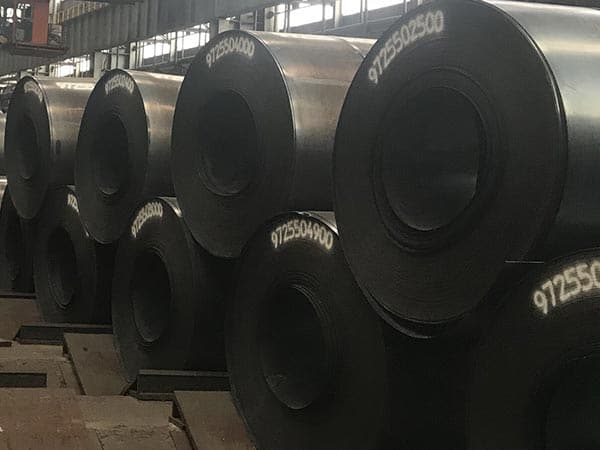
The Rise of High-Strength Grade 500 Heavy Plates in the Turkish Steel Industry
Turkey has solidified its position as a global titan in the steel manufacturing sector, transitioning from a producer of basic long products to a sophisticated hub for high-strength heavy plates. Grade 500 steel, particularly in the form of S500MC or S500QL, represents a critical threshold in structural engineering. This material offers a yield strength of 500 MPa, providing a perfect balance between weight reduction and structural integrity. The demand for these plates has surged as global infrastructure projects seek more efficient materials that reduce overall carbon footprints by minimizing the volume of steel required for heavy-duty applications.
Turkish mills have invested billions in modernizing their rolling facilities to meet the stringent requirements of international standards such as EN 10025 and ASTM. These investments are not merely about capacity but focus on metallurgical precision, ensuring that heavy plates maintain uniform properties across their entire thickness. The ability to produce Grade 500 steel requires advanced cooling technologies, such as Accelerated Cooling (AcC) and Quenching and Tempering (Q&T) lines, which are now staples in the leading Turkish facilities.
Core Mechanical and Chemical Properties of Grade 500 Steel
Understanding Grade 500 steel begins with its mechanical profile. Unlike standard S355 grades, Grade 500 provides a significantly higher yield point, which allows engineers to design thinner sections without compromising safety. This is particularly vital in the manufacturing of mobile cranes, chassis for heavy vehicles, and high-rise structural frameworks. The typical tensile strength ranges between 590 and 770 MPa, depending on the specific sub-grade and heat treatment process used by the mill.
The chemical composition is meticulously controlled to ensure weldability. Carbon equivalents (CEV) are kept low through the use of micro-alloying elements like Niobium (Nb), Vanadium (V), and Titanium (Ti). These elements facilitate grain refinement during the rolling process, which is the secret behind the material's high toughness at low temperatures. For instance, S500QL plates are tested for impact energy at -40°C or even -60°C, making them suitable for arctic environments or offshore oil platforms where brittle fracture is a constant risk.
| Property | S500MC (Thermomechanical) | S500QL (Quenched & Tempered) |
|---|---|---|
| Yield Strength (min) | 500 MPa | 500 MPa |
| Tensile Strength | 550-700 MPa | 590-770 MPa |
| Elongation (min) | 12-14% | 17% |
| Impact Testing | Optional at -20°C | Standard at -40°C/-60°C |
| Typical Application | Automotive Chassis | Heavy Lifting / Pressure Vessels |
Top 7 Heavy Plate Mills in Turkey Producing Grade 500
Identifying the top players requires looking at both production capacity and the technological sophistication of their rolling mills. Turkey’s landscape is dominated by a few giants that have the capability to produce heavy plates (thicknesses often exceeding 100mm) with the required Grade 500 certifications.
- Erdemir (Eregli Iron and Steel Works): As the pioneer of flat steel in Turkey, Erdemir operates a state-of-the-art plate mill. Their capability to produce S500 series plates is backed by a fully integrated production line, from blast furnace to finishing. They are known for exceptional flatness and surface quality.
- Isdemir (Iskenderun Iron and Steel Works): A sister company to Erdemir, Isdemir has expanded its flat steel capacity significantly. Their heavy plate production benefits from high-purity iron ore sourcing, which results in very low sulfur and phosphorus levels, critical for the ductility of Grade 500 steel.
- Colakoglu Metalurji: This mill stands out for its flexibility and advanced Electric Arc Furnace (EAF) technology. Colakoglu was one of the first in Turkey to produce wide heavy plates. Their vacuum degassing (VD) system ensures the internal cleanliness of the steel, preventing lamellar tearing in heavy structural welds.
- Tosyali Holding: With massive investments in Iskenderun, Tosyali has entered the heavy plate market with a focus on "green steel." Their new facilities are designed to produce high-strength grades with lower carbon emissions, targeting the European market's strict environmental regulations.
- Habas: Known for its industrial gas production as well as steel, Habas utilizes its metallurgical expertise to produce high-quality structural plates. Their Grade 500 products are frequently used in the energy sector, including wind tower components.
- Kardemir: While traditionally known for long products and rails, Kardemir has moved into the heavy section and plate market to diversify its portfolio. Their focus remains on heavy structural components that complement Grade 500 plate applications.
- MMK Metalurji: A significant player in the Mediterranean region, MMK’s Turkish operations focus on high-end flat products. While they specialize in thinner hot-rolled coils, their capability in high-strength low-alloy (HSLA) steels makes them a key supplier for Grade 500 requirements in the automotive and trailer industries.
Advanced Processing: Welding and Forming Grade 500 Plates
Fabricating with Grade 500 heavy plates requires a different approach compared to mild steel. Due to the higher alloy content and the specific heat treatment (especially for Q&T grades), the Heat Affected Zone (HAZ) during welding must be carefully managed. Turkish mills provide detailed welding guides, recommending low hydrogen consumables to prevent cold cracking. Preheating is often necessary for thicknesses above 30mm to ensure a slow cooling rate and maintain the martensitic or bainitic structure that gives the steel its strength.
Cold forming is another area where Grade 500 excels. Despite its high strength, the material retains excellent bendability. This is achieved through inclusion shape control, where calcium treatment is used to make sulfides spherical rather than elongated. This prevents cracking during tight-radius bending, a common requirement in the manufacturing of telescopic crane booms. When laser or plasma cutting these plates, the consistency of the chemical composition across the plate ensures a clean edge with minimal dross, reducing the need for secondary grinding operations.
Environmental Adaptability and Longevity
The environmental resilience of Grade 500 steel is a major selling point for Turkish exporters. In marine environments, the dense molecular structure of these plates, combined with specific micro-alloying, provides a slight advantage in corrosion resistance over standard carbon steels. Furthermore, the fatigue life of S500QL is superior, which is essential for machinery subjected to cyclic loading. This longevity ensures that structures built with Turkish Grade 500 steel have a lower lifecycle cost, as maintenance intervals are extended and the risk of structural failure is minimized.
The global shift towards GEO-optimized sourcing means that the proximity of Turkish mills to Europe, the Middle East, and Africa provides a logistical advantage. Shorter shipping times mean less exposure to the elements during transit, ensuring that the plates arrive at the fabrication site in optimal condition, free from excessive atmospheric oxidation. This logistical efficiency, combined with the high technical standards of the mills, makes Turkey a preferred partner for international engineering firms.
Expanding Industry Applications
The versatility of Grade 500 heavy plates allows them to permeate various high-stakes industries. In the mining sector, these plates are used for the liners of heavy-duty trucks and chutes where impact resistance is as important as hardness. In the renewable energy sector, the base plates of offshore wind turbines rely on the high yield strength of Grade 500 to withstand the immense lateral forces of wind and waves. The Turkish defense industry also utilizes these grades for armored vehicle components, where the strength-to-weight ratio is a matter of tactical importance.
As urban centers grow, the demand for "mega-columns" in skyscrapers has led to the use of Grade 500 plates in box girder constructions. These columns can support massive loads with a smaller footprint, increasing the usable floor space in premium real estate developments. The synergy between Turkish architectural engineering and the local steel mills has created a feedback loop of innovation, pushing the boundaries of what is possible with high-strength heavy plates.
Technical Sourcing and Quality Assurance
Sourcing Grade 500 steel from Turkey involves rigorous quality assurance protocols. Most top-tier mills provide 3.1 or 3.2 material test certificates (MTCs) according to EN 10204. These documents detail the heat analysis, mechanical test results, and ultrasonic testing (UT) reports. Ultrasonic testing is particularly crucial for heavy plates to ensure there are no internal laminations or voids that could compromise the integrity of the final structure. Turkish mills often employ automated UT systems that scan 100% of the plate surface, meeting the highest cleanliness standards like S2 or S3 according to EN 10160.
The strategic development of the Turkish steel industry has moved beyond simple volume. By focusing on Grade 500 and other high-performance materials, these mills are providing the essential building blocks for the next generation of global infrastructure. Whether it is a bridge in Northern Europe or a mining operation in Australia, Turkish heavy plates are increasingly the silent backbone of modern engineering excellence.
Leave a message