
What does automobile structure steel S355MC stand for?
A comprehensive guide to S355MC automobile structural steel, covering its nomenclature, chemical composition, mechanical properties, and its critical role in automotive lightweighting and manufacturing.
Decoding the S355MC Nomenclature
In the complex world of metallurgy and automotive engineering, the designation S355MC serves as a precise technical shorthand. To understand what S355MC stands for, we must break down its alphanumeric code according to the European standard EN 10149-2. This standard governs hot-rolled high yield strength steels for cold forming. Each character in the name provides specific information about the steel's intended use, its strength, and its manufacturing history.
The prefix 'S' stands for 'Structural,' indicating that this steel is designed for load-bearing applications where mechanical integrity is paramount. The number '355' represents the minimum yield strength of 355 Megapascals (MPa) for thicknesses up to 16 mm. This is a critical metric for engineers, as it defines the point at which the material will begin to deform plastically. The 'M' signifies that the steel is 'Thermomechanically Rolled' (TMCP). This process involves controlled rolling and cooling at specific temperatures to achieve a fine-grained microstructure that traditional heat treatments cannot replicate. Finally, the 'C' indicates that the steel is suitable for 'Cold forming,' meaning it can be bent, pressed, or folded without cracking, which is essential for creating complex automotive components.
The Metallurgical Foundation: Thermomechanical Control Process (TMCP)
The 'M' in S355MC is perhaps the most significant letter for automotive manufacturers. Thermomechanical rolling is a sophisticated production technique that combines precise temperature control with specific rolling reductions. Unlike conventional hot rolling, which might be followed by separate heat treatment, TMCP refines the grain size of the steel during the rolling process itself. By rolling at temperatures where recrystallization is inhibited, the steel develops a very fine ferrite-pearlite or even bainitic structure.
This fine grain structure is the secret behind S355MC's high strength-to-weight ratio. Smaller grains increase the yield strength and improve toughness simultaneously—a rare combination in metallurgy, as increasing strength usually makes a material more brittle. For the automotive industry, this means parts can be made thinner and lighter without sacrificing the safety or structural rigidity of the vehicle frame. This process also ensures that the steel maintains its properties even after being subjected to the heat of welding, provided the heat input is managed correctly.
Chemical Composition and Micro-alloying Strategies
S355MC is classified as a High Strength Low Alloy (HSLA) steel. Its performance is not derived from high levels of carbon, which would make the steel difficult to weld and form, but rather from the strategic use of micro-alloying elements like Niobium (Nb), Vanadium (V), and Titanium (Ti). These elements, often present in amounts less than 0.1%, form fine carbides and nitrides that pin grain boundaries and prevent grain growth during processing.
| Element | Maximum Content (%) |
|---|---|
| Carbon (C) | 0.12 |
| Manganese (Mn) | 1.50 |
| Silicon (Si) | 0.50 |
| Phosphorus (P) | 0.025 |
| Sulfur (S) | 0.020 |
| Aluminum (Al) | 0.015 |
The low carbon content (typically below 0.12%) is a deliberate choice to enhance weldability and ductility. Manganese is added to increase hardenability and strength through solid solution strengthening. The inclusion of Aluminum ensures the steel is 'killed,' meaning it is fully deoxidized during the melting process, resulting in a cleaner and more uniform internal structure. This chemical precision is what allows S355MC to meet the rigorous demands of modern automated assembly lines.
Mechanical Performance and Structural Integrity
When evaluating S355MC for automotive structures, engineers look beyond just the yield strength. The balance between tensile strength and elongation is what determines how a part will behave during a collision. S355MC offers a tensile strength range typically between 430 and 550 MPa, with a minimum elongation of 19% to 23% depending on the thickness. This high ductility allows the material to absorb significant energy during an impact, which is vital for the 'crumple zones' of a vehicle.
- Yield Strength (ReH): Minimum 355 MPa.
- Tensile Strength (Rm): 430 - 550 MPa.
- Elongation (A80mm): Minimum 19% (for thickness < 3mm).
- Bending Radius: Excellent, allowing for tight 90-degree bends without surface cracking.
Another critical aspect is the impact toughness. While S355MC is primarily rated for its strength and formability, its fine-grained structure provides better low-temperature performance than standard carbon steels. This ensures that automotive frames do not become brittle in cold climates, maintaining their integrity across a wide range of environmental conditions.
Superior Cold Forming and Processing Characteristics
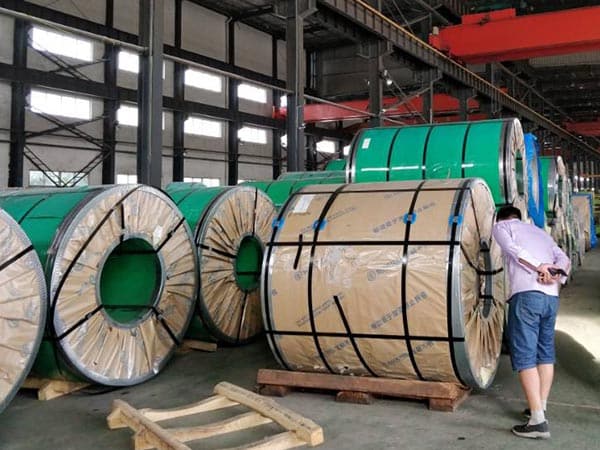
The 'C' designation in S355MC highlights its exceptional cold-forming capabilities. In the automotive sector, parts like chassis rails, cross members, and suspension brackets are often manufactured using cold pressing or roll forming. S355MC is engineered to withstand these processes without developing micro-cracks or excessive spring-back. The material's high purity and fine grain structure mean it can handle complex geometries and tight bending radii.
Manufacturers benefit from the consistency of S355MC. Because the TMCP process is highly controlled, the mechanical properties are uniform across the entire coil. This uniformity is essential for robotic stamping and automated bending, as it reduces the need for constant machine adjustments and lowers the rate of scrap. Furthermore, the surface quality of S355MC is typically excellent, providing a good substrate for subsequent coating processes like galvanizing or E-coating, which are necessary for corrosion resistance.
Welding and Joining in Modern Manufacturing
One of the primary reasons S355MC has become a staple in the automotive industry is its superb weldability. Traditional high-strength steels often require pre-heating or post-weld heat treatment to prevent cracking in the heat-affected zone (HAZ). S355MC, thanks to its low carbon equivalent (CEV), can be welded using standard methods such as MIG/MAG, TIG, and resistance spot welding without these extra steps.
The micro-alloying elements are carefully balanced to ensure that the HAZ does not soften excessively or become brittle. This allows engineers to design lightweight structures that maintain their full strength across welded joints. In an era where vehicle assembly relies heavily on high-speed robotic welding, the reliability of S355MC's weld response is a significant economic advantage, reducing cycle times and inspection costs.
Automotive Industry Applications and Lightweighting
The drive for fuel efficiency and reduced emissions has made 'lightweighting' a priority for every vehicle manufacturer. S355MC plays a pivotal role in this strategy. By replacing traditional S235 or S275 grades with S355MC, engineers can reduce the thickness of structural components by 15% to 25% while maintaining the same load-bearing capacity. This weight reduction directly translates to better fuel economy in internal combustion engines and increased range in electric vehicles (EVs).
Common applications for S355MC include:
- Truck Chassis and Frames: Where high strength and fatigue resistance are needed to carry heavy loads.
- Automotive Cross Members: Providing lateral rigidity and support for the engine and transmission.
- Wheel Rims: Benefiting from the steel's formability and strength to create durable, lightweight wheels.
- Bumper Reinforcements: Using the steel's energy absorption properties to improve crash safety.
- Crane Arms and Lifting Equipment: Although not strictly automotive, the mobile nature of these machines benefits from the same lightweighting principles.
Environmental Impact and Sustainability
Beyond its mechanical advantages, S355MC contributes to the sustainability goals of the modern industrial landscape. The ability to use less material to achieve the same structural performance reduces the total carbon footprint of the vehicle over its lifecycle. Furthermore, S355MC is 100% recyclable. At the end of a vehicle's life, the steel can be recovered and melted down to produce new high-strength steel without any loss of quality.
The TMCP production process itself is also more energy-efficient than traditional quenching and tempering methods. By achieving the desired properties during the rolling stage, manufacturers eliminate the need for energy-intensive secondary heat treatments. This alignment with 'Green Steel' initiatives makes S355MC an attractive choice for forward-thinking automotive brands looking to improve their ESG (Environmental, Social, and Governance) ratings.
Comparing S355MC with Other Structural Grades
It is important to distinguish S355MC from other steels with similar yield strengths, such as s355jr. While both have a minimum yield strength of 355 MPa, S355JR is a general-purpose structural steel governed by EN 10025-2. S355JR is not specifically optimized for cold forming and does not undergo the same TMCP refinement as S355MC. Consequently, S355JR is often thicker, heavier, and more prone to cracking during intense bending operations.
In the hierarchy of automotive steels, S355MC sits as a versatile mid-range option. It offers a significant upgrade over standard mild steels while remaining more cost-effective and easier to process than Ultra-High-Strength Steels (UHSS) like boron steel or dual-phase steels. For many structural parts where extreme strength is not the only requirement—but rather a balance of strength, formability, and cost—S355MC remains the industry standard. Its widespread availability and proven track record make it a low-risk, high-reward material for global automotive platforms.
The technical evolution of S355MC continues as steel mills refine their TMCP capabilities. Modern iterations of this grade now offer even tighter tolerances on thickness and flatness, further enhancing their suitability for the next generation of highly automated, precision-driven automotive manufacturing. Understanding the 'S', the '355', the 'M', and the 'C' is more than a nomenclature exercise; it is an insight into the engineering excellence that keeps modern vehicles safe, efficient, and durable.
Leave a message