
What are the common defects in welding area of s500 steel datasheet welding parts
Explore the technical challenges and common defects in welding S500 high-strength steel. This guide covers HAZ softening, cold cracking, and metallurgical factors for S500MC and S500Q grades.
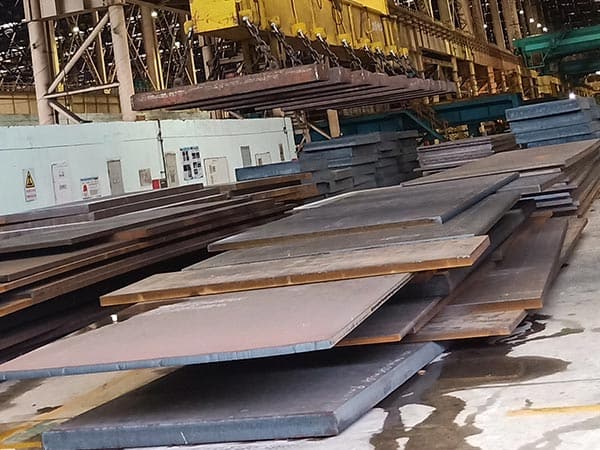
Understanding the Metallurgical Complexity of S500 steel
S500 steel, particularly the S500MC (thermomechanically rolled) and S500Q (quenched and tempered) variants, represents a class of high-strength low-alloy (HSLA) steels designed to bridge the gap between standard structural steels and ultra-high-strength grades. With a minimum yield strength of 500 MPa, these materials allow for significant weight reduction in heavy-duty applications such as crane booms, truck chassis, and offshore structures. However, the very alloying elements and processing methods that grant S500 its superior mechanical properties also introduce specific sensitivities during the welding process. Understanding the datasheet specifications is the first step in predicting how the material will react to the intense thermal cycles of arc welding. Unlike mild steel, S500 relies on a delicate balance of micro-alloying elements like Niobium (Nb), Vanadium (V), and Titanium (Ti) to achieve grain refinement. When these steels are subjected to welding heat, the microstructure in the Heat Affected Zone (HAZ) undergoes rapid transformation, which can lead to several characteristic defects if not managed with precision.
Softening of the Heat Affected Zone (HAZ)
One of the most prevalent issues found in the welding area of S500 steel parts is the localized reduction in hardness and strength, commonly referred to as HAZ softening. This phenomenon is particularly critical for S500MC steels. Because S500MC achieves its strength through thermomechanical rolling, which creates a fine-grained ferrite-pearlite or bainitic structure, excessive heat input during welding can cause grain growth and the dissolution of strengthening precipitates. When the cooling rate is too slow—often characterized by a high t8/5 time (the time taken to cool from 800°C to 500°C)—the HAZ loses its refined structure, resulting in a "soft zone" where the yield strength may drop below the 500 MPa datasheet requirement. This defect is not always visible to the naked eye but becomes apparent during tensile testing or under service loads, where the weldment may fail prematurely in the HAZ rather than the weld metal itself. Controlling heat input (kJ/mm) is the primary defense against this metallurgical degradation.
Hydrogen-Induced Cold Cracking (HIC)
As a high-strength steel, S500 is inherently more susceptible to hydrogen-induced cold cracking than lower-grade steels. This defect typically occurs in the coarse-grained HAZ or the weld metal several hours or even days after the welding process is completed. Three factors must coincide for HIC to manifest: a susceptible microstructure (often martensitic), the presence of diffusible hydrogen, and high residual tensile stresses. For S500Q (quenched and tempered) grades, the risk is elevated because the rapid cooling associated with welding can form brittle martensite in the HAZ. The S500 datasheet often specifies a Carbon Equivalent (CEV) value; the higher this value, the greater the hardenability and the higher the risk of cracking. To prevent this, strict adherence to low-hydrogen welding processes (such as using vacuum-packed basic electrodes or high-purity shielding gases) and appropriate preheating temperatures is mandatory. Failure to manage hydrogen levels leads to internal micro-cracks that can propagate under fatigue, compromising the structural integrity of heavy machinery.
Solidification Cracking and Porosity
While S500 steels generally have low impurity levels (low Phosphorus and Sulfur), solidification cracking can still occur in the weld center-line if the weld bead shape is improper or if there is significant dilution from the base metal. A high depth-to-width ratio in the weld pool increases the risk of impurities segregating at the center, leading to a weak plane that tears as the metal shrinks. Furthermore, porosity remains a common defect in S500 welding parts, often caused by surface contaminants like oil, rust, or moisture on the datasheet-specified plates. Given that S500 is often used in outdoor environments or heavy industrial shops, ensuring the weld preparation zone is ground to a metallic bright finish is essential. Porosity not only reduces the effective cross-sectional area of the weld but also acts as a stress concentrator, which is particularly dangerous in high-strength applications where the margin for error is slim.
Geometric Defects: Undercut and Excessive Reinforcement
In the context of S500 steel, geometric defects such as undercuts are significantly more hazardous than in S235 or S355 grades. Because S500 components are frequently subjected to high dynamic loads and fatigue, an undercut at the toe of the weld creates a severe stress raiser. In high-strength steel welding, the transition between the weld bead and the base metal must be as smooth as possible. Excessive reinforcement or overfill also contributes to unfavorable stress distributions. Welders often struggle with the fluid dynamics of the molten pool when using high-strength filler metals, which may have different wetting characteristics than standard fillers. Ensuring the correct torch angle and travel speed is vital to avoid these profile-related defects that could lead to fatigue failure in transport and lifting equipment.
Technical Specifications and Mechanical Properties Table
To better understand the boundaries of S500 steel, the following table outlines the typical chemical and mechanical properties that influence weldability and defect formation.
| Property Type | Specification (Typical S500MC) | Impact on Welding |
|---|---|---|
| Yield Strength (ReH) | Min 500 MPa | Requires matching or slightly over-matching filler metal. |
| Tensile Strength (Rm) | 550 - 700 MPa | High risk of residual stress accumulation. |
| Carbon Equivalent (CEV) | Max 0.39 - 0.44 | Determines preheat requirements to avoid cold cracking. |
| Elongation (A5) | Min 12% - 14% | Limits the allowable plastic deformation in the weld zone. |
| Max Carbon (C) Content | 0.12% | Low carbon improves weldability but necessitates grain refinement. |
Optimizing Welding Parameters to Eliminate Defects
Preventing defects in S500 steel requires a holistic approach to the welding procedure specification (WPS). First, the selection of filler metal is paramount; it should not only match the 500 MPa yield strength but also provide sufficient toughness at low temperatures, especially for offshore or arctic applications. Second, the cooling time t8/5 must be strictly monitored. For S500MC, a t8/5 range of 5 to 15 seconds is often recommended to maintain the balance between avoiding brittle martensite (too fast) and avoiding grain coarsening/softening (too slow). Third, the use of pulsed arc welding can be highly effective. Pulsed MIG/MAG welding allows for better control over heat input and reduces spatter, which in turn minimizes the risk of surface defects and the need for aggressive post-weld cleaning. By integrating these technical controls, manufacturers can ensure that the welding area of S500 parts remains as robust as the base material described in the datasheet.
Environmental Adaptability and Stress Corrosion
Beyond the immediate welding defects, S500 steel parts must also be evaluated for their performance in specific environments. In corrosive or hydrogen-rich environments, the welded joints may be susceptible to Stress Corrosion Cracking (SCC). The weld area, with its varied microstructure and residual stresses, acts as a focal point for environmental degradation. Post-weld heat treatment (PWHT) is generally discouraged for S500MC as it can lead to further softening, so the focus must remain on achieving a high-quality "as-welded" state. This involves ensuring that the weld bead profile is convex and free of sharp transitions, and that the heat-affected zone is as narrow as possible. Through rigorous non-destructive testing (NDT) such as ultrasonic or radiographic inspection, the presence of internal defects like lack of fusion or slag inclusions can be identified before the component enters its service life, ensuring the safety and longevity of high-strength steel structures.
Leave a message