
How strong is S460MC hot rolled flat?
Comprehensive guide to S460MC hot rolled flat steel strength, mechanical properties, chemical composition, and industrial applications for engineering excellence.
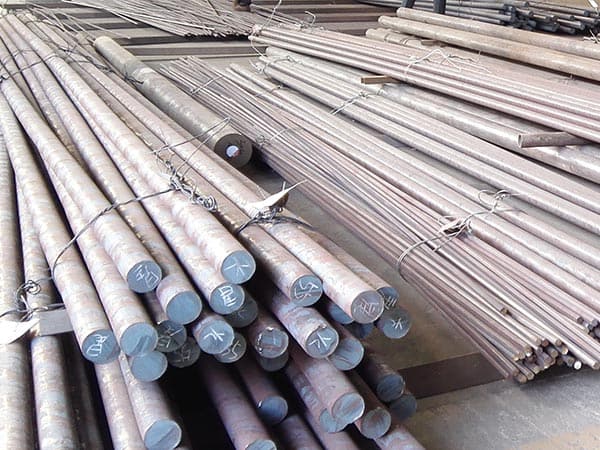
Defining the Strength Profile of S460MC Hot Rolled Flat Steel
S460MC represents a high-performance grade within the EN 10149-2 standard, specifically engineered for cold forming applications where high yield strength and weight reduction are paramount. The 'S' denotes structural steel, '460' signifies a minimum yield strength of 460 MPa, and 'MC' indicates the thermomechanically rolled (M) condition with high impact toughness (C). Unlike traditional carbon steels, S460MC leverages advanced metallurgical techniques to achieve a superior strength-to-weight ratio, making it a cornerstone material in modern automotive and heavy machinery engineering.
The strength of S460MC is not merely a product of its chemical composition but is deeply rooted in the Thermomechanical Controlled Processing (TMCP). This process involves precise temperature control during the rolling stages, which refines the grain structure to a microscopic level. Fine-grain steel inherently possesses higher resistance to dislocation movement, which translates directly into elevated yield and tensile strength without sacrificing ductility. This balance is what makes S460MC particularly resilient under static and dynamic loading conditions.
The Metallurgy of S460MC: Chemical Composition and Micro-Alloying
The exceptional strength of S460MC is facilitated by a low-carbon chemistry supplemented with micro-alloying elements such as Niobium (Nb), Vanadium (V), and Titanium (Ti). These elements play a critical role in grain refinement and precipitation hardening. By maintaining a low carbon content, the steel retains excellent weldability and toughness, while the micro-alloys ensure the structural integrity of the flat bar or sheet remains consistent across its entire surface.
| Element | Maximum Content (%) |
|---|---|
| Carbon (C) | 0.12 |
| Manganese (Mn) | 1.60 |
| Silicon (Si) | 0.50 |
| Phosphorus (P) | 0.025 |
| Sulfur (S) | 0.015 |
| Aluminum (Al) | 0.015 (min) |
| Niobium (Nb) | 0.09 |
| Vanadium (V) | 0.20 |
| Titanium (Ti) | 0.15 |
The low Carbon Equivalent (CEV) is a standout feature of S460MC. This chemical balance ensures that the steel does not become brittle during rapid cooling or welding processes. Manganese acts as a solid-solution strengthener, while the combination of Nb, V, and Ti prevents grain growth during the reheating phases of fabrication. This metallurgical precision allows engineers to specify thinner sections of S460MC compared to standard S355 grades, achieving the same structural load-bearing capacity while reducing the overall mass of the component.
Mechanical Properties: Yield, Tensile, and Elongation
When evaluating how strong S460MC is, the primary focus is its yield strength. In structural engineering, the yield point is the threshold where the material begins to deform plastically. S460MC offers a minimum yield strength of 460 MPa for thicknesses up to 16mm. This is approximately 30% stronger than the ubiquitous S355 grade, providing a significant safety margin or an opportunity for light-weighting.
| Property | Value Range |
|---|---|
| Yield Strength (ReH) | Min 460 MPa |
| Tensile Strength (Rm) | 520 - 670 MPa |
| Elongation (A5) | Min 14% (depending on thickness) |
| Impact Energy (KV) | 40 J at -20°C (if specified) |
Tensile strength, ranging between 520 and 670 MPa, ensures that the material can withstand significant pulling forces before ultimate failure. However, strength without ductility is dangerous in structural applications. S460MC maintains a minimum elongation of 14%, allowing the steel to absorb energy and deform slightly under extreme stress rather than snapping. This characteristic is vital for safety-critical components in transport and lifting equipment, where sudden impacts or overloads can occur.
Cold Forming and Bending Capabilities
Despite its high strength, S460MC is specifically designed for cold forming. This is a rare combination, as increasing strength usually results in a loss of formability. Because of its fine-grained structure and low carbon content, S460MC can be bent to tight radii without cracking. This makes it ideal for manufacturing complex profiles, chassis frames, and structural channels.
- Bending Radius: For thicknesses (t) less than 3mm, the minimum recommended bending radius is often as low as 1.0t.
- Springback: Engineers must account for slightly higher springback compared to lower-strength steels due to the higher elastic limit of S460MC.
- Surface Integrity: The hot-rolled surface is optimized to prevent micro-cracking during the bending process, ensuring that the structural integrity of the corner remains intact.
The ability to cold-form S460MC allows manufacturers to eliminate expensive hot-forming steps, reducing energy consumption and production lead times. It also enables the creation of complex, one-piece structural members that would otherwise require multiple welded joints, further enhancing the overall strength of the final assembly.
Weldability and Fabrication Performance
One of the most significant advantages of S460MC is its exceptional weldability. High-strength steels often require preheating or specialized filler metals to prevent cold cracking in the heat-affected zone (HAZ). However, the low carbon equivalent of S460MC means it can typically be welded using standard processes such as MIG/MAG, TIG, or submerged arc welding without the need for preheating, provided the material is clean and dry.
During the welding process, the fine-grained structure of S460MC helps maintain toughness in the HAZ. While some softening may occur in the immediate vicinity of the weld, the overall strength of the joint remains high. Using appropriate filler materials that match or slightly exceed the strength of the base metal ensures that the entire welded structure meets the required design specifications. This ease of fabrication is a primary reason why S460MC is preferred for high-volume production in the automotive and trailer industries.
Environmental Adaptability and Fatigue Resistance
S460MC is frequently used in environments subject to vibration and cyclic loading. The fatigue strength of a material is closely linked to its tensile strength and surface quality. S460MC’s high tensile strength provides a robust foundation for resisting fatigue crack initiation. Furthermore, the thermomechanical rolling process produces a very uniform surface, which minimizes stress concentrators that could lead to premature failure under dynamic loads.
In terms of temperature adaptability, S460MC performs well in cold climates. While the standard 'MC' grade focuses on formability, it inherently possesses good low-temperature toughness. For applications in sub-zero environments, such as offshore structures or arctic transport, S460MC ensures that the risk of brittle fracture is minimized, providing a reliable solution for global logistics and infrastructure projects.
Industrial Applications: Where S460MC Excels
The unique properties of S460MC hot rolled flat steel make it indispensable across several high-demand industries. Its primary role is often found in structural components where weight reduction directly impacts operational efficiency or payload capacity.
- Automotive and Trucking: Used extensively for truck chassis frames, cross members, and suspension components. The high strength allows for thinner gauges, increasing the vehicle's payload.
- Lifting and Handling: Ideal for crane booms, telescopic arms, and forklift frames where high yield strength is required to prevent bending under heavy loads.
- Construction Machinery: Applied in the manufacturing of excavators, bulldozers, and agricultural equipment that must withstand harsh working conditions and high stress.
- Storage and Racking: High-rise warehouse racking systems utilize S460MC to support massive vertical loads while keeping the structural profile slim to maximize storage space.
In the trailer manufacturing industry, switching from S355 to S460MC can reduce the weight of a trailer frame by up to 20-30%. This reduction leads to lower fuel consumption for the towing vehicle and a lower carbon footprint over the vehicle's lifecycle, aligning with modern sustainability goals in the transport sector.
Comparative Analysis: S460MC vs. S355MC and S700MC
Understanding the position of S460MC requires a comparison with its siblings in the EN 10149-2 family. S355MC is the entry-level high-strength steel, offering good formability but lower load-bearing capacity. S460MC acts as the 'sweet spot' for many engineers, providing a substantial strength upgrade without the significantly higher costs or more stringent fabrication requirements of ultra-high-strength steels like S700MC.
While S700MC offers nearly double the yield strength of S355, it requires much more careful handling during welding and has more restrictive bending limits. S460MC maintains much of the 'forgiving' nature of S355 while providing the extra strength needed for modern, optimized designs. For projects where S355 is reaching its physical limits, S460MC is the logical next step for structural optimization.
Practical Considerations for Procurement and Processing
When sourcing S460MC hot rolled flat steel, it is essential to verify the material certification (EN 10204 3.1) to ensure the yield and tensile values meet the EN 10149-2 requirements. Surface condition is also a factor; many users prefer pickled and oiled (P&O) S460MC to ensure a clean surface for laser cutting and painting. The removal of mill scale through pickling not only improves the aesthetic of the final product but also protects the precision of CNC cutting tools.
Storage should be managed to prevent heavy oxidation, although the micro-alloyed nature of the steel provides a slightly better atmospheric resistance than plain carbon steel. During processing, ensure that cutting parameters are adjusted for the higher strength of the material. Laser cutting S460MC is highly efficient, and the steel's consistent grain structure results in clean, sharp edges with minimal dross, facilitating easier subsequent assembly and welding.
Strategic Value of S460MC in Modern Engineering
The strength of S460MC hot rolled flat steel is more than just a number on a data sheet; it is a strategic tool for engineers looking to push the boundaries of design. By offering 460 MPa of yield strength combined with excellent ductility and weldability, it bridges the gap between conventional structural steels and specialized high-performance alloys. Whether the goal is to increase the payload of a heavy-duty trailer, ensure the safety of a high-rise racking system, or reduce the material costs of a large-scale construction project, S460MC provides a reliable, cost-effective, and high-strength solution. Its adoption continues to grow as industries prioritize efficiency, durability, and performance in their structural components.
Leave a message