
How strong is s550mc steel equivalent astm?
Explore the comprehensive technical specifications of S550MC steel, its ASTM equivalents like A1011 and A656, mechanical properties, and industrial applications in this expert guide.
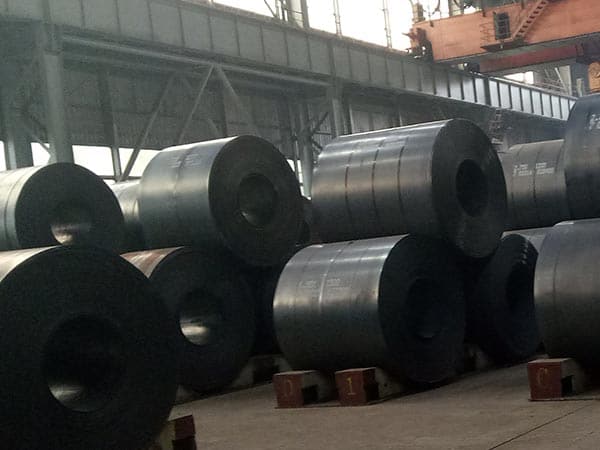
Understanding the Structural Integrity of S550MC Steel
S550MC is a high-yield strength, thermomechanically rolled steel specifically designed for cold forming. Governed by the European standard EN 10149-2, this grade represents a pinnacle of metallurgical engineering where weight reduction meets extreme durability. When engineers ask, "How strong is S550MC?", they are looking at a material that offers a minimum yield strength of 550 MPa. This allows for significantly thinner sections compared to traditional structural steels like S235 or S355, without compromising the safety or load-bearing capacity of the final structure.
S550MC vs. ASTM Equivalents: A Comparative Analysis
Identifying the exact ASTM equivalent for S550MC requires looking at both the mechanical requirements and the manufacturing process. The most common North American counterparts are ASTM A1011 Grade 80 (specifically for sheet and strip) and ASTM A656 Grade 80 (for plate). Both standards specify a minimum yield strength of 80,000 psi, which converts to approximately 551.6 MPa, aligning perfectly with the 550 MPa threshold of S550MC.
| Property | S550MC (EN 10149-2) | ASTM A1011 Gr. 80 | ASTM A656 Gr. 80 |
|---|---|---|---|
| Yield Strength (min) | 550 MPa | 550 MPa (80 ksi) | 550 MPa (80 ksi) |
| Tensile Strength | 600 - 760 MPa | 620 MPa (min) | 620 MPa (min) |
| Elongation (min) | 12 - 14% | 12% | 12 - 15% |
| Formability | Excellent (Cold Forming) | Good | Excellent |
While the mechanical properties are nearly identical, S550MC often undergoes more stringent thermomechanical processing (TMCP), which results in a finer grain structure. This grain refinement is the secret behind its superior weldability and toughness at low temperatures compared to standard hot-rolled ASTM grades.
The Role of Micro-Alloying in S550MC Performance
The strength of S550MC is not achieved through high carbon content, which would impair weldability. Instead, it relies on micro-alloying elements such as Niobium (Nb), Vanadium (V), and Titanium (Ti). These elements facilitate grain refinement and precipitation hardening during the cooling process. By keeping the carbon content low (typically below 0.12%), S550MC maintains a low carbon equivalent (CEV), making it exceptionally easy to weld without the need for extensive preheating.
- Niobium (Nb): Increases yield strength and improves impact toughness by refining the ferrite grain size.
- Titanium (Ti): Prevents grain growth in the heat-affected zone (HAZ) during welding.
- Vanadium (V): Contributes to precipitation hardening, ensuring the steel maintains its strength even after processing.
Advanced Cold Forming and Processing Characteristics
One of the primary reasons manufacturers choose S550MC over other high-strength steels is its remarkable cold-forming capability. Despite its high yield strength, it can be bent to tight radii. For a sheet thickness (t), S550MC typically allows for a minimum inner bending radius of 1.0t to 1.5t, depending on the orientation relative to the rolling direction. This flexibility is critical for complex automotive chassis components and crane booms where precision geometry is mandatory.
When laser cutting S550MC, the material's consistent chemical composition and uniform grain structure ensure clean edges and minimal distortion. This predictability reduces scrap rates and enhances the throughput of automated fabrication lines. However, engineers must account for springback. Because S550MC is significantly stiffer than mild steel, the elastic recovery after bending is more pronounced, requiring over-bending calculations during the design phase.
Environmental Adaptability and Fatigue Resistance
S550MC is designed to perform in demanding environments. Its fine-grained microstructure provides excellent resistance to fatigue, which is essential for components subjected to cyclic loading, such as truck frames and heavy-duty trailers. Furthermore, the thermomechanical rolling process ensures that the steel retains its ductility even at sub-zero temperatures. Many variants of S550MC are tested for impact energy at -20°C or even -40°C, ensuring they do not become brittle in arctic or high-altitude conditions.
Strategic Industrial Applications
The shift toward S550MC and its ASTM equivalents is driven by the global demand for lightweighting. In the transportation industry, replacing S355 with S550MC can reduce the weight of structural components by up to 30-40%. This weight saving directly translates to higher fuel efficiency and increased payload capacity.
- Automotive Industry: Used for longitudinal beams, cross members, and reinforced chassis parts where crash safety and weight are paramount.
- Lifting Equipment: Ideal for telescopic cranes, aerial platforms, and boom sections where high strength-to-weight ratios allow for longer reach.
- Agriculture: Used in the manufacturing of trailers, plows, and harvesting equipment that must withstand high stress while remaining light enough to minimize soil compaction.
- Construction: Employed in cold-pressed profiles and structural sections for modern architectural designs that require slim yet strong supports.
Optimizing Fabrication: Welding S550MC
Welding S550MC requires an understanding of its TMCP origin. Because the strength is derived from the grain structure rather than heat treatment, excessive heat input during welding can cause "softening" in the heat-affected zone. To maintain the integrity of the 550 MPa yield strength, it is recommended to use low heat input welding techniques such as MIG/MAG with optimized shielding gases. Using filler metals that match the strength of the base material (e.g., ER80S-D2 or similar) ensures that the joint is as robust as the parent metal.
Economic Advantages of High-Strength Steel Selection
While the per-ton price of S550MC may be higher than standard structural steel, the total cost of ownership is often lower. By using thinner gauges to achieve the same structural performance, manufacturers reduce the total weight of steel purchased. Additionally, thinner materials require less welding consumables and shorter welding times, leading to significant savings in labor and energy. The environmental impact is also reduced, as less raw material is consumed and the finished products are more energy-efficient throughout their lifecycle.
Choosing between S550MC and an ASTM equivalent often comes down to regional availability and specific project certifications. For global projects, S550MC offers a highly standardized set of properties that are recognized by engineers worldwide, making it a versatile choice for international manufacturing chains. Whether you are designing a high-performance trailer or a complex industrial crane, the strength and reliability of S550MC provide a competitive edge in modern engineering.
Leave a message