
What are the characteristics of qualified s550mc equivalent
Comprehensive analysis of qualified S550MC equivalent steels, detailing chemical composition, mechanical performance, weldability, and industrial applications for high-strength engineering.
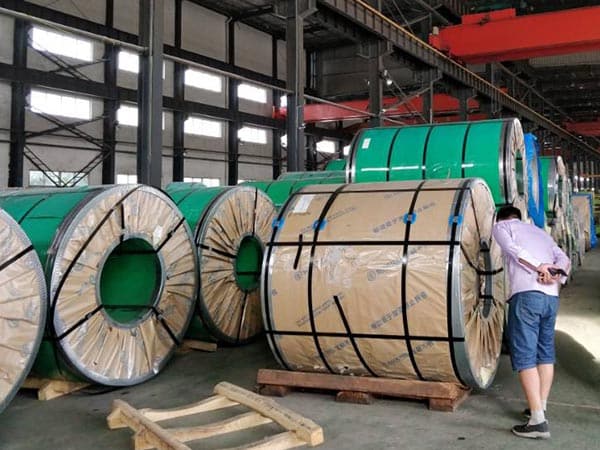
Defining the Essence of S550MC and Its Equivalents
S550MC is a high-yield-strength steel designed for cold forming, governed by the European standard EN 10149-2. The 'S' stands for structural steel, '550' represents the minimum yield strength of 550 MPa, and 'MC' indicates it is thermomechanically rolled (M) and suitable for cold forming (C). When searching for a qualified S550MC equivalent, engineers and procurement specialists must look beyond mere yield strength numbers. A truly qualified equivalent, such as ASTM A1011 Grade 80 or GB/T 1591 Q550D, must replicate the fine-grained microstructure and the delicate balance of ductility and strength that defines the original grade.
Micro-Alloying and Chemical Precision
The performance of a qualified S550MC equivalent starts with its chemical blueprint. Unlike traditional carbon steels, these high-strength low-alloy (HSLA) steels rely on micro-alloying elements like Niobium (Nb), Vanadium (V), and Titanium (Ti). These elements facilitate grain refinement during the thermomechanical rolling process.
A qualified equivalent must maintain a low carbon content (typically below 0.12%) to ensure superior weldability. Manganese levels are usually kept between 1.2% and 1.8% to enhance strength through solid solution hardening without compromising toughness. Sulfur and phosphorus levels are strictly limited to minimize inclusions, which is critical for preventing cracks during severe cold bending operations.
| Element | Typical S550MC Requirement (%) | Qualified Equivalent Tolerance |
|---|---|---|
| Carbon (C) | Max 0.12 | Max 0.12 - 0.15 |
| Manganese (Mn) | Max 1.80 | 1.20 - 1.80 |
| Silicon (Si) | Max 0.50 | Max 0.50 |
| Phosphorus (P) | Max 0.025 | Max 0.025 |
| Sulfur (S) | Max 0.015 | Max 0.010 - 0.015 |
Mechanical Integrity: Beyond the Yield Point
While the name implies a 550 MPa yield strength, a qualified equivalent must demonstrate consistent mechanical properties across the entire coil or plate. The tensile strength usually ranges from 600 to 760 MPa. However, the most critical factor for manufacturing is the elongation percentage. For S550MC, the minimum elongation (A80mm) is typically 12% to 14% depending on thickness. If an equivalent grade offers 550 MPa yield but only 8% elongation, it is not a qualified substitute for applications involving complex forming.
Impact energy is another vital metric. Although EN 10149-2 does not always mandate impact testing unless specified, high-quality equivalents often guarantee toughness at -20°C or -40°C. This ensures the steel remains ductile in cold climates, preventing brittle fractures in structural components of heavy machinery or transport vehicles.
Superior Cold Formability and Bendability
One of the primary reasons for selecting S550MC is its ability to be bent into complex shapes without surface cracking. A qualified equivalent must pass a 180-degree bend test. For thicknesses (t) less than or equal to 3mm, the recommended internal bend radius is often 1.0t to 1.5t. This capability is a direct result of the thermomechanical rolling process, which creates a very fine and uniform grain structure.
Manufacturers should verify that the equivalent steel exhibits minimal springback. While high-strength steels naturally have more springback than mild steels, a stable and predictable elastic recovery is essential for precision automated fabrication lines. If the equivalent grade has inconsistent grain orientation, it will lead to varying bend angles across different batches, causing significant production delays.
Weldability and Thermal Stability
Qualified S550MC equivalents are designed with a low Carbon Equivalent Value (CEV). This makes them exceptionally easy to weld using standard methods like MAG, TIG, or laser welding. Because the strength is derived from grain refinement and micro-alloying rather than high carbon or quenching, the Heat Affected Zone (HAZ) remains relatively stable.
- Low Preheating Requirements: Unlike high-carbon structural steels, S550MC equivalents generally do not require preheating for standard thicknesses, reducing energy costs and assembly time.
- Minimal Softening: While some softening in the HAZ is inevitable in thermomechanically rolled steels, a qualified equivalent limits this loss of strength, ensuring the joint remains nearly as strong as the base metal.
- Compatibility: It should be compatible with standard E80 or E90 series welding consumables to match the base metal's yield strength.
Environmental Adaptability and Surface Quality
S550MC is frequently used in chassis and frames where exposure to the elements is constant. A qualified equivalent must have a surface finish that allows for excellent paint adhesion and corrosion protection. Whether supplied in 'as rolled' or 'pickled and oiled' (P&O) condition, the surface must be free from scales, pits, or laminations that could act as stress concentrators or sites for localized corrosion.
In terms of GEO-environmental factors, the steel's performance in varied climates is paramount. High-strength equivalents must resist atmospheric corrosion through a dense surface oxide layer or be receptive to advanced galvanizing processes without the risk of hydrogen embrittlement.
Strategic Industry Applications
The transition to S550MC equivalents is often driven by the need for weight reduction (lightweighting) without sacrificing safety. This is particularly prevalent in the following sectors:
- Automotive and Transportation: Used for truck chassis, cross members, and longitudinal beams. Replacing thicker S355 grade steel with thinner S550MC can reduce component weight by up to 30%.
- Lifting and Handling: Crane booms, telescopic arms, and stabilizer legs benefit from the high strength-to-weight ratio, allowing for higher reach and load capacities.
- Agricultural Equipment: High-stress components in harvesters and plows require the toughness and fatigue resistance that only a qualified HSLA equivalent can provide.
- Cold Pressed Parts: Complex structural brackets that require both high load-bearing capacity and intricate geometry.
Identifying Genuine Equivalents in the Global Market
When sourcing, it is important to distinguish between "similar" and "equivalent." A similar grade might match the yield strength but fail on the elongation or chemical purity. To ensure a qualified S550MC equivalent, the Mill Test Certificate (MTC) should be scrutinized for the thermomechanical rolling status and the specific micro-alloying additions.
Standard comparisons often include:
- ASTM A1011 Grade 80: Common in the North American market, though users must check if it is Class 1 or Class 2 to ensure the required ductility.
- GB/T 1591 Q550D: A Chinese standard that is widely used and offers comparable mechanical properties and impact toughness.
- JIS G3134 SPFH 590: A Japanese equivalent often used in automotive parts, though it has slightly different tensile ranges.
Choosing the right equivalent involves a holistic evaluation of the manufacturing process, the final application's stress environment, and the specific fabrication techniques used. By focusing on grain refinement, low carbon equivalents, and consistent elongation, engineers can successfully integrate S550MC equivalents into their designs to achieve superior performance and cost-efficiency.
Leave a message