
What is the en 10149-2 s315mc steel price export to French
In-depth guide on EN 10149-2 S315MC steel pricing for the French market. Covers mechanical properties, processing advantages, environmental impact, and export logistics.
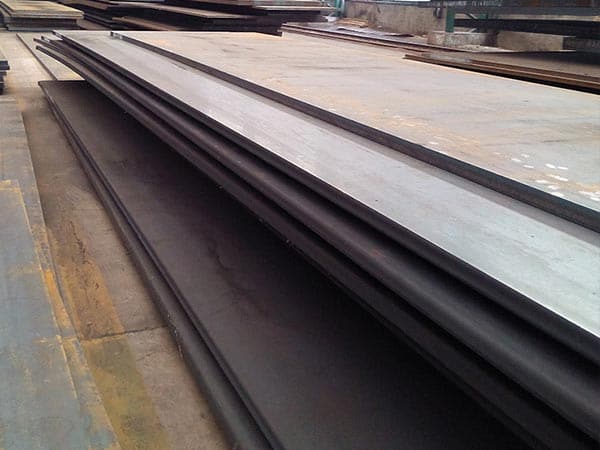
The Fundamentals of EN 10149-2 S315MC in the Global Market
Understanding the price of EN 10149-2 S315MC steel for export to France requires a deep dive into its metallurgical identity. S315MC is a high yield strength steel specifically designed for cold forming. The 'S' denotes structural steel, '315' represents the minimum yield strength of 315 MPa, and 'MC' indicates that the material is thermomechanically rolled (M) and suitable for cold forming (C). This grade is a staple in European manufacturing due to its balance of strength, ductility, and weight-saving potential.
When French procurement managers evaluate S315MC, they aren't just looking at a commodity price per ton. They are investing in a material that adheres to strict European standards, ensuring consistency across automated production lines. The price volatility often reflects the cost of micro-alloying elements like Niobium (Nb), Vanadium (V), and Titanium (Ti), which are essential for achieving the fine-grain structure required by the EN 10149-2 specification.
Chemical Composition and Its Impact on Material Value
The pricing of S315MC is intrinsically linked to its chemical purity. Unlike standard carbon steels, S315MC maintains extremely low levels of impurities, which enhances its weldability and toughness. The controlled addition of alloying elements allows for a lower carbon equivalent, making it easier to process without the risk of cold cracking.
| Element | Maximum Percentage (%) |
|---|---|
| Carbon (C) | 0.12 |
| Manganese (Mn) | 1.30 |
| Silicon (Si) | 0.50 |
| Phosphorus (P) | 0.025 |
| Sulfur (S) | 0.020 |
| Aluminum (Al) | 0.015 (min) |
This precise chemical balance ensures that the steel remains stable during high-speed laser cutting and complex bending operations, which are common in French high-tech workshops. Any fluctuation in the global price of Manganese or Niobium directly influences the export quote for S315MC.
Mechanical Properties: Why French Engineers Prefer S315MC
The mechanical integrity of S315MC is the primary driver for its demand in the French transport and construction sectors. Its high yield strength allows for the use of thinner gauges compared to traditional S235JR or s355jr steels, leading to significant weight reductions in final products.
- Yield Strength: Minimum 315 MPa, providing a robust safety margin for structural components.
- Tensile Strength: Ranges between 390 and 510 MPa, ensuring the material can withstand significant stress before failure.
- Elongation: Minimum 20% (for thicknesses < 3mm), which is critical for intricate cold-forming processes.
- Impact Strength: Excellent low-temperature toughness, making it suitable for equipment operating in the diverse French climate, from the Alps to the Atlantic coast.
These properties are achieved through Thermomechanical Controlled Processing (TMCP). This process involves precise temperature control during rolling, which refines the grain size. For the French market, where safety and durability are paramount, the reliability of these mechanical values justifies the premium over standard hot-rolled coils.
Processing Performance and Operational Efficiency
French manufacturers in the automotive and heavy machinery sectors prioritize S315MC because of its exceptional processing characteristics. The cost of steel is only one part of the equation; the 'cost to process' is where S315MC truly shines.
Cold Forming: S315MC is designed for tight bending radii. It can be bent 180 degrees without cracking, provided the minimum bend radius is respected. This allows for the creation of complex, one-piece structural components, reducing the need for extensive welding and assembly.
Weldability: Due to its low carbon content and fine-grain structure, S315MC is compatible with all standard welding methods, including MIG/MAG, TIG, and laser welding. It does not require pre-heating in most applications, which accelerates production cycles and reduces energy consumption in French factories.
Surface Quality: Export-grade S315MC usually comes with a high-quality surface finish, often pickled and oiled (P&O). This is essential for French industries that require immediate painting or galvanizing, as it eliminates the need for intensive pre-treatment.
French Market Dynamics and Price Drivers
Exporting S315MC to France involves navigating several economic factors that influence the final landed price. Currently, the French industrial sector is undergoing a shift toward sustainability and high-efficiency materials.
The price is influenced by:
- EU Carbon Border Adjustment Mechanism (CBAM): As France adheres to strict EU environmental regulations, importers must account for the carbon footprint of the steel produced outside the EU.
- Logistics and Freight: Shipping costs to major French ports like Le Havre, Marseille, or Dunkirk fluctuate based on global fuel prices and container availability.
- Energy Surcharges: Steel mills in Europe and Asia often apply energy surcharges depending on the volatility of natural gas and electricity prices.
- Currency Exchange: The Euro (EUR) vs. US Dollar (USD) or Chinese Yuan (CNY) exchange rate plays a pivotal role in the competitiveness of export quotes.
Strategic Applications in French Industry
The versatility of S315MC makes it a preferred choice across various high-value sectors in France. Its adoption is driven by the need for lightweighting and structural optimization.
Automotive Sector: Used extensively for chassis parts, seat frames, and suspension components. French automakers like Renault and Stellantis utilize S315MC to meet stringent CO2 emission targets by reducing vehicle weight without compromising crash safety.
Heavy Machinery: In the production of agricultural equipment and earthmoving machinery, S315MC provides the necessary strength for crane arms and trailer frames while remaining easy to weld and repair in the field.
Storage and Racking: The high yield strength is ideal for industrial racking systems found in French logistics hubs, allowing for higher load-bearing capacities with less material usage.
Environmental Adaptability and Sustainability
France is a leader in the 'Green Deal' initiative, and S315MC aligns perfectly with these goals. Because the steel is high-strength, less material is required to achieve the same structural integrity as lower grades. This 'material efficiency' results in lower carbon emissions during transport and manufacturing.
Furthermore, S315MC is 100% recyclable. At the end of a product's lifecycle—whether it's a truck chassis or a warehouse rack—the steel can be returned to the electric arc furnace (EAF) to be reborn as new high-quality steel, supporting the circular economy that is highly valued in the French market.
Navigating Export Regulations and Standards
When sourcing S315MC for the French market, compliance with EN 10149-2 is non-negotiable. French inspectors and quality control teams require Mill Test Certificates (MTC) according to EN 10204 3.1. This documentation must verify the chemical analysis, mechanical testing, and the thermomechanical rolling process.
Potential exporters must also be aware of any anti-dumping duties (ADD) imposed by the European Commission on certain origins of hot-rolled flat products. Ensuring that the S315MC is sourced from a mill with the necessary CE marking and ISO certifications is crucial for smooth customs clearance and acceptance by French industrial end-users.
Optimizing Value in S315MC Procurement
To secure the best price for S315MC export to France, it is essential to look beyond the base rate. Factors such as coil width optimization, length tolerances, and protective packaging for sea freight can significantly impact the total cost of ownership. Working with a supplier who understands the nuances of the French 'Normes Françaises' (NF) and the broader European supply chain can provide a competitive edge in a demanding market.
Leave a message