
What are the top ten s700mc steel equivalent in india brands in Turkey
Discover the top ten S700MC steel equivalent brands in India and Turkey. This guide covers mechanical properties, chemical composition, and industrial applications of high-strength steel.
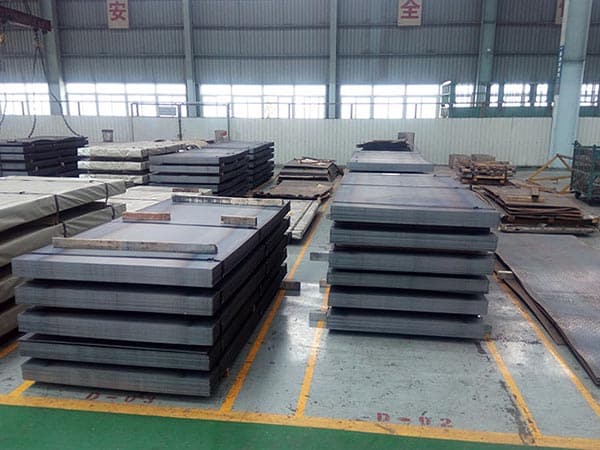
Understanding S700MC: The Benchmark for High-Strength Steel
S700MC is a high-strength, thermomechanically rolled steel grade governed by the European standard EN 10149-2. Known for its exceptional yield strength of at least 700 MPa, this material is a staple in industries requiring weight reduction without compromising structural integrity. The 'S' stands for structural steel, '700' denotes the minimum yield strength in megapascals, and 'MC' indicates it is thermomechanically rolled for cold forming. As global supply chains evolve, identifying reliable equivalents in major manufacturing hubs like India and Turkey is crucial for procurement and engineering teams.
Top Ten S700MC Equivalent Brands and Grades in India and Turkey
The steel markets in India and Turkey are robust, hosting some of the world's most advanced rolling mills. Below are the primary brands and their respective equivalent grades that match the S700MC specification.
| Brand Name | Equivalent Grade / Trade Name | Country of Origin |
|---|---|---|
| JSW Steel | JSW Steel 700 / JSW Magma | India |
| Tata Steel | Tata Astrum 700 / Steelium Hi-Strength | India |
| AM/NS India | AM/NS 700MC | India |
| Steel Authority of India (SAIL) | SAILMA 700HI | India |
| Erdemir | Grade 7423 / 7424 | Turkey |
| Isdemir | Grade 7425 (Hot Rolled High Strength) | Turkey |
| Colakoglu Metalurji | S700MC (EN 10149-2) | Turkey |
| Tosyali Holding | Tosyali S700 Series | Turkey |
| Habas | Habas High Strength S700 | Turkey |
| Essar Steel (Now AM/NS) | E700 High Strength | India |
Mechanical Properties: Why S700MC is Superior
The primary allure of S700MC and its equivalents lies in the mechanical performance. These steels offer a high strength-to-weight ratio, allowing for thinner sections in structural components. This directly translates to fuel efficiency in transport vehicles and lower material costs in construction.
- Yield Strength (Reh): Minimum 700 MPa.
- Tensile Strength (Rm): 750 - 950 MPa.
- Elongation (A80): Minimum 10% to 12% depending on thickness.
- Impact Strength: Often tested at -20°C or -40°C to ensure low-temperature toughness.
The thermomechanical rolling process (TMCP) used by brands like JSW and Erdemir ensures a fine-grained microstructure. This microstructural refinement is achieved by controlling the temperature and deformation during the rolling process, often supplemented by micro-alloying elements like Niobium (Nb), Vanadium (V), and Titanium (Ti).
Chemical Composition and Micro-Alloying
To achieve 700 MPa yield strength while maintaining weldability, the carbon content is kept strictly low. This distinguishes S700MC from traditional quenched and tempered steels. The low carbon equivalent (CEV) is a critical factor for Indian and Turkish manufacturers to ensure the steel does not crack during rapid cooling or welding.
| Element | Max % (EN 10149-2) | Typical JSW/Erdemir Values |
|---|---|---|
| Carbon (C) | 0.12 | 0.08 - 0.10 |
| Manganese (Mn) | 2.10 | 1.60 - 1.80 | 0.60 | 0.20 - 0.35 |
| Phosphorus (P) | 0.025 | 0.015 |
| Sulfur (S) | 0.015 | 0.005 |
| Nb + V + Ti | 0.22 | 0.15 |
Processing Performance: Bending and Welding
One of the most critical aspects of S700MC equivalents from brands like Tata Steel or Colakoglu is their cold-forming capability. Despite their extreme strength, these steels can be bent to tight radii. For a thickness (t) under 3mm, a minimum bending radius of 1.0t is often achievable, though 1.5t to 2.0t is recommended for safety margins.
Welding Considerations: Due to the low carbon content, S700MC equivalents exhibit excellent weldability. Standard methods such as MAG (Metal Active Gas), MIG (Metal Inert Gas), and Laser Beam Welding are highly effective. It is vital to use low-hydrogen consumables to prevent cold cracking. Because the strength is derived from the TMCP process rather than heat treatment, excessive heat input during welding should be avoided to prevent softening of the Heat Affected Zone (HAZ).
Environmental Adaptability and Durability
Steel produced in Turkey and India must often withstand diverse climatic conditions, from the humid coastal regions of Mumbai to the freezing mountainous areas of Eastern Anatolia. S700MC equivalents are designed with atmospheric corrosion resistance in mind, though they are typically painted or galvanized for long-term exposure.
The fine-grained structure provides an inherent resistance to brittle fracture. This makes these grades ideal for dynamic loads and vibration-heavy environments, such as those found in heavy machinery and mining equipment. The consistency of the grain structure across the coil width and length is a hallmark of top-tier brands like AM/NS India and Isdemir.
Industry-Specific Applications
The shift toward S700MC equivalents is driven by the global push for "lightweighting." By replacing S355 or S500 grades with S700MC, engineers can reduce component weight by up to 30-40%.
- Automotive and Transport: Truck chassis frames, cross members, and trailer side beams.
- Lifting Equipment: Crane booms, telescopic arms, and outriggers where high strength and low weight are paramount.
- Agriculture: High-stress components in harvesters, plows, and trailers.
- Construction: Cold-pressed profiles and structural sections for high-rise scaffolding and modular buildings.
In the Indian market, Tata Astrum has seen significant uptake in the commercial vehicle segment, while in Turkey, Erdemir's high-strength grades are frequently exported to European automotive manufacturers, proving their compliance with stringent international quality standards.
Strategic Procurement in India and Turkey
When sourcing S700MC equivalents, it is essential to verify the Mill Test Certificate (MTC). Ensure that the material complies with EN 10204 3.1 or 3.2. Indian manufacturers often follow IS 2062 standards, but for high-strength grades, they usually certify directly to EN 10149-2 to facilitate international trade. Turkish mills are highly integrated into the European supply chain, meaning their S700MC offerings are virtually identical to those produced by German or Swedish mills in terms of tolerances and surface finish.
Selecting the right brand involves evaluating the specific dimensions required. For instance, JSW Steel offers some of the widest hot-rolled coils in India, while Erdemir is renowned for its precision in thickness tolerances, which is critical for automated laser cutting and robotic welding lines.
Leave a message