
How to remove rust of S420MC steel for car body
Explore professional methods for removing rust from S420MC high-strength steel used in automotive bodies. This guide covers mechanical, chemical, and laser cleaning techniques while preserving structural integrity.
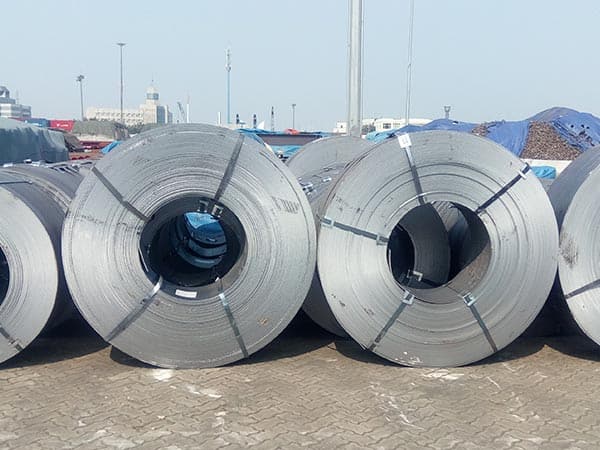
Understanding S420MC Steel Characteristics in Automotive Applications
S420MC steel is a high-strength, low-alloy (HSLA) steel grade governed by the EN 10149-2 standard. It is specifically designed for cold-forming applications where weight reduction and high structural integrity are paramount. In the automotive industry, S420MC is the backbone of chassis components, longitudinal beams, and cross members. Its yield strength of 420 MPa allows manufacturers to use thinner gauges without sacrificing safety, directly contributing to fuel efficiency and reduced carbon emissions.
However, because S420MC is thermomechanically rolled and lacks the high chromium content of stainless steel, it remains susceptible to atmospheric corrosion and oxidation. When moisture and oxygen react with the iron on the surface, iron oxide (rust) forms. For a car body, this is not merely an aesthetic issue; it is a structural threat. Rust can lead to stress concentration points, potentially causing fatigue failure in critical load-bearing parts. Removing rust while maintaining the steel's mechanical properties is a precise engineering task.
The Metallurgical Impact of Corrosion on S420MC
Before diving into removal techniques, it is essential to understand how rust interacts with the fine-grained structure of S420MC. This steel contains micro-alloying elements such as Niobium (Nb), Vanadium (V), and Titanium (Ti). These elements refine the grain size, providing the material with its characteristic toughness and strength. When rust penetrates the surface, it disrupts the surface tension and can lead to pitting corrosion.
Pitting is particularly dangerous for high-strength steels. A small pit can act as a notch, significantly reducing the fatigue life of the automotive component. Therefore, the goal of rust removal is not just to clean the surface but to do so without inducing hydrogen embrittlement or removing excessive base metal, which would thin the structural cross-section.
Mechanical Rust Removal Methods
Mechanical methods are often the first line of defense for heavy oxidation on S420MC car body parts. These methods physically displace the rust layers through abrasion or impact.
- Abrasive Sanding and Grinding: For localized rust spots, manual or pneumatic grinders with 80-120 grit sandpaper are effective. It is vital to avoid excessive heat generation, as localized overheating can alter the tempered state of the HSLA steel.
- Shot Blasting: In industrial restoration or manufacturing, shot blasting with steel grit or ceramic beads is common. This method not only removes rust but also introduces beneficial compressive residual stresses on the surface, which can improve the fatigue resistance of the S420MC component.
- Wire Brushing: Useful for tight corners and welds, though it is less efficient for large surface areas. Stainless steel brushes should be used to prevent cross-contamination of carbon steel particles.
| Method | Efficiency | Impact on S420MC Surface | Best Use Case |
|---|---|---|---|
| Sanding | Medium | Low (if heat is controlled) | Surface prep for painting |
| Shot Blasting | High | Moderate (surface hardening) | Large chassis components |
| Wire Brushing | Low | Minimal | Welded joints and seams |
Chemical Rust Removal and Passivation
Chemical treatments offer a way to remove rust from complex geometries where mechanical tools cannot reach. However, for S420MC, one must be cautious about hydrogen embrittlement, a phenomenon where hydrogen atoms penetrate the steel lattice during acid pickling, making the high-strength steel brittle.
Phosphoric Acid-Based Removers: These are the most common in automotive applications. Phosphoric acid reacts with iron oxide to form iron phosphate, a black, stable layer that provides temporary corrosion resistance. This process is generally safer for S420MC than hydrochloric acid, as it is less aggressive toward the base metal.
Chelating Agents: Modern rust removers use molecules that bind specifically to iron ions without affecting the unoxidized steel. These are pH-neutral and eliminate the risk of acid-induced damage to the S420MC micro-structure. They are ideal for delicate car body panels where maintaining the original thickness is critical.
Laser Cleaning: The Modern Automotive Standard
Laser cleaning has emerged as the most sophisticated method for treating S420MC steel. It utilizes high-frequency laser pulses to sublimate rust without physical contact or chemical waste. For high-strength steels like S420MC, laser cleaning offers several advantages:
- Precision: It removes only the oxide layer, leaving the base metal completely intact.
- No Chemical Risk: There is zero risk of hydrogen embrittlement or chemical residue.
- Surface Activation: The process leaves the surface in a highly active state, which is perfect for the subsequent application of primers or anti-corrosion coatings.
While the initial equipment cost is high, the speed and lack of consumables make it highly efficient for high-volume automotive production lines or high-end restorations.
Environmental Adaptability and Long-term Protection
Removing rust is only half the battle. S420MC's performance in various environments depends on the protection applied after cleaning. In coastal areas with high salinity or regions where road salt is used in winter, the cleaned steel will oxidize almost immediately if not sealed.
The standard procedure for S420MC car body parts involves a multi-layer protection strategy. After rust removal, the surface should be degreased and then treated with an epoxy primer. Epoxy provides an excellent moisture barrier and adheres strongly to the fine-grained surface of HSLA steel. For chassis parts, a secondary layer of underbody wax or rubberized coating is often applied to protect against stone chips and mechanical abrasion.
Mechanical Properties Retention Post-Cleaning
Engineers must ensure that the rust removal process does not compromise the tensile strength (480-620 MPa) or the elongation (min 16-20%) of S420MC. If a component has lost more than 10% of its original thickness due to deep corrosion, the structural integrity is likely compromised, and replacement is safer than cleaning. For surface rust, ensuring that the cleaning method does not introduce micro-cracks is the priority. Using non-destructive testing (NDT) such as dye penetrant inspection after heavy rust removal can confirm the component is still fit for service in a vehicle.
Industry-Specific Applications and Best Practices
In the heavy-duty truck industry, S420MC is used for frames that endure massive torsional stress. Rust removal in this sector often involves high-pressure water jetting (hydro-blasting) combined with rust inhibitors. This avoids the dust associated with sandblasting while being powerful enough to strip heavy scales.
For passenger cars, where S420MC might be used in thinner sections for seat frames or reinforcement pillars, the focus is on chemical converters or laser cleaning to prevent any distortion of the thin-walled parts. Maintaining the weldability of the steel is also crucial; any rust removal method must ensure that no residues are left that could contaminate future repair welds, as S420MC requires clean surfaces to maintain its weld-zone toughness.
Effective rust management for S420MC steel involves a balanced approach that respects the material's metallurgical sophistication. By choosing the right removal method—be it mechanical, chemical, or laser—and following up with robust surface protection, the lifespan and safety of the automotive body can be significantly extended, ensuring that the high-strength benefits of this steel grade are fully realized throughout the vehicle's operational life.
Leave a message