
Will S460MC Steel for automotive inner panels rust?
A comprehensive technical analysis of S460MC steel's corrosion resistance, mechanical properties, and processing performance for automotive inner panels.
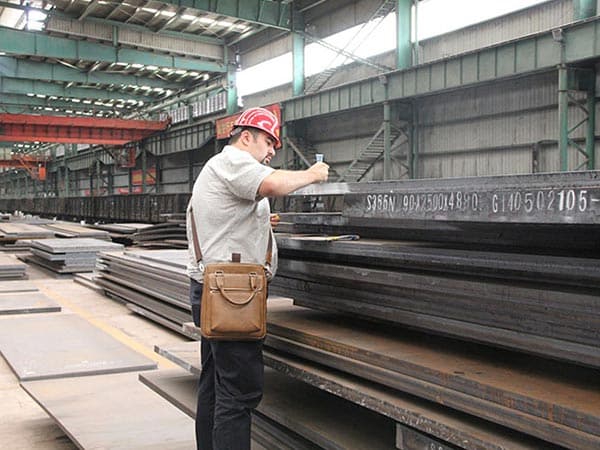
The Fundamental Nature of S460MC Steel in Automotive Engineering
S460MC is a high-strength low-alloy (HSLA) steel grade specifically designed for cold forming applications, governed by the EN 10149-2 standard. In the context of automotive manufacturing, where the push for lightweighting and fuel efficiency is relentless, S460MC has emerged as a critical material for structural components, including inner panels, chassis parts, and cross members. The 'S' denotes structural steel, '460' indicates a minimum yield strength of 460 MPa, 'M' refers to its thermomechanically rolled condition, and 'C' signifies its suitability for cold forming. While its mechanical prowess is well-documented, a recurring question among procurement specialists and automotive engineers is whether S460MC steel for automotive inner panels will rust. Understanding the oxidation behavior of this material requires a deep dive into its chemical composition, the manufacturing process, and the environmental conditions it encounters throughout its lifecycle.
Chemical Composition and Its Impact on Oxidation
The corrosion resistance of any carbon steel is primarily dictated by its chemistry. S460MC is not a stainless steel; it lacks the high chromium content (typically >10.5%) required to form a self-healing passive oxide layer. Instead, its composition is optimized for strength and weldability. The low carbon content (usually ≤ 0.12%) ensures excellent ductility, but it does little to prevent atmospheric corrosion. Elements like Manganese (Mn ≤ 1.60%) and Silicon (Si ≤ 0.50%) are added for deoxidation and solid solution strengthening. Micro-alloying elements such as Niobium (Nb), Vanadium (V), and Titanium (Ti) are the hallmarks of S460MC, providing grain refinement that leads to its high yield strength. However, these elements do not significantly alter the electrochemical potential of the iron matrix, meaning S460MC will oxidize when exposed to moisture and oxygen.
| Element | Maximum Content (%) | Effect on Performance |
|---|---|---|
| Carbon (C) | 0.12 | Ensures weldability and prevents brittleness. |
| Manganese (Mn) | 1.60 | Increases strength and hardenability. |
| Silicon (Si) | 0.50 | Deoxidizer, improves yield strength. |
| Phosphorus (P) | 0.025 | Kept low to maintain toughness. |
| Sulfur (S) | 0.015 | Minimizing sulfur improves lamellar tearing resistance. |
| Aluminium (Al) | 0.015 (Min) | Grain size control. |
The Mechanism of Rusting in Automotive Inner Panels
Rusting, or the formation of iron oxide, is an electrochemical process. For S460MC used in automotive inner panels, this process typically begins with the presence of an electrolyte, such as condensation or road salt spray that penetrates the vehicle's crevices. Since inner panels are often shielded from direct sunlight and airflow, they can trap moisture, creating a micro-environment conducive to prolonged oxidation. The iron in the S460MC reacts with oxygen and water to form Fe(OH)2, which further oxidizes into the hydrated iron(III) oxide known as red rust. Unlike the dense patina formed on weathering steel, the rust on S460MC is porous and flaky, allowing moisture to penetrate deeper into the substrate, potentially leading to structural thinning over many years if left unprotected.
Mechanical Properties and Structural Integrity
The primary reason for selecting S460MC over lower grades like S355MC is its superior strength-to-weight ratio. Automotive inner panels often serve as the backbone for the vehicle's interior rigidity and crash safety. By using S460MC, engineers can reduce the thickness of the steel sheet without sacrificing the component's load-bearing capacity. This reduction in mass is vital for meeting global emissions standards. The mechanical properties of S460MC are achieved through thermomechanical rolling, which involves controlled deformation at specific temperature ranges to produce a very fine ferrite-pearlite grain structure.
- Yield Strength: Minimum 460 MPa, providing high resistance to permanent deformation.
- Tensile Strength: Ranges between 520 and 670 MPa, ensuring the material can withstand high stress during collisions.
- Elongation: Typically ≥ 14% for thicknesses under 3mm, allowing for complex stamping of inner panel geometries.
- Impact Toughness: Maintains ductility even at low temperatures, which is crucial for vehicles operating in arctic climates.
Environmental Adaptability and the Role of Protective Coatings
Given that S460MC will rust in its bare state, the automotive industry employs sophisticated multi-layer protection systems. The inner panels are rarely used as "black" (uncoated) steel in the final assembly. During the manufacturing process, S460MC coils are often pickled and oiled to prevent flash rust during transport and storage. Once the panel is stamped and welded into the vehicle body (Body-in-White), it undergoes an Electrophoretic Coating (E-coat or KTL) process. This involves submerging the entire chassis in a tank of primer where an electric current deposits a uniform, corrosion-resistant epoxy layer even in the most recessed areas of the inner panels. For high-corrosion environments, S460MC can also be sourced in a hot-dip galvanized (GI) or galvannealed (GA) state, where a zinc coating provides sacrificial protection to the underlying steel.
Processing Performance: Welding and Forming
S460MC is celebrated for its excellent processing characteristics. Its low carbon equivalent (CEV) makes it highly weldable using standard automotive techniques such as Resistance Spot Welding (RSW), Laser Welding, and MAG welding. Because the strength is derived from grain refinement rather than high alloy content, the Heat Affected Zone (HAZ) remains relatively stable, although care must be taken to avoid excessive heat input that could cause grain coarsening and a localized drop in strength. From a forming perspective, S460MC exhibits low springback compared to higher-strength dual-phase steels, making it easier to achieve tight dimensional tolerances in inner panel assemblies. The fine-grained structure also minimizes the risk of edge cracking during hole expansion or flanging operations.
Industry-Specific Applications and Case Studies
The adoption of S460MC spans various segments of the transportation industry. In heavy truck manufacturing, S460MC is the standard for longitudinal beams and inner reinforcement plates where durability is paramount. In passenger vehicles, it is frequently utilized for seat frames, floor reinforcements, and door inner structures. These components are critical for occupant safety but are hidden from view, making them susceptible to "hidden" corrosion if the E-coat is compromised during assembly. Engineers must ensure that the design of these panels includes adequate drainage holes to prevent the accumulation of water, which is the primary catalyst for rust in HSLA steels.
Comparison with Alternative Steel Grades
When evaluating S460MC against S355MC, the former offers a 30% increase in yield strength, allowing for a significant gauge reduction. However, as strength increases, the sensitivity to surface defects and stress corrosion cracking can also increase. Compared to Advanced High-Strength Steels (AHSS) like DP600, S460MC is more cost-effective and easier to form, though it lacks the high work-hardening rate of dual-phase steels. In terms of rust resistance, all these grades behave similarly in their bare state; the choice between them is driven by mechanical requirements rather than inherent corrosion differences. The decision to use S460MC for inner panels is a balance of weight, cost, and the ability to integrate into existing coating lines.
Strategies for Preventing Corrosion During Storage and Fabrication
To ensure that S460MC components do not develop rust before they reach the coating stage, several industrial best practices are followed. First, maintaining a controlled humidity environment in the warehouse is essential. Steel coils should be stored on racks, off the floor, to prevent moisture wicking. Second, during the stamping process, the use of high-quality synthetic lubricants can provide a temporary barrier against oxidation. If parts are stored for extended periods between stamping and welding, a secondary rust-preventative oil may be applied. Finally, the cleaning stage of the E-coat line must be meticulously managed to remove all oils and shop dirt, ensuring the phosphate and primer layers bond perfectly to the S460MC surface, providing the long-term corrosion protection required for the vehicle's 10-to-15-year service life.
The Future of S460MC in a Greener Automotive Sector
As the industry transitions toward Electric Vehicles (EVs), the role of S460MC is evolving. EVs are significantly heavier due to battery packs, making weight reduction in the rest of the vehicle even more critical. S460MC remains a top choice for battery enclosures and internal structural reinforcements due to its reliability and ease of recycling. While newer aluminum alloys and composites offer even lower weight, the cost-to-performance ratio and the established recycling infrastructure of steel like S460MC make it indispensable. The focus is shifting toward "Green Steel" production, where hydrogen-based reduction of iron ore is used to create S460MC with a much lower carbon footprint, ensuring that this versatile material remains relevant in a sustainable manufacturing landscape.
Addressing the rust concern involves a holistic view of the vehicle's design. While S460MC is naturally prone to oxidation like all carbon steels, the integration of modern metallurgical controls, precision stamping, and advanced coating technologies effectively mitigates this risk. When utilized within a properly engineered system, S460MC provides the strength and longevity required for the most demanding automotive applications, proving that its benefits far outweigh the manageable challenges of its chemical nature.
Leave a message