
What is the S700MC steel for car gear BBN Steel stock
Comprehensive guide to S700MC high-strength steel properties, chemical composition, and automotive applications. Learn why BBN Steel's S700MC stock is the top choice for vehicle weight reduction and structural integrity.
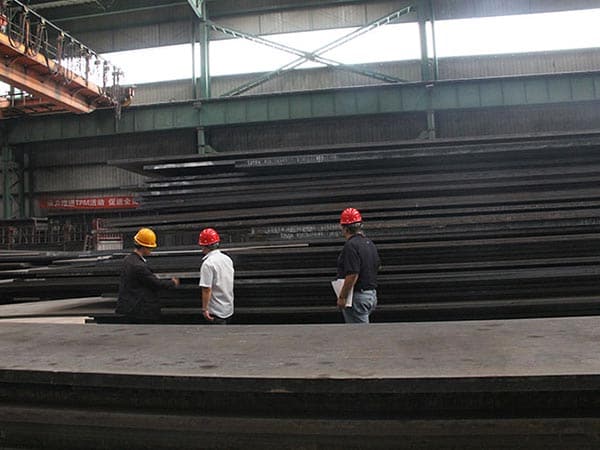
Defining S700MC: The High-Performance Benchmark for Automotive Engineering
S700MC represents a pinnacle in the evolution of high-strength low-alloy (HSLA) steels, specifically engineered through thermomechanical rolling processes. As defined by the EN 10149-2 standard, the 'S' denotes structural steel, '700' signifies a minimum yield strength of 700 MPa, and 'MC' indicates it is thermomechanically rolled for cold forming. This material has become indispensable for modern automotive manufacturing, where the dual demands of weight reduction and enhanced safety are paramount.
BBN Steel maintains an extensive inventory of S700MC, recognizing its critical role in the global supply chain. Unlike traditional hot-rolled steels, S700MC achieves its extraordinary strength through a refined grain structure rather than high carbon content. This metallurgical strategy ensures that the steel remains highly ductile and weldable despite its immense load-bearing capacity. For automotive components, especially those involved in structural support and load distribution, this steel provides a strength-to-weight ratio that few other materials can match.
The Metallurgy Behind the Strength: Chemical Composition of S700MC
The performance of S700MC is rooted in its precise chemical balance. By utilizing micro-alloying elements such as Niobium (Nb), Vanadium (V), and Titanium (Ti), manufacturers can achieve grain refinement that prevents dislocation movement within the crystalline lattice. This process occurs during the thermomechanical rolling stage, where controlled cooling and rolling temperatures dictate the final mechanical properties.
| Element | Max Content (%) | Role in S700MC |
|---|---|---|
| Carbon (C) | 0.12 | Ensures weldability while maintaining hardness. |
| Manganese (Mn) | 2.10 | Increases tensile strength and hardenability. |
| Silicon (Si) | 0.60 | Deoxidizer and solid solution strengthener. |
| Niobium (Nb) | 0.09 | Key for grain refinement and precipitation hardening. |
| Titanium (Ti) | 0.22 | Prevents grain growth during welding. |
| Phosphorus (P) | 0.025 | Kept low to maintain toughness. |
The low carbon equivalent (CEV) of S700MC is one of its most significant commercial advantages. In automotive assembly lines, where high-speed robotic welding is the norm, the ability to weld without preheating or post-weld heat treatment saves significant time and energy costs. BBN Steel ensures that every batch of S700MC stock adheres to these strict chemical limits, providing consistency for automated manufacturing processes.
Mechanical Properties and Cold Forming Capabilities
Mechanical integrity is the primary reason engineers specify S700MC for vehicle components. With a yield strength starting at 700 MPa, it allows for the use of thinner gauges without sacrificing the structural safety of the vehicle. This is particularly relevant for chassis frames, cross members, and structural brackets.
| Property | Value (Metric) | Significance |
|---|---|---|
| Yield Strength (ReH) | Min 700 MPa | Resistance to permanent deformation. |
| Tensile Strength (Rm) | 750 - 950 MPa | Maximum stress before necking or failure. |
| Elongation (A5) | Min 12% | Ability to deform plastically without fracture. |
| Bending Radius (90°) | 1.5t to 2.0t | Suitability for complex cold-formed shapes. |
Despite its high strength, S700MC exhibits exceptional cold forming properties. It can be bent, folded, and pressed into complex geometries required for automotive structural components. The fine-grained structure prevents cracking during tight radius bending, a common failure point in lower-quality high-strength steels. BBN Steel provides S700MC with guaranteed minimum bending radii, ensuring that designers can push the limits of part complexity.
Automotive Integration: From Chassis to Load-Bearing Components
While the term "gear" in a traditional sense often refers to transmission gears (which usually require case-hardening steels like 20CrMnTi), S700MC is the preferred choice for structural gearing mechanisms and heavy-duty load-bearing assemblies in the automotive sector. This includes heavy truck frames, crane arms mounted on vehicles, and specialized towing equipment where high torque and structural stress are constant.
In the context of vehicle lightweighting, S700MC allows for a reduction in material thickness by up to 30% compared to standard S355 grade steel. This reduction translates directly into lower vehicle curb weight, improved fuel efficiency, and increased payload capacity. For electric vehicles (EVs), where battery weight is a major concern, using S700MC in the battery enclosure and protective frame helps offset the weight of the battery pack while providing superior crash protection.
- Longitudinal Beams: S700MC provides the rigidity needed for long-haul truck frames.
- Cross Members: High fatigue resistance ensures durability under vibration.
- Suspension Parts: The high yield strength absorbs shocks without deformation.
- Bumper Supports: Maximum energy absorption during impact scenarios.
Advanced Processing: Welding and Cutting S700MC
Processing S700MC requires an understanding of its thermomechanical history. Because the strength is derived from the rolling process rather than heat treatment, excessive heat input during welding or cutting must be managed. Laser cutting is highly recommended for S700MC as it minimizes the Heat Affected Zone (HAZ), preserving the steel's mechanical properties near the cut edge.
When it comes to welding, S700MC is compatible with all standard methods, including MAG, TIG, and submerged arc welding. The low carbon content ensures that the weld metal and the HAZ maintain high toughness and resistance to cold cracking. It is essential to use filler materials that match the strength of the base metal, typically G 70 or higher classifications. BBN Steel's technical team often assists clients in selecting the correct welding parameters to ensure that the final assembly meets the rigorous safety standards of the automotive industry.
Environmental Resilience and Lifecycle Advantages
S700MC is not only a performance material but also a sustainable one. The ability to use less steel to achieve the same structural goal reduces the carbon footprint of the manufacturing process. Furthermore, the high purity of S700MC makes it 100% recyclable at the end of the vehicle's lifecycle. Its resistance to atmospheric corrosion can be further enhanced through modern coating technologies such as galvanizing or KTL (cathodic dip painting), to which S700MC responds excellently due to its low silicon content.
In harsh environments, such as those faced by off-road vehicles or construction machinery, S700MC maintains its toughness even at low temperatures. Many variants of S700MC are tested for impact energy at -20°C or -40°C, ensuring that the steel does not become brittle in arctic or high-altitude conditions. This environmental adaptability makes it a global standard for vehicles intended for international markets.
Why Source S700MC from BBN Steel Stock?
Selecting the right supplier is as critical as selecting the right grade. BBN Steel offers several advantages for manufacturers seeking S700MC. First, the consistency of mechanical properties is guaranteed through rigorous testing and mill certification. In automotive production, even slight variations in yield strength can lead to springback issues during stamping; BBN Steel minimizes this variance through strict quality control.
Second, BBN Steel provides value-added services such as precision decoiling, slitting, and custom-size blanking. This allows automotive manufacturers to receive material that is ready for the production line, reducing scrap rates and optimizing internal logistics. With a deep stock of various thicknesses and widths, BBN Steel can meet the just-in-time (JIT) delivery requirements typical of the automotive supply chain.
Third, the technical expertise available at BBN Steel helps engineers navigate the transition from lower-grade steels to S700MC. Whether it is calculating the weight savings or optimizing the bending process, the partnership goes beyond simple material supply. By maintaining a robust inventory of S700MC, BBN Steel ensures that innovation in vehicle design is never hindered by material availability.
Technical Integration and Future Outlook
As the automotive industry moves toward more stringent safety regulations and aggressive emission targets, the role of S700MC will only expand. The integration of this material into multi-material vehicle architectures is a key trend. Engineers are increasingly combining S700MC with aluminum or carbon fiber to create hybrid structures that offer the best of all worlds: the strength and cost-effectiveness of steel with the extreme lightness of composites.
Utilizing S700MC from BBN Steel stock provides a reliable foundation for these advancements. The material's predictable behavior under stress and its ease of processing make it the "workhorse" of the high-strength steel world. For any automotive project requiring high load capacity, weight optimization, and manufacturing efficiency, S700MC stands as the definitive solution.
Leave a message