
What is the s700mce application
Explore the comprehensive guide to S700MCE high-strength steel applications. This article analyzes its mechanical properties, chemical composition, and industrial uses in cranes, chassis, and heavy machinery.
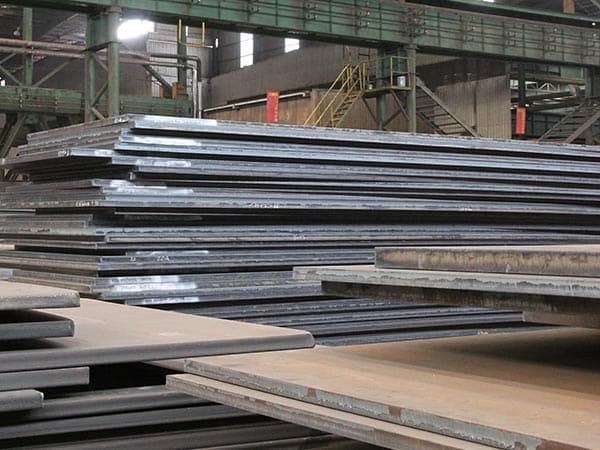
The Genesis of S700MC and S700MCE High-Strength Steel
Modern engineering demands materials that offer both extreme strength and significant weight reduction. S700MC, a thermomechanically rolled (TMCP) high-strength low-alloy (HSLA) steel, stands at the forefront of this evolution. Governed by the EN 10149-2 standard, this material is designed for cold forming and is characterized by a minimum yield strength of 700 MPa. The "MC" suffix denotes its thermomechanical rolling process and its suitability for cold forming, while additional designations like "E" often refer to specific impact toughness requirements at low temperatures, such as -40°C or -50°C.
The development of S700MCE was driven by the transport and construction industries' need to improve fuel efficiency and load capacity. By utilizing a fine-grained microstructure achieved through controlled rolling and cooling, this steel provides a strength-to-weight ratio that far surpasses traditional structural steels like S355. This allows engineers to specify thinner sections without compromising the structural integrity of the final component.
Chemical Composition and the Role of Micro-alloying
The exceptional properties of S700MCE are not merely a result of heat treatment but are deeply rooted in its precise chemical makeup. Unlike traditional steels that rely on high carbon content for strength, S700MCE maintains a very low carbon equivalent to ensure superior weldability.
Micro-alloying elements such as Niobium (Nb), Titanium (Ti), and Vanadium (V) are added in minute quantities. These elements facilitate grain refinement during the thermomechanical rolling process. A finer grain structure directly contributes to both higher yield strength and improved notch toughness, making the steel resilient against brittle fracture even in harsh environments.
| Element | Maximum Content (%) |
|---|---|
| Carbon (C) | 0.12 |
| Manganese (Mn) | 2.10 |
| Silicon (Si) | 0.60 |
| Phosphorus (P) | 0.025 |
| Sulfur (S) | 0.015 |
| Aluminium (Al) | 0.015 |
This lean chemical design ensures that the material remains cost-effective while delivering performance that rivals more expensive quenched and tempered grades. The low sulfur content, achieved through advanced desulfurization techniques, further enhances the steel's isotropic properties, ensuring consistent performance in both longitudinal and transverse directions.
Mechanical Performance and Structural Integrity
The core value proposition of S700MCE lies in its mechanical profile. With a minimum yield strength of 700 MPa, it allows for a reduction in material thickness by up to 40% compared to standard structural steels. This weight saving is critical for mobile equipment where every kilogram saved translates into increased payload or reduced fuel consumption.
| Property | Value (Minimum) |
|---|---|
| Yield Strength (ReH) | 700 MPa |
| Tensile Strength (Rm) | 750 - 950 MPa |
| Elongation (A80mm) | 10% - 12% (depending on thickness) |
| Impact Energy (at -40°C) | 27 Joules (for Grade E/L) |
Beyond the static strength, the fatigue resistance of S700MCE is a vital factor for dynamic applications. Its fine-grained structure inhibits the initiation and propagation of fatigue cracks. This makes it an ideal candidate for components subjected to cyclic loading, such as the chassis of heavy-duty trucks and the booms of telescopic cranes.
Precision Fabrication: Welding and Cold Forming
Fabrication efficiency is a primary consideration when selecting high-strength steel. S700MCE is specifically optimized for cold forming. Despite its high strength, it exhibits excellent bendability. However, due to its high yield point, fabricators must account for significant springback. Using larger mandrel radii and ensuring a clean bending environment can mitigate the risk of surface cracking during tight bends.
Welding S700MCE requires a nuanced approach. Because the strength is derived from the TMCP process, excessive heat input can lead to softening in the Heat Affected Zone (HAZ). To maintain the integrity of the joint, it is recommended to use low heat input welding processes such as MAG (Metal Active Gas) with optimized parameters. Preheating is generally not required for thinner sections, which simplifies the production workflow and reduces energy costs. The use of matching or slightly under-matching filler materials is often preferred to ensure the ductility of the welded joint remains sufficient for dynamic stresses.
Diverse Applications Across Global Industries
The versatility of S700MCE enables its use across a broad spectrum of demanding sectors. Within the Heavy Transport industry, it is the standard for manufacturing lightweight truck frames, trailers, and sub-frames. By reducing the dead weight of a vehicle, fleet operators can maximize cargo capacity, directly impacting the profitability of logistics operations.
Regarding Lifting and Construction Machinery, S700MCE is indispensable for the fabrication of telescopic booms, mobile crane structures, and aerial work platforms. These components require high rigidity and strength at great heights. The use of S700MCE allows for longer reach and higher lifting capacities without increasing the overall footprint of the machine.
In the Agricultural Sector, the steel is used for high-stress components in harvesters, plows, and trailers. These machines operate in abrasive and unpredictable environments where impact resistance and structural durability are paramount. S700MCE provides the necessary toughness to withstand accidental impacts while maintaining a lightweight profile that prevents excessive soil compaction.
- Mobile Cranes: High-strength booms and chassis frames.
- Automotive: Bumper reinforcements, cross members, and seat frames.
- Energy: Structural supports for solar tracking systems and wind turbine components.
- Mining: Lightweight conveyor systems and support structures.
Environmental Adaptability and Sustainability
As global regulations tighten regarding carbon emissions, the role of S700MCE in sustainability becomes clear. Lightweighting is one of the most effective ways to reduce the carbon footprint of the transportation sector. Every ton of weight saved in a commercial vehicle results in a significant reduction in CO2 emissions over its operational lifetime.
Furthermore, the high recyclability of HSLA steels ensures that components made from S700MCE can be efficiently reprocessed at the end of their life cycle. The low alloy content means it can be easily integrated into standard steel recycling streams without contaminating the melt. This circular economy potential, combined with the energy savings during the TMCP production process compared to traditional quenching and tempering, makes S700MCE a "green" choice for modern engineering.
The material's performance at low temperatures is also a critical environmental adaptation. In arctic or offshore environments, standard steels become brittle. S700MCE, especially in its impact-tested variations, maintains its ductility, preventing catastrophic structural failures in sub-zero temperatures. This reliability is essential for infrastructure projects in northern latitudes and for equipment used in refrigerated logistics.
Strategic Advantages for Manufacturers
Adopting S700MCE offers more than just technical benefits; it provides a competitive edge in the marketplace. Manufacturers can market their products as being more efficient, durable, and environmentally friendly. While the price per ton of S700MCE may be higher than S355, the total cost of ownership is often lower. Reduced material usage, lower welding consumables, and simplified processing (due to the lack of preheating) contribute to a leaner manufacturing process.
Ultimately, the application of S700MCE represents a shift toward intelligent design. By leveraging the high yield strength and excellent formability of this grade, engineers can push the boundaries of what is possible in structural design, creating the next generation of high-performance machinery and transport solutions.
Leave a message