
Main factors affecting S420MC steel for automotive industry price
An in-depth exploration of S420MC steel pricing drivers, technical properties, and automotive applications. Learn how chemical composition, processing, and market dynamics impact costs.
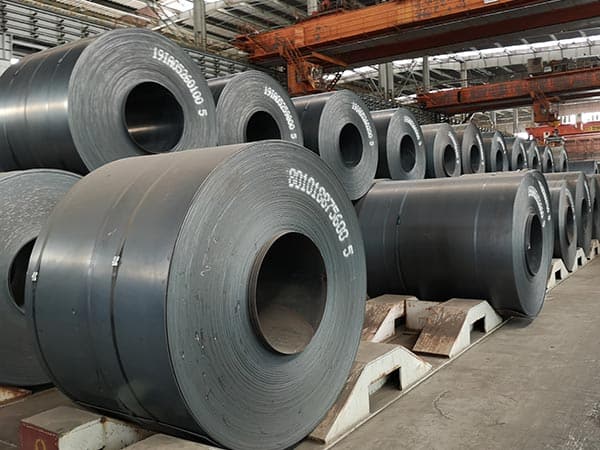
The Technical Essence of S420MC and Its Value Proposition
S420MC is a high-yield-strength steel specifically designed for cold forming, governed by the EN 10149-2 standard. Its name reflects its primary characteristic: a minimum yield strength of 420 MPa, with the 'MC' suffix indicating it is thermomechanically rolled (M) and suitable for cold forming (C). In the automotive industry, this material is a cornerstone for structural components that require a balance between weight reduction and high structural integrity. The price of S420MC is not merely a reflection of raw material costs but is deeply tied to its complex manufacturing process and the stringent quality requirements of modern vehicle engineering.
Chemical Composition and Micro-Alloying Costs
The pricing of S420MC is significantly influenced by its chemical blueprint. Unlike standard carbon steels, S420MC utilizes micro-alloying elements such as Niobium (Nb), Vanadium (V), and Titanium (Ti). These elements are added in precise, minute quantities to achieve grain refinement and precipitation hardening.
| Element | Maximum Content (%) | Impact on Price & Performance |
|---|---|---|
| Carbon (C) | 0.12 | Ensures weldability; low content reduces hardening risks. |
| Manganese (Mn) | 1.60 | Increases strength and toughness; price fluctuates with global ore markets. |
| Silicon (Si) | 0.50 | Deoxidizer; affects surface quality and galvanizing response. |
| Niobium (Nb) | 0.09 | Critical for grain refinement; high cost per ton affects final pricing. |
Fluctuations in the price of these ferro-alloys directly impact the production cost of S420MC. When the global supply of Niobium or Vanadium tightens, manufacturers must adjust their pricing to account for these expensive additives that give the steel its high-strength-to-weight ratio.
The Impact of Thermomechanical Rolling (TMCP)
One of the most significant factors affecting the price of S420MC is the Thermomechanically Controlled Processing (TMCP). Unlike traditional hot rolling followed by heat treatment, TMCP integrates controlled deformation and cooling directly into the rolling mill sequence. This process requires sophisticated equipment and precise temperature control, which increases operational costs compared to standard hot-rolled grades.
- Energy Consumption: The precise cooling rates required for TMCP demand high energy inputs, making the steel price sensitive to industrial electricity and natural gas rates.
- Yield Rates: Achieving the exact mechanical properties across the entire width and length of a coil requires high process stability. Lower yield rates during production lead to higher per-unit costs.
- Equipment Maintenance: The high forces required to deform steel at lower temperatures during the final stages of TMCP put significant wear on rolling mills, necessitating higher maintenance budgets.
Mechanical Performance and Automotive Requirements
Automotive manufacturers demand S420MC for its superior mechanical properties, which allow for thinner gauges without sacrificing safety. The price is often a reflection of the guaranteed performance levels provided by the mill.
Yield Strength and Tensile Strength: With a yield strength of 420-540 MPa and a tensile strength of 480-620 MPa, S420MC provides the structural rigidity needed for chassis parts, cross members, and longitudinal beams. The ability of a mill to consistently hit these targets within tight tolerances adds a premium to the product.
Elongation and Formability: S420MC offers excellent elongation (typically A80 ≥ 16% for thicknesses under 3mm), allowing for complex stamping and bending. This formability reduces the scrap rate for automotive part manufacturers, providing a value-add that justifies a higher initial material cost compared to lower-grade steels.
Environmental Adaptability and Sustainability Factors
As the automotive industry shifts toward Green Steel and carbon neutrality, the environmental footprint of S420MC production is becoming a pricing factor. Steel produced via Electric Arc Furnaces (EAF) using scrap metal may carry different pricing structures than traditional Blast Furnace (BF) production due to carbon tax implications and energy source differences.
Furthermore, S420MC contributes to the "Lightweighting" trend. By using S420MC instead of standard S235 or S355, engineers can reduce the weight of a component by 15-25%. While the price per ton of S420MC is higher, the total cost of the vehicle part may decrease because less material is required. This "cost-to-performance" ratio is a critical metric for procurement teams.
Processing Performance: Welding and Surface Treatment
The price of S420MC is also influenced by its suitability for downstream processing. Because of its low carbon equivalent (CEV), S420MC exhibits exceptional weldability. It can be welded using all standard methods (MIG, MAG, Laser) without the need for pre-heating, which significantly reduces labor and energy costs for the automotive assembly line.
Surface quality is another variable. S420MC is often supplied in a pickled and oiled (P&O) condition to ensure it is ready for robotic welding and painting. The cost of the pickling process, which involves acid baths to remove mill scale, is a standard add-on to the base steel price. Additionally, for parts exposed to corrosive environments, S420MC may be galvanized, further impacting the final price delivered to the automotive tier-1 supplier.
Market Dynamics and Supply Chain Logistics
Beyond the technical attributes, global market dynamics play a massive role in S420MC pricing.
- Automotive Demand Cycles: Since S420MC is heavily utilized in the truck and passenger car sectors, its price is highly correlated with vehicle production volumes. A surge in truck manufacturing typically leads to a localized shortage of high-strength structural steel.
- Geopolitical Trade Policies: Anti-dumping duties and import quotas on high-strength steel grades can create price disparities between regions (e.g., EU vs. Asia).
- Logistics and Packaging: High-strength steel coils must be handled with care to avoid edge damage, which could lead to cracks during the cold-forming process. Specialized packaging and transport insurance add to the landed cost.
How to Optimize Procurement Costs for S420MC
Understanding the factors above allows for better strategic sourcing. Buyers should look beyond the price per kilogram and consider the Total Cost of Ownership (TCO). For instance, sourcing S420MC with tighter thickness tolerances can lead to more consistent stamping results and fewer machine downtimes.
Collaborating with mills that offer IATF 16949 certification is non-negotiable in the automotive sector. This certification ensures that the steel meets the rigorous quality management standards required for safety-critical components. While certified mills may charge a premium, the reduction in risk and potential recall costs provides long-term financial stability for the manufacturer.
S420MC remains a highly competitive material due to its versatility. Its ability to be cold-formed into complex shapes while maintaining high load-bearing capacity makes it indispensable. As the industry evolves, the price of S420MC will continue to be a balance of metallurgical innovation, energy efficiency, and the ever-present demand for safer, lighter vehicles.
Leave a message