
What is the S460MC steel for earth moving machines price export to Australia
Explore the comprehensive pricing factors and technical advantages of S460MC steel for earth-moving machinery exported to Australia. Learn about its mechanical properties, processing capabilities, and environmental suitability for the Australian mining se
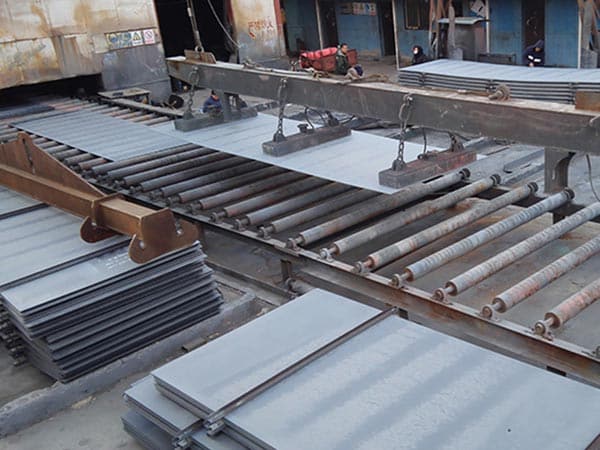
Understanding S460MC Steel in the Context of Australian Earth-Moving Requirements
When discussing the S460MC steel for earth moving machines price export to Australia, it is essential to first define what makes this material a cornerstone of modern heavy equipment manufacturing. S460MC is a high-yield-strength, thermomechanically rolled steel designed specifically for cold forming. Governed by the EN 10149-2 standard, it offers a minimum yield strength of 460 MPa, making it significantly more robust than standard structural steels like S355. For the Australian market, where earth-moving machines operate in some of the world's most demanding environments—from the Pilbara's iron ore mines to massive infrastructure projects in New South Wales—the choice of S460MC is driven by the need for weight reduction without compromising structural integrity.
The price of exporting this steel to Australia is not a static figure; it is a complex calculation involving raw material costs, energy surcharges, international shipping rates, and the specific requirements of Australian compliance standards. Manufacturers of excavators, loaders, and dump trucks in Australia prioritize S460MC because its high strength-to-weight ratio allows for larger payloads and improved fuel efficiency, which are critical factors in the competitive Australian mining and construction sectors.
Mechanical Properties and Material Composition
The technical superiority of S460MC lies in its precise chemical composition and the thermomechanical rolling process. Unlike traditional hot-rolled steels, S460MC utilizes micro-alloying elements such as Niobium (Nb), Vanadium (V), and Titanium (Ti) to achieve its high strength while maintaining excellent ductility.
| Chemical Element | Maximum Content (%) |
|---|---|
| Carbon (C) | 0.12 |
| Manganese (Mn) | 1.60 |
| Silicon (Si) | 0.50 |
| Phosphorus (P) | 0.025 |
| Sulfur (S) | 0.015 |
| Aluminium (Al) | 0.015 (min) |
From a mechanical standpoint, S460MC provides a Yield Strength (ReH) of at least 460 MPa and a Tensile Strength (Rm) ranging between 520 and 670 MPa. The elongation properties (typically 14% or higher depending on thickness) ensure that the material can withstand the intense vibrations and shock loads common in earth-moving operations. These properties are vital for Australian engineers who must design equipment capable of handling the abrasive and high-impact conditions of the outback.
Exceptional Cold Forming and Welding Performance
One of the primary reasons S460MC is favored for earth-moving machine components like chassis frames, crane arms, and boom sections is its outstanding cold forming capability. Despite its high strength, S460MC can be bent and folded with precision, allowing for complex geometries that reduce the number of welded joints. This is particularly beneficial for Australian manufacturers who aim to minimize stress concentration points in their machinery.
Welding S460MC is straightforward due to its low carbon equivalent (CEV). It can be welded using all standard methods, including MIG/MAG, TIG, and submerged arc welding. Because the steel is produced via thermomechanical rolling, it maintains its fine-grained structure even after welding, provided the heat input is controlled. This ensures that the heat-affected zone (HAZ) does not become a weak point, which is crucial for the longevity of earth-moving equipment subjected to cyclic loading.
Environmental Adaptability in the Australian Climate
Australia's climate presents unique challenges for steel. In the northern regions, high humidity and tropical conditions accelerate corrosion, while in the desert interior, extreme temperature fluctuations (from below freezing at night to over 45°C during the day) can cause thermal fatigue. S460MC exhibits excellent environmental adaptability. Its fine-grained structure provides better resistance to atmospheric corrosion compared to lower-grade steels, especially when combined with modern protective coatings used by Australian OEMs.
Furthermore, the low-temperature toughness of S460MC is a critical safety feature. Even though Australia is known for heat, many mining operations occur at night or in southern regions where temperatures drop significantly. S460MC ensures that the steel remains ductile and does not undergo brittle fracture under sudden impact, protecting both the machinery and the operators.
Factors Influencing the Export Price to Australia
When sourcing S460MC for the Australian market, several variables dictate the final landed price. Understanding these is key for procurement managers and engineers.
- Global Steel Market Fluctuations: The base price of S460MC is tied to the cost of iron ore and coking coal. As a major iron ore producer, Australia's domestic economy is linked to these prices, but the processed steel price is determined by global mill outputs in Europe and Asia.
- Logistics and Freight: Shipping to major Australian ports like Brisbane, Sydney, Melbourne, or Fremantle involves significant maritime logistics costs. Bulk shipping vs. containerized shipping can impact the price per ton.
- Certification and Compliance: Australian buyers often require dual certification or proof that S460MC meets the equivalent requirements of AS/NZS 3678. Providing 3.1 or 3.2 Material Test Reports (MTRs) adds a layer of quality assurance that is reflected in the price.
- Processing Services: Many Australian customers prefer to import S460MC that has been pre-cut (laser or plasma), beveled, or even primed. These value-added services increase the initial cost but significantly reduce local manufacturing lead times and labor costs.
Application in Earth-Moving Machinery Components
The versatility of S460MC allows it to be used across a wide range of components within an earth-moving machine. In excavators, it is used for the upper frame and the boom, where high stress and fatigue resistance are paramount. In articulated dump trucks, the chassis and the dump body ribs often utilize S460MC to achieve the necessary stiffness while keeping the vehicle's tare weight low.
In the Australian mining sector, S460MC is also found in the construction of massive conveyor systems and mobile crushing plants. Its ability to be formed into U-channels and C-profiles without cracking makes it ideal for long structural members that must support heavy loads over vast distances. The reliability of S460MC translates directly to reduced downtime for Australian operators, where a single hour of machine failure can cost thousands of dollars in lost productivity.
Comparative Advantage Over Traditional Grades
Compared to s355jr or S355J2, S460MC offers a yield strength increase of approximately 30%. This allows engineers to reduce the thickness of steel plates by up to 20-25% while maintaining the same load-bearing capacity. For an Australian earth-moving fleet, this weight reduction means lower fuel consumption and the ability to transport more material per trip, directly impacting the bottom line of mining and construction projects.
Moreover, the surface quality of S460MC is typically superior to standard hot-rolled plates. The thermomechanical process results in a thinner, more adherent scale, which is easier to remove during sandblasting and provides a better substrate for high-performance paint systems required in the harsh Australian sun.
Sourcing and Quality Control for Export
To ensure the best S460MC steel for earth moving machines price export to Australia, it is vital to partner with suppliers who understand the Australian regulatory landscape and the specific technical demands of the industry. Quality control must begin at the melt shop and continue through the rolling process and final inspection. For Australian exports, packaging is also a critical factor; seaworthy packaging that prevents salt-air corrosion during the long transit across the Pacific or Indian Oceans is non-negotiable.
The future of earth-moving equipment in Australia is leaning towards even higher strength grades like S500MC or S700MC, but S460MC remains the "sweet spot" for many manufacturers due to its perfect balance of cost, strength, and ease of fabrication. By choosing S460MC, Australian companies are investing in durability and efficiency, ensuring their machines can tackle the toughest terrain on earth.
Leave a message