
S460MC automobile structure steel coil stockist and supplier
Explore the comprehensive technical properties, processing capabilities, and industrial applications of S460MC automobile structure steel coil for global suppliers.
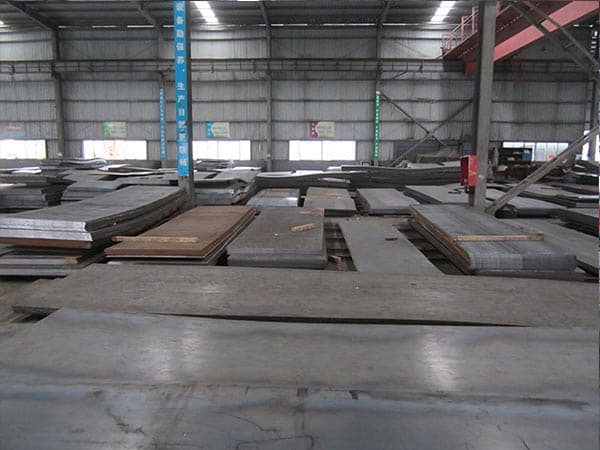
The Strategic Importance of S460MC in Modern Vehicle Manufacturing
S460MC represents a pinnacle in the evolution of high-yield strength cold-forming steels, specifically engineered for the rigorous demands of the automotive industry. Governed by the EN 10149-2 standard, this thermomechanically rolled steel offers a unique combination of high load-bearing capacity and exceptional weight-saving potential. For a stockist or supplier, understanding S460MC goes beyond knowing its name; it requires a deep dive into how its microstructure enables the creation of safer, more efficient vehicles.
The 'S' prefix denotes structural steel, while '460' indicates a minimum yield strength of 460 MPa. The 'MC' suffix signifies that the material is thermomechanically rolled (M) and is suitable for cold forming (C). This specific manufacturing process ensures a fine-grained structure that is difficult to achieve through traditional normalized rolling. By optimizing the cooling rates and rolling temperatures, manufacturers produce a coil that maintains high strength without the brittleness typically associated with high-carbon steels.
Chemical Composition and Metallurgical Precision
The performance of S460MC is rooted in its precise chemical balance. Unlike traditional carbon steels that rely on high carbon content for strength, S460MC utilizes micro-alloying elements such as Niobium (Nb), Vanadium (V), and Titanium (Ti). These elements facilitate grain refinement and precipitation hardening, which are essential for maintaining ductility at high strength levels.
| Element | Maximum Percentage (%) |
|---|---|
| Carbon (C) | 0.12 |
| Manganese (Mn) | 1.60 |
| Silicon (Si) | 0.50 |
| Phosphorus (P) | 0.025 |
| Sulfur (S) | 0.015 |
| Aluminum (Al) | 0.015 |
Low carbon levels (max 0.12%) are critical for ensuring excellent weldability and preventing cold cracking. The addition of Manganese enhances hardenability and tensile strength, while the micro-alloying elements ensure that the steel remains tough even at low temperatures. This chemical synergy allows S460MC to be used in safety-critical components where failure is not an option.
Mechanical Properties: The Balance of Strength and Ductility
For engineers and procurement specialists, the mechanical profile of S460MC is its most compelling feature. It provides a significant upgrade over S355MC, allowing for thinner wall thicknesses in structural components without compromising the integrity of the vehicle frame. This transition is a key driver in the global push for automotive lightweighting.
| Property | Value (Thickness ≤ 16mm) |
|---|---|
| Yield Strength (ReH) | Min 460 MPa |
| Tensile Strength (Rm) | 520 - 670 MPa |
| Elongation (A80mm) | Min 14% (depending on thickness) |
| Impact Energy (at -20°C) | Optional/Specified by order |
The high yield-to-tensile ratio ensures that the material can absorb significant energy during an impact, making it ideal for crash-relevant parts. Furthermore, the consistent elongation properties ensure that the steel can undergo complex deformation during the manufacturing process without developing micro-cracks or surface defects.
Advanced Processing Performance: Bending and Forming
One of the primary reasons S460MC is favored by Tier 1 automotive suppliers is its exceptional cold formability. Despite its high strength, the material can be bent to tight radii, which is essential for the compact and complex geometries found in modern chassis designs. Suppliers must ensure that the rolling direction is considered during the fabrication process, as the material exhibits slightly different properties longitudinal and transverse to the rolling direction.
- Bending Radius: For thicknesses under 3mm, a minimum bending radius of 1.0 times the thickness (1.0t) is typically achievable for 90-degree bends.
- Deep Drawing: While primarily a structural steel, S460MC offers sufficient ductility for moderate deep-drawing operations.
- Laser Cutting: The low impurity content and fine grain structure make it highly suitable for high-speed laser cutting, resulting in clean edges with minimal heat-affected zones.
The consistency of the coil's thickness and flatness is paramount for automated production lines. Stockists who provide S460MC must guarantee tight dimensional tolerances to prevent jamming in high-speed stamping presses and to ensure the precision of robotic welding cells.
Welding Characteristics and Structural Integrity
Welding S460MC is straightforward compared to other high-strength steels. Due to its low carbon equivalent (CEV), it does not require preheating in most standard applications. This efficiency in the assembly line reduces production costs and increases throughput. Common welding methods include MAG (Metal Active Gas), Laser welding, and Resistance Spot Welding (RSW).
However, it is vital to control the heat input. Excessive heat can lead to grain growth in the heat-affected zone (HAZ), which may locally reduce the yield strength. By utilizing modern pulse-welding techniques or laser-hybrid welding, manufacturers can maintain the fine-grained structure of the S460MC base metal throughout the joint. This ensures that the entire assembly meets the required safety standards for fatigue resistance and load bearing.
Environmental Adaptation and Lightweighting Strategies
The shift toward electric vehicles (EVs) has placed a premium on weight reduction. Every kilogram saved in the structural frame allows for a larger battery capacity or an increased driving range. S460MC is a frontrunner in this sustainability drive. By replacing traditional S235 or S355 grades with S460MC, engineers can reduce component weight by 20% to 30% while maintaining the same structural stiffness.
Furthermore, the high strength of S460MC contributes to the longevity of the vehicle. Its resistance to atmospheric corrosion can be further enhanced through galvanizing or pickling and oiling (P&O). Many stockists provide S460MC+PO (Pickled and Oiled) to ensure the steel surface is free of scale, which is essential for subsequent painting or coating processes in the automotive paint shop.
Diversified Industrial Applications
While the automotive sector is the primary consumer, the attributes of S460MC make it highly versatile for other industries. Its high strength-to-weight ratio is beneficial wherever mobility and structural durability are required.
- Truck and Trailer Manufacturing: Used for longitudinal beams, cross members, and side protection devices to increase payload capacity.
- Crane and Lifting Equipment: Ideal for telescopic booms and support structures where weight reduction is critical for stability.
- Agricultural Machinery: Employed in the frames of heavy-duty plows, harvesters, and trailers that face extreme mechanical stress in outdoor environments.
- Construction Profiles: Cold-formed sections for warehouse racking and lightweight steel frames.
Role of a Reliable S460MC Stockist and Supplier
Choosing the right supplier for S460MC involves more than just price comparison. Because this material is often used in safety-critical applications, traceability and quality assurance are non-negotiable. A premium stockist should provide comprehensive Mill Test Certificates (MTC) according to EN 10204 3.1, detailing the exact chemical heat analysis and mechanical test results for every coil.
Inventory management is another crucial factor. High-quality suppliers maintain a range of thicknesses and widths, offering slitting services to provide narrow strips for specific stamping needs. They also ensure that the coils are stored in climate-controlled environments to prevent oxidation. For global manufacturers, a supplier with robust logistics capabilities ensures that the just-in-time (JIT) requirements of the automotive assembly line are met without interruption.
The technical support provided by a supplier can also be a differentiator. Understanding the springback characteristics of S460MC during bending or advising on the optimal welding parameters can help fabricators reduce scrap rates and optimize their production cycles. As the industry moves toward even higher strength grades like S500MC and S700MC, the expertise gained from working with S460MC serves as the foundation for future engineering breakthroughs.
Leave a message