
S315MC auto steel flat price is suspected to enter the cold winter
An in-depth analysis of S315MC automotive steel, exploring its mechanical properties, processing advantages, and market dynamics amidst price fluctuations.
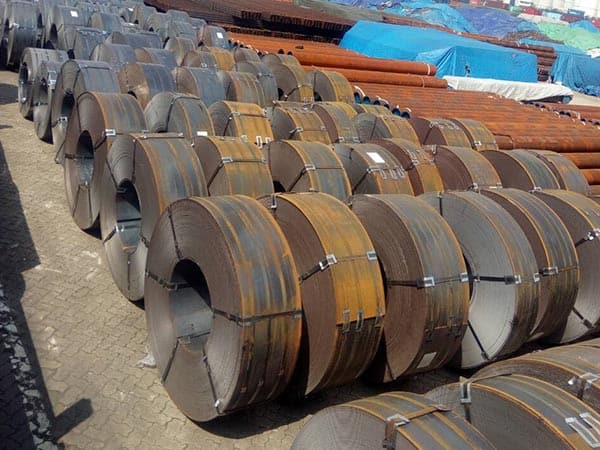
The Reality of S315MC Steel in a Shifting Global Market
The recent fluctuations in the automotive steel market have led many to speculate whether the S315MC auto steel flat price is suspected to enter the cold winter. While price indices show a cooling trend, understanding the intrinsic value of this material requires a deep dive into its metallurgical properties and industrial utility. S315MC, a high-yield strength steel for cold forming, is governed by the EN 10149-2 standard. It is not merely a commodity but a specialized engineering solution designed to balance weight reduction with structural integrity. The perceived "cold winter" may be less about a decline in relevance and more about a cyclical correction in a market increasingly focused on efficiency and high-performance alloys.
Chemical Composition and the Micro-Alloying Advantage
The performance of S315MC is rooted in its precise chemical makeup. Unlike standard carbon steels, S315MC utilizes thermomechanical rolling and micro-alloying elements like Niobium (Nb), Vanadium (V), and Titanium (Ti). These elements facilitate grain refinement, which is the primary mechanism for increasing strength without sacrificing ductility. The low carbon content ensures that the material remains highly weldable, a critical factor for automated automotive assembly lines. By keeping carbon levels low, the risk of hardening in the heat-affected zone (HAZ) is significantly reduced, maintaining the structural uniformity of the finished component.
| Element | C (max %) | Mn (max %) | Si (max %) | P (max %) | S (max %) | Al (min %) | Nb+V+Ti (max %) |
|---|---|---|---|---|---|---|---|
| S315MC | 0.12 | 1.30 | 0.50 | 0.025 | 0.020 | 0.015 | 0.22 |
This chemical balance allows S315MC to achieve a fine-grained ferrite-pearlite structure. The addition of Manganese (Mn) enhances the hardenability and strength, while Phosphorus (P) and Sulfur (S) are kept to a minimum to prevent brittleness and improve the surface quality of the flat steel. For manufacturers, this translates to a material that is predictable during high-speed stamping and consistent across different production batches.
Mechanical Properties: Beyond the Yield Point
The "315" in S315MC refers to its minimum yield strength of 315 MPa. However, the mechanical profile of this steel is much more nuanced. Its tensile strength typically ranges between 390 and 510 MPa, providing a robust safety margin for structural components. What sets S315MC apart is its elongation property, which is often greater than 20% for thicknesses less than 3mm. This high ductility-to-strength ratio is what makes it a favorite for complex cold-formed parts that require significant deformation without cracking.
| Property | Yield Strength (MPa) | Tensile Strength (MPa) | Elongation A80mm (%) | Bending Radius (180°) |
|---|---|---|---|---|
| Value | ≥ 315 | 390 - 510 | ≥ 20 (t < 3mm) | 0.25t |
The ability to withstand a 180-degree bend with a radius as tight as 0.25 times the material thickness (0.25t) demonstrates its exceptional cold-forming capabilities. This allows automotive designers to create more intricate geometries, reducing the number of separate parts and, consequently, the overall weight of the vehicle. In an era where fuel efficiency and electric vehicle (EV) range are paramount, the lightweighting potential of S315MC remains a strong selling point, regardless of temporary price dips.
Processing Performance and Industrial Adaptability
One of the reasons S315MC maintains a steady demand is its ease of processing. In the context of welding, the material exhibits excellent compatibility with standard methods such as Metal Active Gas (MAG) welding, Tungsten Inert Gas (TIG) welding, and laser welding. Because of its low carbon equivalent (CEV), it does not require preheating or post-weld heat treatment in most applications. This streamlines the manufacturing process and reduces energy consumption, providing a cost-offsetting advantage when raw material prices are volatile.
Furthermore, S315MC is highly amenable to modern cutting technologies. Whether using fiber lasers or plasma cutters, the steel produces clean edges with minimal slag, which reduces the need for secondary finishing operations. Its surface quality is also optimized for subsequent coating processes, such as hot-dip galvanizing or cathodic e-coating. This ensures that the final automotive parts have superior corrosion resistance, extending the lifespan of the vehicle chassis and structural frames even in harsh environmental conditions.
Environmental Resilience and Sustainability
The automotive industry is under immense pressure to improve the lifecycle sustainability of its products. S315MC contributes to this goal through its high strength-to-weight ratio. By using thinner gauges of S315MC to replace thicker sections of conventional mild steel, manufacturers can reduce the total mass of a vehicle without compromising crash safety. This mass reduction leads to lower CO2 emissions during the vehicle's operational phase. Additionally, S315MC is fully recyclable. At the end of a vehicle's life, the steel can be recovered and processed in electric arc furnaces (EAF) to produce new high-strength alloys, supporting a circular economy model.
The environmental adaptability of S315MC also extends to its performance in varying climates. The fine-grained structure provides good impact toughness even at lower temperatures, which is essential for vehicles operating in cold regions. This reliability ensures that structural components like cross members and longitudinal beams do not suffer from brittle fracture under sudden loads or extreme weather conditions.
Market Dynamics: Navigating the "Cold Winter"
The suspicion that S315MC prices are entering a "cold winter" is often tied to broader macroeconomic factors, such as fluctuations in iron ore prices, energy costs, and the global demand for new vehicles. However, a technical perspective suggests that the demand for high-strength low-alloy (HSLA) steels like S315MC is more resilient than that for commodity-grade steels. As automotive standards for safety and emissions become stricter, the transition from low-grade carbon steel to S315MC and higher grades (like S420MC or S700MC) becomes a technical necessity rather than a choice.
The current price stagnation might be viewed as a consolidation phase. For procurement specialists, this period offers an opportunity to secure high-quality material at more competitive rates before the next cycle of industrial expansion. The growth of the electric vehicle sector, which requires specialized battery enclosures and reinforced chassis structures, is expected to provide a new floor for demand. S315MC, with its proven track record in traditional internal combustion engine (ICE) vehicles, is being rapidly adapted for these new applications.
Expansion into Non-Automotive Industries
While S315MC is primarily known as an "auto steel," its properties make it highly suitable for other sectors. In the construction machinery industry, it is used for crane booms, excavator components, and agricultural equipment. These applications require a material that can handle high stress while remaining light enough to maximize the machine's lifting or hauling capacity. The cold-forming flexibility of S315MC allows for the production of U-channels and C-profiles used in solar panel racking systems and modular building frames.
The versatility of S315MC ensures that even if the automotive sector experiences a temporary slowdown, other industrial sectors can absorb the supply. This multi-industry utility acts as a buffer against the "cold winter" narrative. Manufacturers who diversify their application of S315MC can leverage its high-performance characteristics to improve product durability across a wide range of engineering projects.
Technical experts emphasize that the long-term value of S315MC lies in its consistency. Unlike lower-tier steels that may vary in mechanical properties from edge to center of the coil, S315MC produced by top-tier mills offers a high degree of uniformity. This reliability is essential for automated factories where any deviation in material thickness or yield strength can lead to machine downtime or part rejection. By focusing on total cost of ownership—including reduced scrap rates and faster processing speeds—the technical superiority of S315MC outweighs the short-term price volatility often discussed in market reports.
Leave a message