
S550MC high yield strength steel equivalent ASME material
Detailed technical analysis of S550MC high yield strength steel, exploring its ASME/ASTM equivalents like A656 Grade 80, mechanical properties, and industrial applications.
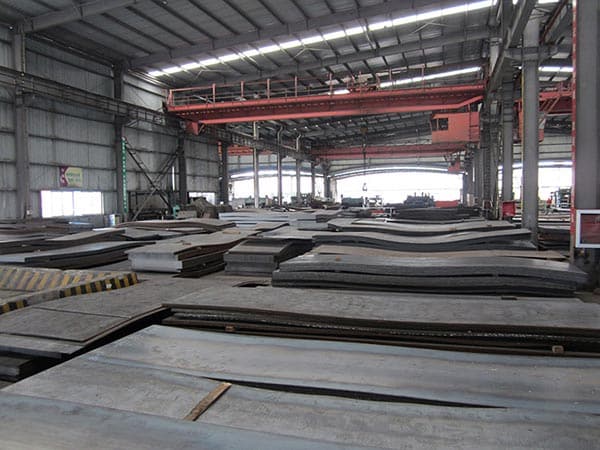
Understanding S550MC: The Power of Thermomechanically Rolled Steel
S550MC is a high-yield-strength steel grade defined under the European standard EN 10149-2. This material is produced using a thermomechanical rolling process (TMCP), which allows for a refined grain structure that provides an exceptional balance between high strength and excellent cold formability. For engineers and procurement specialists working across international borders, identifying the S550MC high yield strength steel equivalent ASME material is crucial for ensuring structural integrity and compliance with localized building codes.
The Quest for ASME and ASTM Equivalents
When searching for an ASME (American Society of Mechanical Engineers) or ASTM (American Society for Testing and Materials) equivalent to S550MC, it is important to note that there is no single 1:1 identical match across all parameters. However, ASTM A656 Grade 80 is widely recognized as the closest functional equivalent. This grade is a high-strength low-alloy (HSLA) steel intended for use in truck frames, brackets, crane booms, and similar structural applications where weight reduction is critical.
Another potential alternative is ASTM A1011 HSLAS-F Grade 80, particularly for thinner sheet applications. While ASME SA-656 is the pressure vessel code's recognition of the ASTM standard, S550MC is primarily a structural steel rather than a pressure vessel steel. Therefore, the cross-reference is most often made within the context of structural performance and fabrication characteristics.
Mechanical Properties Comparison
The performance of S550MC is defined by its minimum yield strength of 550 MPa. Below is a comparison of how it stacks up against its primary North American counterpart, ASTM A656 Grade 80.
| Property | S550MC (EN 10149-2) | ASTM A656 Grade 80 |
|---|---|---|
| Yield Strength (min) | 550 MPa | 550 MPa (80 ksi) |
| Tensile Strength | 600 - 760 MPa | 620 MPa (90 ksi) min |
| Elongation (min) | 12-14% (depending on thickness) | 12-15% |
| Cold Bending (90°) | 1.0t - 1.5t (Mandrel diameter) | Excellent formability |
Chemical Composition and Micro-Alloying Strategy
The secret to the high performance of S550MC lies in its chemistry. Unlike traditional carbon steels that rely on high carbon content for strength, S550MC utilizes micro-alloying elements such as Niobium (Nb), Vanadium (V), and Titanium (Ti). These elements facilitate grain refinement during the thermomechanical rolling process.
- Carbon (C): Kept low (typically ≤ 0.12%) to ensure superior weldability and prevent brittleness.
- Manganese (Mn): Enhances strength and toughness through solid solution hardening.
- Silicon (Si): Acts as a deoxidizer and contributes to strength.
- Niobium & Titanium: Form carbides and nitrides that pin grain boundaries, preventing grain growth during heating.
By maintaining a low Carbon Equivalent (CEV), S550MC offers a weldability profile that is often superior to traditional structural steels with much lower yield points.
Advanced Fabrication and Processing Capabilities
One of the primary reasons S550MC is favored in modern manufacturing is its adaptability to various fabrication techniques. Because it is designed for cold forming, it can be bent into complex shapes without cracking, provided the minimum bend radius is respected. This is a significant advantage over higher-carbon steels which may require pre-heating or exhibit spring-back issues.
Welding Performance: S550MC can be welded using all standard methods, including GMAW (MIG/MAG), FCAW, and Laser welding. Due to its low alloy content, it does not typically require pre-heating for standard thicknesses. However, it is essential to manage heat input to avoid excessive grain growth in the heat-affected zone (HAZ), which could locally reduce the yield strength.
Cutting and Machining: The material responds exceptionally well to laser, plasma, and waterjet cutting. The clean chemical composition ensures minimal slag and a high-quality edge finish, which is vital for components that will undergo subsequent robotic welding.
Environmental Adaptability and Durability
While S550MC is not classified as a weathering steel, its refined microstructure provides a degree of atmospheric corrosion resistance that exceeds that of basic mild steel. In harsh environments, it is commonly protected via hot-dip galvanizing or high-performance coating systems. The low silicon content can be specifically controlled (if requested) to optimize the material for galvanizing, ensuring a uniform and aesthetic zinc layer.
Strategic Industry Applications
The drive for "lightweighting" has pushed S550MC into the spotlight across several heavy-duty industries. By replacing standard S355 or A36 steels with S550MC, engineers can reduce the thickness of components by up to 30-40% without sacrificing load-bearing capacity.
- Automotive and Transport: Used extensively in truck chassis, cross members, and bumper reinforcements to improve fuel efficiency by reducing dead weight.
- Lifting and Mobile Equipment: Essential for telescopic crane booms, aerial work platforms, and forklift masts where high strength-to-weight ratios are mandatory.
- Agricultural Machinery: Applied in the construction of large-scale harvesters, plows, and trailers that must withstand high stress in rugged terrain.
- Energy and Infrastructure: Utilized in solar tracking systems and wind turbine internal components where structural precision and durability are required.
Technical Considerations for Material Substitution
When substituting S550MC with an ASME equivalent like A656 Grade 80, designers must verify the impact toughness requirements. S550MC is often tested at -20°C or -40°C (indicated by suffixes like L or J), whereas ASTM standards may have different default testing temperatures. Ensuring that the Charpy V-notch values align with the operating environment is a critical step in the material selection process.
Furthermore, the surface finish of S550MC, which is typically pickled and oiled (P&O) or as-rolled, should be matched to the intended finishing process. The tight thickness tolerances achieved through modern TMCP mills ensure that automated manufacturing lines can operate with high repeatability, a factor that is just as important as the raw mechanical strength.
Future-Proofing Engineering Projects
As global standards continue to converge, the use of high-strength steels like S550MC and its ASME counterparts will only increase. The combination of environmental sustainability (through reduced material usage) and enhanced mechanical performance makes these grades the backbone of modern structural engineering. Selecting the right equivalent involves a holistic view of chemistry, mechanical limits, and the specific fabrication environment of the project.
Leave a message