
What is the 1.8976 special steel for automobiles normalizing process
Comprehensive guide to 1.8976 (S700MC) special steel, focusing on its normalizing process, chemical composition, mechanical properties, and automotive applications.
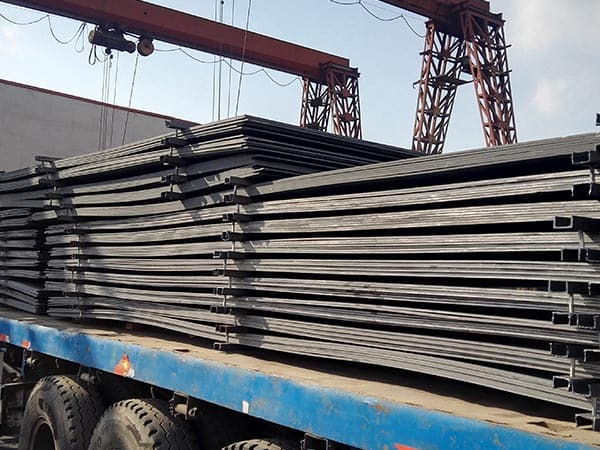
Understanding 1.8976 Steel: The Backbone of Modern Automotive Lightweighting
1.8976 steel, commonly recognized under the EN 10149-2 standard as S700MC, represents a pinnacle in high-yield strength, hot-rolled steels designed specifically for cold forming. As the automotive industry shifts towards stricter fuel efficiency standards and enhanced safety protocols, the demand for materials that offer both high strength and low weight has skyrocketed. 1.8976 steel meets these demands by providing a minimum yield strength of 700 MPa, allowing engineers to reduce wall thickness without compromising structural integrity.
This steel grade is categorized as a High-Strength Low-Alloy (HSLA) steel. Its unique properties are derived from a meticulously controlled chemical composition and advanced thermomechanical rolling processes. However, understanding the normalizing process—or more accurately, how heat treatment affects this thermomechanically rolled material—is crucial for manufacturers involved in complex component fabrication.
The Technical Nuance of the Normalizing Process for 1.8976
In traditional metallurgy, normalizing involves heating the steel to a temperature above its upper critical point (Ac3), holding it there for a specific duration to achieve a uniform austenitic structure, and then cooling it in still air. For many carbon steels, this refines grain structure and improves ductility. However, 1.8976 (S700MC) is fundamentally a thermomechanically rolled (M) steel.
When discussing the normalizing process for 1.8976, it is vital to note that standard normalizing can actually lead to a reduction in yield strength. The high strength of 1.8976 is achieved through a combination of fine grain size and precipitation hardening (using elements like Niobium, Vanadium, and Titanium) during the rolling process. If a component made of 1.8976 is subjected to a traditional normalizing cycle (typically around 900°C to 950°C), the fine-grained structure induced by TMCP (Thermomechanical Controlled Processing) may coarsen, and the delicate balance of micro-alloying precipitates can be disrupted.
Therefore, in the context of 1.8976, "normalizing" often refers to stress-relief annealing or controlled thermal cycles used after heavy welding or complex forging to restore a degree of uniformity to the Heat Affected Zone (HAZ). If full normalizing is required, the material must be re-evaluated to ensure it still meets the S700MC performance criteria, or the design must account for the potential drop in mechanical values.
Chemical Composition: The Secret to High Performance
The exceptional performance of 1.8976 is rooted in its chemical makeup. Unlike standard carbon steels, 1.8976 utilizes micro-alloying elements to achieve its 700 MPa yield strength while maintaining excellent weldability and cold-formability.
| Element | Maximum Content (%) | Role in 1.8976 Steel |
|---|---|---|
| Carbon (C) | 0.12 | Ensures weldability and prevents brittleness. |
| Manganese (Mn) | 2.10 | Increases strength and hardness through solid solution. |
| Silicon (Si) | 0.60 | Deoxidizer and contributes to strength. |
| Niobium (Nb) | 0.09 | Grain refinement and precipitation hardening. |
| Titanium (Ti) | 0.22 | Fixes nitrogen and refines grain structure. |
| Vanadium (V) | 0.20 | Enhances secondary hardening during cooling. |
The low carbon content is particularly significant for the automotive sector, as it ensures that the steel can be welded using standard robotic MIG/MAG or laser welding processes without the risk of cold cracking in the weld seam.
Mechanical Properties and Structural Reliability
The mechanical profile of 1.8976 is designed for high-stress environments where failure is not an option. Its high yield-to-tensile ratio makes it ideal for energy-absorbing components in vehicle crashes.
- Yield Strength (ReH): Minimum 700 MPa.
- Tensile Strength (Rm): 750 - 950 MPa.
- Elongation (A80): Minimum 10-12% (depending on thickness).
- Impact Toughness: Often tested at -20°C or -40°C to ensure performance in cold climates.
These properties allow for the construction of thinner, lighter frames that can still withstand the massive forces encountered in heavy-duty transport or passenger vehicle collisions. The fine-grained ferrite-bainite microstructure provides a robust barrier against crack propagation.
Advanced Process Performance: Welding and Cold Forming
One of the primary reasons 1.8976 is favored for automotive chassis and longitudinal beams is its superior cold-formability. Despite its high strength, the steel can be bent to tight radii without surface cracking, provided the minimum mandrel diameter is respected. This is a direct result of the micro-alloying strategy which keeps the inclusion levels (like sulfur and phosphorus) extremely low, preventing internal voids during deformation.
Regarding welding, 1.8976 exhibits excellent compatibility with modern automated lines. Because the strength is not solely dependent on high carbon levels, the Heat Affected Zone (HAZ) remains relatively stable. However, users must manage heat input; excessive heat can cause grain growth in the HAZ, leading to a localized drop in hardness. This is where the understanding of thermal cycles—similar to the normalizing logic—becomes critical for production engineers.
Environmental Adaptability and Durability
In the automotive environment, components are exposed to road salts, moisture, and fluctuating temperatures. While 1.8976 is not a stainless steel, its fine microstructure and the presence of elements like Silicon and Manganese provide a slightly better atmospheric corrosion resistance compared to standard mild steels. For long-term durability, 1.8976 components are typically treated with E-coating (electrophoretic painting) or zinc-rich primers. The smooth surface finish of hot-rolled 1.8976, often achieved through pickling and oiling (P&O), provides an excellent substrate for these protective coatings.
Expanding Applications in the Automotive Industry
The versatility of 1.8976 extends far beyond simple brackets. Its application spectrum includes:
- Chassis Systems: Cross members and longitudinal beams for trucks and trailers where weight reduction directly translates to increased payload capacity.
- Safety Components: Bumper supports and side-impact beams that require high energy absorption during deformation.
- Crane and Lifting Equipment: Telescopic booms and support structures that benefit from the high strength-to-weight ratio.
- Agricultural Machinery: Plow frames and harvester components that face high mechanical stress and abrasive environments.
By utilizing 1.8976, manufacturers can achieve weight savings of up to 30% compared to traditional S355 grade steels. This weight reduction is a key driver in the development of Electric Vehicles (EVs), where every kilogram saved helps extend battery range.
Strategic Implementation of 1.8976 in Manufacturing
Implementing 1.8976 requires a shift in manufacturing philosophy. Tooling must be designed to handle higher springback forces compared to lower-strength steels. Furthermore, the cutting process—whether laser, plasma, or mechanical shearing—must be optimized to avoid edge hardening or micro-cracks that could serve as fatigue initiation points. When the normalizing process or any thermal treatment is considered, it must be integrated into a holistic quality management system that monitors the grain size and mechanical output of the finished part.
The transition to 1.8976 is more than a material substitution; it is an engineering upgrade. By mastering the relationship between its thermomechanical history and its response to subsequent heat and mechanical processing, automotive manufacturers can push the boundaries of what is possible in vehicle design and performance.
Leave a message