
s460mc 1.0982 en 10149 2 price is relatively stable
Explore the technical depth of S460MC (1.0982) high-strength steel. This guide covers mechanical properties, cold forming advantages, welding performance, and why the EN 10149-2 price remains stable.
Introduction to S460MC and the EN 10149-2 Standard
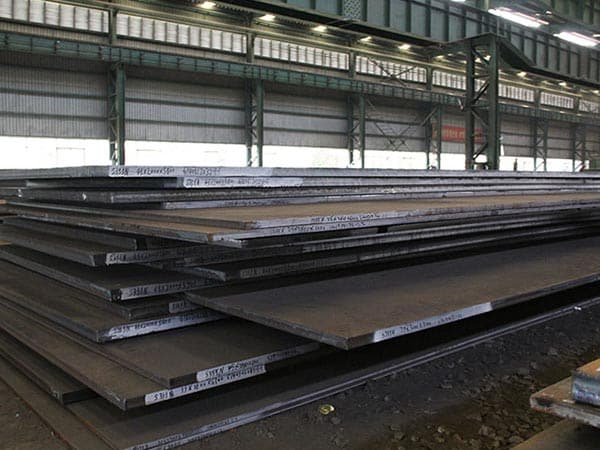
S460MC (material number 1.0982) represents a pinnacle of thermomechanically rolled high-strength low-alloy (HSLA) steel designed specifically for cold forming. Governed by the EN 10149-2 European standard, this material is engineered to offer a superior strength-to-weight ratio, allowing engineers to reduce the mass of structural components without compromising safety or structural integrity. The "S" denotes structural steel, "460" refers to the minimum yield strength of 460 MPa, "M" indicates its thermomechanically rolled delivery condition, and "C" signifies its suitability for cold forming. Currently, the S460MC 1.0982 price is exhibiting a period of relative stability, making it an attractive choice for procurement managers looking to balance cost-efficiency with high-performance engineering requirements.
Chemical Composition and the Science of Micro-alloying
The exceptional performance of 1.0982 is rooted in its precise chemical metallurgy. Unlike traditional carbon steels that rely on high carbon content for strength, S460MC utilizes a low-carbon strategy combined with micro-alloying elements such as Niobium (Nb), Vanadium (V), and Titanium (Ti). This approach ensures that the steel maintains excellent weldability and toughness while achieving high yield points.
| Element | Maximum Percentage (%) |
|---|---|
| Carbon (C) | 0.12 |
| Manganese (Mn) | 1.60 | Silicon (Si) | 0.50 |
| Phosphorus (P) | 0.025 |
| Sulfur (S) | 0.015 |
| Aluminium (Al) | 0.015 |
| Nb + V + Ti | 0.22 |
By keeping the carbon equivalent low, the material resists brittle cracking and exhibits a fine-grained microstructure. The addition of Titanium and Niobium acts as a grain refiner during the thermomechanical rolling process, which is critical for achieving the high yield strength required by modern industrial standards.
Mechanical Properties and Structural Reliability
The core value of S460MC lies in its mechanical reliability. It provides a significant leap in performance compared to standard S355 grades. The high yield strength allows for the design of thinner sections, which leads to weight savings in final products, particularly in the transport and automotive sectors.
| Property | Value (Thickness ≤ 3mm) | Value (Thickness > 3mm) |
|---|---|---|
| Yield Strength (ReH MPa) | Min 460 | Min 460 |
| Tensile Strength (Rm MPa) | 520 - 670 | 520 - 670 |
| Elongation (A80mm / A5 %) | Min 14% | Min 17% |
Beyond simple strength, the ductility of 1.0982 is remarkable. The elongation values ensure that the steel can absorb energy and undergo plastic deformation before failure, a critical safety feature for crash-relevant automotive components and heavy-duty machinery chassis.
Advanced Processing Performance: Cold Forming and Welding
One of the primary reasons for the popularity of EN 10149-2 S460MC is its exceptional processing characteristics. The "C" designation highlights its optimized chemistry for cold forming operations like bending, flanging, and cold pressing.
- Excellent Bending Radius: Thanks to its fine-grained structure, S460MC can be bent at tight radii without surface cracking, provided the recommended minimum bending radius (based on thickness) is followed.
- Superior Weldability: The low carbon equivalent (CEV) means that S460MC can be welded using all standard methods, including MIG/MAG, TIG, and submerged arc welding, without the need for extensive pre-heating in most standard thicknesses.
- Precision Laser Cutting: The consistency of the thermomechanical rolling process ensures that internal stresses are minimized, leading to flat plates that behave predictably during high-speed laser or plasma cutting.
Environmental Adaptability and Fatigue Resistance
In harsh operating environments, material longevity is paramount. S460MC is known for its high fatigue resistance, making it suitable for components subjected to cyclic loading, such as truck frames and crane booms. While it is not a dedicated weathering steel, its dense surface structure and uniform composition provide a consistent base for modern protective coatings, such as galvanizing or high-performance painting systems. Furthermore, its performance at low temperatures is stable, ensuring that structures remain safe even in cold climates often encountered in mining or international logistics.
Diverse Application Ecosystems
The versatility of 1.0982 allows it to penetrate various high-demand industries where weight reduction and strength are non-negotiable. Its current price stability further cements its role as a staple material in large-scale production.
- Automotive Industry: Used for longitudinal beams, cross members, and chassis parts where weight savings directly translate to fuel efficiency or increased payload for electric vehicle battery packs.
- Heavy Lifting and Construction: Critical for telescopic cranes, agricultural machinery, and earthmoving equipment that require high load-bearing capacity without excessive bulk.
- Storage and Logistics: High-rack shelving systems and shipping containers benefit from the increased strength, allowing for taller and safer storage solutions.
- Renewable Energy: Components for wind turbine transport frames and solar tracking systems utilize S460MC for its balance of strength and weldability.
Factors Contributing to S460MC 1.0982 Price Stability
The current S460MC 1.0982 price remains relatively stable due to several macroeconomic and technical factors. First, the production technology for thermomechanically rolled steel has reached a high level of maturity among major European and Asian mills, leading to consistent supply volumes. Unlike specialized nickel-based alloys, the micro-alloying elements (Nb, V, Ti) used in S460MC are required in small quantities, insulating the final price from extreme volatility in specific rare-metal markets.
Additionally, the widespread adoption of EN 10149-2 standards across the globe has created a highly liquid market with numerous stockholders. This competitive environment prevents sudden price spikes. For manufacturers, this stability is crucial for long-term project planning and fixed-price contract bidding. By choosing S460MC, companies can lock in material costs with higher confidence compared to more volatile specialty grades.
Strategic Procurement and Quality Assurance
When sourcing 1.0982 steel, it is essential to verify the material test certificates (MTC) against EN 10204 3.1 standards. This ensures that the chemical composition and mechanical properties strictly adhere to the EN 10149-2 requirements. Buyers should focus on surface quality and flatness tolerances, as these directly impact the efficiency of automated welding and cutting lines. Working with reputable suppliers who understand the nuances of thermomechanical rolling ensures that the material will perform as expected during complex cold-forming stages.
The combination of high yield strength, excellent fabricability, and a stable pricing environment positions S460MC as a premier choice for modern engineering. Whether reducing the carbon footprint of a transport fleet or increasing the lifting capacity of a mobile crane, this material provides the technical foundation required for innovation in the 21st-century steel industry.
Leave a message