
What is the s420mc steel properties available size
Explore the comprehensive technical specifications of S420MC steel. This guide covers chemical composition, mechanical properties, processing capabilities, and detailed size availability for high-strength engineering projects.
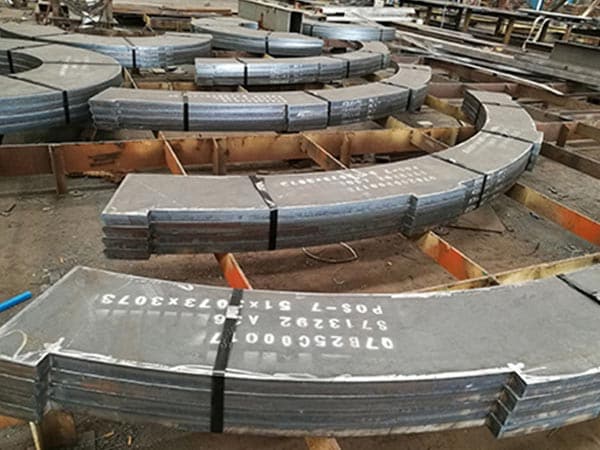
The Essence of S420MC: High-Strength Low-Alloy Steel
S420MC is a high-yield-strength, thermomechanically rolled steel specifically designed for cold forming. Governed by the European standard EN 10149-2, this material represents a significant advancement in metallurgy, offering a unique balance between weight reduction and structural integrity. Unlike traditional structural steels, S420MC undergoes a controlled rolling process where the temperature and deformation are precisely managed to refine the grain structure, resulting in superior toughness and strength without the need for heavy alloying elements.
Engineers and manufacturers favor S420MC when they need to reduce the weight of a component without sacrificing its load-bearing capacity. By utilizing a thinner gauge of S420MC compared to standard S235 or S355 grades, the overall weight of vehicle chassis, crane booms, and structural frames can be reduced by up to 30%, leading to better fuel efficiency and lower material costs.
Chemical Composition and Its Impact on Performance
The performance of S420MC is rooted in its low-carbon chemistry and the strategic addition of micro-alloying elements. The low carbon content ensures excellent weldability, while elements like Niobium (Nb), Vanadium (V), and Titanium (Ti) contribute to grain refinement and precipitation hardening.
| Element | Maximum Percentage (%) |
|---|---|
| Carbon (C) | 0.12 |
| Manganese (Mn) | 1.60 |
| Silicon (Si) | 0.50 |
| Phosphorus (P) | 0.025 |
| Sulfur (S) | 0.015 |
| Aluminium (Al) | 0.015 (min) |
| Nb + V + Ti | 0.22 |
Micro-alloying synergy: The combination of Niobium and Titanium prevents grain growth during the rolling process. This fine-grained structure is the primary reason why S420MC maintains high impact strength even at low temperatures, making it suitable for equipment operating in harsh environmental conditions.
Mechanical Properties: Yield, Tensile, and Ductility
The "420" in S420MC signifies its minimum yield strength of 420 MPa. This high threshold allows for higher stress limits in design. However, strength is only part of the story; ductility is equally critical for components that must undergo complex bending or flanging.
| Property | Value Range |
|---|---|
| Yield Strength (ReH) | Min 420 MPa |
| Tensile Strength (Rm) | 480 - 620 MPa |
| Elongation (A5) | Min 16% (thickness < 3mm) / Min 19% (thickness ≥ 3mm) |
| 180° Cold Bend Test | Mandrel Diameter = 0.5 x thickness (for t < 6mm) |
Ductility and Formability: Despite its high strength, S420MC exhibits remarkable elongation properties. This allows it to be cold-formed into intricate shapes without cracking. The tight bending radii achievable with this grade make it an ideal choice for modern automated bending cells where precision is paramount.
Advanced Processing Capabilities
Fabricating with S420MC requires an understanding of its metallurgical behavior during cutting, welding, and forming. Its low carbon equivalent (CEV) makes it exceptionally friendly to modern manufacturing techniques.
- Laser and Plasma Cutting: S420MC is highly suitable for laser cutting. The clean chemical composition results in a narrow heat-affected zone (HAZ) and minimal dross, ensuring that the edges remain workable for subsequent welding or assembly.
- Welding Performance: It can be welded using all standard methods, including MIG/MAG, TIG, and submerged arc welding. Because of the low alloy content, preheating is generally not required for standard thicknesses, which significantly speeds up production timelines.
- Cold Bending and Flanging: S420MC is designed for cold forming. When bending, it is recommended to account for springback, which is slightly higher than that of lower-strength steels. Using a larger die opening and ensuring the bending line is transverse to the rolling direction can optimize results.
Available Size Range and Dimensional Tolerances
S420MC is primarily available in hot-rolled coils, sheets, and plates. The size range varies by manufacturer but generally falls within the following parameters to meet diverse industrial needs.
| Dimension Type | Typical Range |
|---|---|
| Thickness | 1.5 mm to 20.0 mm |
| Width | 1000 mm, 1250 mm, 1500 mm, up to 2000 mm | 2000 mm to 12000 mm (custom lengths available) |
| Surface Finish | As rolled, Pickled & Oiled (P&O) |
Pickled and Oiled (P&O) Advantage: For applications requiring a superior surface finish or those involving painting and coating, the P&O version of S420MC is preferred. The pickling process removes mill scale, providing a clean surface that enhances the adhesion of protective coatings and improves the aesthetic quality of the final product.
Environmental Adaptability and Longevity
While S420MC is not a stainless steel, its fine-grained structure provides a degree of atmospheric corrosion resistance superior to coarse-grained steels. However, for long-term durability in outdoor or corrosive environments, surface treatments are necessary.
Coating Compatibility: S420MC is an excellent substrate for hot-dip galvanizing, powder coating, and E-coating. Its low silicon content (often controlled for galvanizing) ensures a uniform zinc layer during the galvanizing process, preventing the brittle "Sandelin effect" that can occur in other steel grades. This makes it a robust choice for truck frames and agricultural machinery that face constant exposure to moisture and road salts.
Strategic Industry Applications
The adoption of S420MC has transformed several heavy industries by enabling the design of lighter, stronger, and more efficient equipment.
- Automotive and Transportation: Used extensively in truck chassis, cross members, and suspension parts. The weight savings directly translate to increased payload capacity for commercial vehicles.
- Lifting and Handling: Crane booms, telescopic arms, and forklift frames utilize S420MC to maintain high lifting capacities while reducing the dead weight of the equipment.
- Agricultural Machinery: Plows, trailers, and harvester frames benefit from the high yield strength, allowing the machinery to withstand high-impact loads during soil preparation and harvesting.
- Construction and Infrastructure: Cold-formed sections and profiles for modular building systems often specify S420MC for its reliability and ease of assembly.
Key Considerations for Procurement
When sourcing S420MC, it is vital to verify the material certification (EN 10204 3.1) to ensure the chemical and mechanical properties meet the EN 10149-2 standard. Pay close attention to the rolling direction if your application involves tight bends, and specify whether a pickled surface is required for your finishing process. Understanding the relationship between thickness and minimum bending radius will prevent material failure during fabrication and ensure the longevity of the structural component.
Leave a message