
S460MC hot rolled flat material spec
A detailed technical guide to S460MC hot rolled flat material, covering chemical composition, mechanical properties, processing performance, and industrial applications for lightweight engineering.
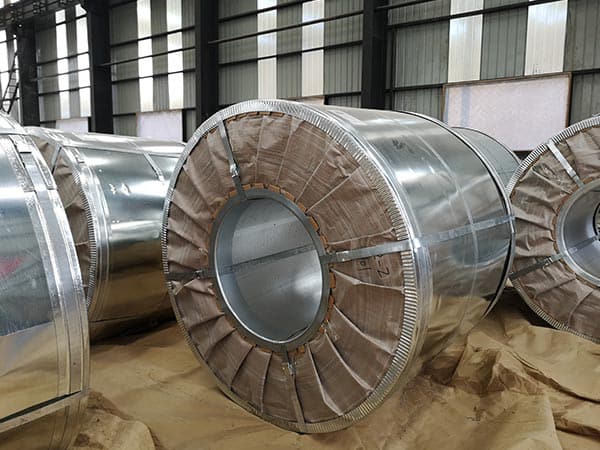
Understanding S460MC: The Backbone of Modern Lightweight Engineering
S460MC is a high-yield strength, thermomechanically rolled steel designed specifically for cold forming. Governed by the EN 10149-2 standard, this material represents a critical evolution in metallurgy, offering a balance between weight reduction and structural integrity. The 'S' denotes structural steel, '460' refers to the minimum yield strength of 460 MPa, and 'MC' indicates it is thermomechanically rolled (M) and suitable for cold forming (C). In an era where fuel efficiency and material optimization are paramount, S460MC has become the preferred choice for engineers designing heavy-duty vehicles, crane booms, and complex structural components.
Chemical Composition and the Role of Micro-Alloying
The superior properties of S460MC are not accidental; they are the result of precise chemical engineering. Unlike traditional carbon steels, S460MC utilizes a low carbon content to ensure excellent weldability while relying on micro-alloying elements like Niobium (Nb), Vanadium (V), and Titanium (Ti) to achieve high strength through grain refinement.
| Element | Max % Content |
|---|---|
| Carbon (C) | 0.12 | Manganese (Mn) | 1.60 | Silicon (Si) | 0.50 | Phosphorus (P) | 0.025 | Sulfur (S) | 0.015 | Aluminum (Al) | 0.015 (min) | Nb + V + Ti | 0.22 |
The low carbon equivalent (CEV) is a standout feature. By keeping carbon levels below 0.12%, the material avoids the brittleness often associated with high-strength alloys. The addition of Niobium and Titanium creates fine precipitates that pin grain boundaries during the rolling process, resulting in a fine-grained microstructure that enhances both strength and toughness simultaneously.
Mechanical Properties: Strength Meets Ductility
The core specification of S460MC revolves around its mechanical performance. It provides a significantly higher yield strength than standard S355 grades, allowing for thinner sections to carry the same load. This 'down-gauging' is essential for reducing the dead weight of trailers and mobile machinery.
| Property | Value Range |
|---|---|
| Yield Strength (Reh) | Min 460 MPa | Tensile Strength (Rm) | 520 - 670 MPa | Elongation (A80mm, t < 3mm) | Min 14% | Elongation (A5, t ≥ 3mm) | Min 17% |
Beyond static strength, S460MC exhibits remarkable impact toughness. While the standard primarily focuses on cold forming, many manufacturers provide S460MC with guaranteed impact energy values at low temperatures (e.g., 40J at -20°C), making it suitable for equipment operating in harsh, cold climates.
Thermomechanical Rolling (TMCP) Explained
The 'M' in S460MC stands for thermomechanical rolling. This process involves strict control of the rolling temperature and the reduction ratio during the final passes of the hot strip mill. Unlike traditional normalized steel, TMCP steel achieves its properties through a combination of thermal treatment and mechanical deformation. This process creates a refined ferrite-pearlite or bainitic structure that cannot be replicated by heat treatment alone. It is important to note that S460MC should not be heated above 580°C during subsequent processing, as this can destroy the grain-refined structure and lead to a significant drop in yield strength.
Processing Performance: Bending, Welding, and Cutting
One of the primary reasons for the popularity of S460MC is its exceptional cold forming capability. Despite its high strength, it can be bent to tight radii without cracking, provided the minimum internal bending radius is respected.
- Bending: For thicknesses (t) between 3mm and 6mm, the recommended minimum bending radius is typically 1.0t to 1.5t, depending on the bending direction relative to the rolling grain.
- Welding: S460MC is highly weldable using standard methods like MIG/MAG, submerged arc welding (SAW), and laser welding. Due to the low carbon content, preheating is generally not required for standard thicknesses, which reduces production time and costs.
- Cutting: The material is ideal for laser, plasma, and waterjet cutting. Its clean surface and consistent microstructure ensure minimal dross and high precision during automated cutting processes.
Strategic Industry Applications
The application of S460MC is driven by the need for lightweighting. By replacing S355 with S460MC, engineers can often achieve a weight reduction of 20% to 30% in structural components. This has profound implications across various sectors:
- Automotive and Transportation: Used extensively in truck chassis frames, cross members, and longitudinal beams. Reducing the weight of a heavy-duty trailer increases its payload capacity and improves fuel economy.
- Lifting and Handling: Telescopic crane booms and aerial work platforms benefit from the high strength-to-weight ratio, allowing for longer reach and higher lifting capacities.
- Construction Machinery: Components for excavators, bulldozers, and dumper bodies utilize S460MC to withstand high stress while maintaining portability.
- Renewable Energy: Support structures for solar panels and components for wind turbine transport systems require the durability and strength that S460MC provides.
Environmental Adaptability and Longevity
S460MC is designed to perform in demanding environments. Its fine-grained structure provides better resistance to fatigue failure compared to coarser-grained steels. In applications subject to cyclic loading, such as vehicle suspensions or moving machinery parts, this fatigue resistance translates to a longer service life and lower maintenance costs. Furthermore, the material's consistent chemical purity ensures that it responds well to protective coatings, such as hot-dip galvanizing or advanced paint systems, protecting the structure from atmospheric corrosion.
Procurement and Quality Standards
When sourcing S460MC hot rolled flat material, it is vital to ensure compliance with EN 10149-2. Buyers should look for 3.1 or 3.2 Material Test Reports (MTRs) that verify the yield strength, tensile strength, and chemical analysis. Consistency in thickness tolerances (often according to EN 10051) is also crucial for automated manufacturing processes. Selecting a supplier that understands the nuances of thermomechanically rolled products ensures that the material will perform as expected during the critical bending and welding stages of production.
Leave a message