
Why is water seeping out of the slit when cutting S420MC automobile structure steel
A technical analysis of why water seeps during S420MC steel cutting, covering material properties, thermal dynamics, and professional processing solutions.
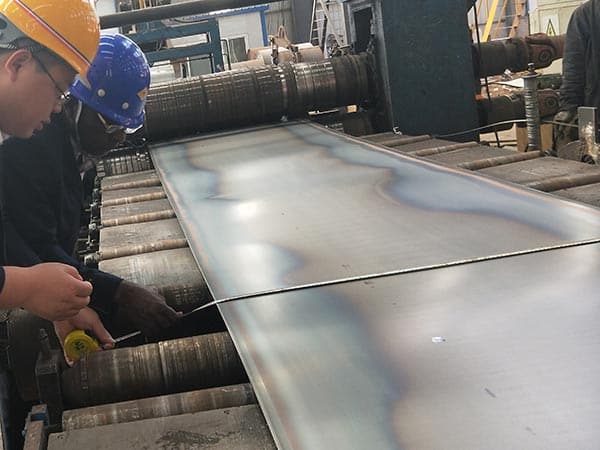
Understanding the Phenomenon: Why Moisture Appears During S420MC Cutting
When fabricators engage in the precision cutting of S420MC automobile structural steel, particularly through laser or plasma methods, they occasionally encounter a perplexing sight: tiny droplets of water or a misty residue seeping from the cut slit. This is not a sign of a defective batch of steel in terms of its internal chemistry, but rather a complex interaction between the material's thermal properties, the environment, and the physics of high-energy cutting processes.
S420MC is a high-strength low-alloy (HSLA) steel, thermomechanically rolled for cold forming. Its density and thermal conductivity play a role in how it reacts to localized heat. The "water" observed is typically condensation. When the high-temperature cutting beam (reaching thousands of degrees) hits the relatively cold steel plate, it creates a massive temperature gradient. If the ambient humidity is high, the air surrounding the cut zone reaches its dew point instantly as it is cooled by the surrounding bulk of the steel plate, which acts as a massive heat sink.
Metallurgical Profile of S420MC: Beyond the Surface
To understand how S420MC reacts to processing, we must look at its composition. Defined by the EN 10149-2 standard, S420MC is designed to offer a balance of high yield strength and excellent formability. The "MC" indicates that the material has undergone thermomechanical rolling, a process that refines the grain structure far more effectively than traditional normalizing.
| Element | Maximum Content (%) |
|---|---|
| Carbon (C) | 0.12 |
| Manganese (Mn) | 1.60 |
| Silicon (Si) | 0.50 |
| Phosphorus (P) | 0.025 |
| Sulfur (S) | 0.015 |
| Niobium (Nb) | 0.09 |
The low carbon content ensures excellent weldability, while the micro-alloying elements like Niobium and Titanium provide the strength. These elements create a fine-grained structure that can sometimes trap microscopic amounts of moisture if the plate has a porous oxide scale or if it was stored in a non-climate-controlled environment. When the laser cuts through, this trapped moisture in the surface layer is liberated and condensed.
Mechanical Integrity and Performance Benchmarks
S420MC is prized in the automotive industry for its weight-saving potential. By using thinner gauges of S420MC to replace thicker carbon steels, manufacturers can reduce vehicle weight without sacrificing structural safety. The mechanical properties are strictly controlled to ensure consistency during high-speed stamping and bending operations.
- Yield Strength: Minimum 420 MPa, providing robust resistance to permanent deformation.
- Tensile Strength: 480 to 620 MPa, ensuring the material can withstand significant loads before failure.
- Elongation: Minimum 16-19% (depending on thickness), allowing for complex geometries in chassis components.
- Impact Toughness: Excellent performance even at low temperatures, which is critical for vehicles operating in arctic climates.
Because of these high-performance metrics, any anomaly during cutting—like water seepage—raises concerns about hydrogen embrittlement. If water (H2O) is present during the molten phase of cutting, it can dissociate into hydrogen, which may enter the heat-affected zone (HAZ). While S420MC is generally resistant, maintaining a dry cutting environment is a best practice to ensure the edge quality remains ductile.
The Role of Surface Condition and Storage in Moisture Seepage
The "seeping water" mystery often traces back to the hygroscopic nature of surface oxides or rust. S420MC is often delivered in a pickled and oiled (P&O) state or with a thin mill scale. If the steel plates are moved from a cold warehouse to a warm production floor, "sweating" occurs. This moisture can be pulled into the microscopic crevices of the mill scale through capillary action.
During laser cutting, the high-pressure assist gas (usually Oxygen or Nitrogen) blows through the slit. If there is moisture on the surface or trapped in the scale, the gas flow can atomize it, making it look like water is being squeezed out of the steel itself. In reality, the steel is non-porous; the moisture is strictly a surface and environmental phenomenon exacerbated by the thermal cycle of the cutting process.
Technical Solutions to Prevent Water Seepage and Quality Defects
To mitigate moisture-related issues when processing S420MC, several professional steps should be taken. These ensure that the cut edges are clean, slag-free, and ready for subsequent welding or painting operations.
1. Material Acclimatization: Allow steel plates to reach the workshop temperature for at least 24 hours before cutting. This prevents the dew point effect where warm, moist air hits a cold metal surface. Temperature equalization is the most effective way to stop "sweating."
2. Assist Gas Purity: Ensure that the compressed air or nitrogen used in the cutting process is passed through a high-efficiency refrigerated dryer. Moisture in the gas lines can mimic the appearance of water seeping from the steel.
3. Preheating: For thicker sections of S420MC, a slight preheat along the cutting path can evaporate surface moisture and reduce the thermal shock, leading to a smoother edge finish and reduced risk of micro-cracking in the heat-affected zone.
Expanding Applications: Where S420MC Excels
While its name suggests a primary use in automobiles, the utility of S420MC extends far beyond passenger cars. Its high strength-to-weight ratio makes it a staple in various heavy-duty engineering sectors. Truck chassis frames, for instance, rely on S420MC for longitudinal beams where high fatigue resistance is mandatory.
In the crane and lifting equipment industry, S420MC is used for telescopic booms and support structures. The material's ability to be cold-formed into U-channels and C-profiles without cracking is a significant advantage. Furthermore, in the agricultural machinery sector, parts such as plow frames and harvester components benefit from the steel's abrasion resistance and toughness.
| Industry | Typical Component | Key Benefit of S420MC |
|---|---|---|
| Automotive | Cross members, Bumper brackets | Weight reduction & Crash energy absorption |
| Heavy Trucking | Chassis side rails | High fatigue strength |
| Construction | Crane boom sections | Excellent weldability & Formability |
| Agriculture | Tractor frames | Environmental durability |
Advanced Processing Tips for High-Strength Automotive Steel
Processing S420MC requires an understanding of its springback characteristics. Because of its high yield strength, when you bend a part after cutting, it will tend to return to its original shape more than a standard S235JR grade. Operators must compensate for this in their tooling and CNC programming.
Regarding the cutting edge itself, S420MC responds exceptionally well to fiber laser technology. The fine grain structure allows for a very narrow kerf and a small heat-affected zone. If you notice water seepage, check the nozzle centering and focus point. An improper focus can increase the heat input into the plate, worsening the condensation effect and potentially leading to dross (slag) adherence on the bottom of the cut.
By maintaining a dry environment and understanding the metallurgical foundation of S420MC, manufacturers can eliminate the "water seepage" nuisance and leverage the full potential of this advanced structural steel. The focus should always remain on controlling the thermal environment to match the high-quality standards of the automotive supply chain.
Leave a message