
s500mc automotive steel equivalent astm price continues to weaken
Detailed analysis of S500MC automotive steel, covering its ASTM equivalents, mechanical properties, chemical composition, and the factors driving the current price weakening in the global market.
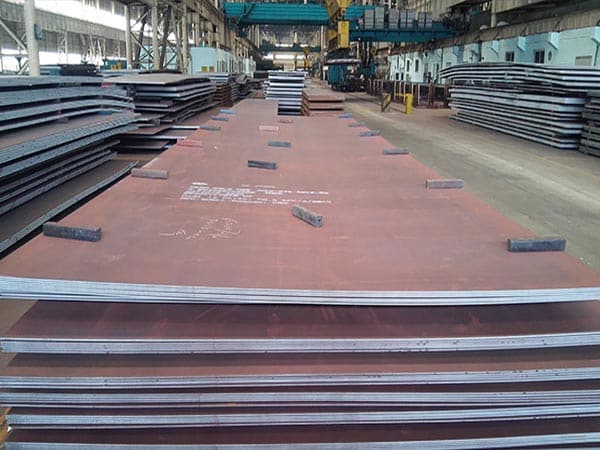
Understanding S500MC Automotive Steel and the TMCP Process
S500MC is a high-strength low-alloy (HSLA) steel grade specifically designed for cold-formed components in the automotive industry. It is governed by the EN 10149-2 standard, which specifies hot-rolled flat products made of high yield strength steels for cold forming. The 'S' stands for structural steel, '500' represents the minimum yield strength of 500 MPa, and 'MC' indicates that the material is thermomechanically rolled (M) and intended for cold forming (C). This thermomechanical rolling process (TMCP) is crucial as it refines the grain structure through controlled rolling and cooling rates, allowing the steel to achieve high strength without excessive alloying elements. This fine-grained microstructure is the primary reason for its exceptional toughness and weldability compared to traditional normalized steels.
ASTM Equivalents: Navigating the ASTM A1011 and A1018 Standards
For engineers and procurement specialists working across international borders, identifying the correct ASTM equivalent for S500MC is essential. While there is no perfect 1:1 match due to different testing methodologies and classification criteria, ASTM A1011 HSLAS Class 1 Grade 70 is the most recognized equivalent for thinner gauges (up to 6mm). For thicker sections, ASTM A1018 HSLAS Grade 70 is often cited. These ASTM standards focus on High-Strength Low-Alloy Steel with improved formability. It is important to note that while S500MC guarantees a minimum yield strength of 500 MPa (approx. 72.5 ksi), ASTM Grade 70 specifies a minimum yield of 70 ksi (approx. 480 MPa). Therefore, S500MC is slightly stronger than the base ASTM Grade 70 requirement, making it a safe substitute in most structural applications, though the reverse substitution requires careful engineering verification.
Detailed Chemical Composition Analysis
The chemical composition of S500MC is strictly controlled to ensure a low carbon equivalent value (CEV), which directly enhances weldability and prevents cold cracking. The use of micro-alloying elements like Niobium (Nb), Vanadium (V), and Titanium (Ti) is a hallmark of this grade. These elements form fine carbides and nitrides that pin grain boundaries during the rolling process, preventing grain growth and enhancing strength through precipitation hardening. Below is a comparison of the typical chemical requirements:
| Element | S500MC (EN 10149-2) Max % | ASTM A1011 HSLAS Gr 70 Max % |
|---|---|---|
| Carbon (C) | 0.12 | 0.15 |
| Manganese (Mn) | 1.60 | 1.65 |
| Silicon (Si) | 0.50 | - |
| Phosphorus (P) | 0.025 | 0.020 |
| Sulfur (S) | 0.015 | 0.035 |
| Aluminum (Al) | 0.015 (Min) | - |
| Nb/V/Ti | 0.22 (Total) | 0.005 (Min each) |
The lower sulfur content in S500MC compared to standard ASTM grades often results in better lamellar tearing resistance and improved edge quality during laser cutting or punching operations.
Mechanical Performance and Formability
The mechanical properties of S500MC are optimized for complex bending and folding. Unlike standard structural steels, S500MC maintains a high degree of ductility even at high strength levels. This is measured by the elongation percentage and the minimum bending radius. For S500MC, the minimum bending radius for a 90-degree bend is typically 0.5 to 1.0 times the material thickness (t), depending on the rolling direction. This makes it ideal for manufacturing chassis cross-members, truck frames, and crane booms where weight reduction is critical but structural integrity cannot be compromised.
- Yield Strength: Min 500 MPa
- Tensile Strength: 550 - 700 MPa
- Elongation (A5): Min 12% to 14% (depending on thickness)
- Impact Energy: Often specified at -20°C or -40°C for demanding environments
Why S500MC Price Continues to Weaken
The current market trend shows a persistent weakening in the price of S500MC and its ASTM equivalents. Several macroeconomic and industry-specific factors contribute to this downward pressure. First, the global automotive production cycle has faced significant shifts. As major manufacturers transition their platforms toward Electric Vehicles (EVs), there is a temporary lull in the demand for traditional HSLA grades used in internal combustion engine (ICE) chassis components. EVs often utilize ultra-high-strength steels (UHSS) or aluminum alloys for battery enclosures, which has displaced some volume of S500MC.
Second, overcapacity in major steel-producing regions, particularly in Asia, has led to a surplus of hot-rolled coil (HRC) feedstock. Since S500MC is a value-added product derived from HRC, its price is inherently linked to the base metal cost. With iron ore prices stabilizing at lower levels and energy costs in some regions retreating from previous peaks, the floor price for high-strength steels has dropped. Furthermore, high interest rates in Western markets have slowed down the construction and heavy machinery sectors, which are secondary consumers of S500MC for crane arms and trailer frames.
Environmental Adaptability and Longevity
S500MC exhibits good environmental adaptability, particularly when treated with modern coating technologies. While it is not a corrosion-resistant steel by nature, its fine-grained structure provides a consistent substrate for hot-dip galvanizing or cataphoretic painting (KTL/E-coat). In automotive applications, the uniformity of the oxide layer formed during the TMCP process allows for better adhesion of protective layers, ensuring that chassis components can withstand harsh road conditions, including exposure to de-icing salts and moisture. The material's fatigue resistance is also a critical factor; the micro-alloying elements help in resisting crack initiation under cyclic loading, which is a common stressor in heavy-duty transport vehicles.
Advanced Processing: Welding and Cutting
From a manufacturing perspective, S500MC is highly favored due to its ease of processing. Its low carbon content means that preheating is rarely required for welding, even in thicker sections. Standard welding processes such as MIG/MAG, TIG, and laser welding are highly effective. However, it is vital to control the heat input. Excessive heat can lead to grain coarsening in the heat-affected zone (HAZ), which may locally reduce the yield strength below the 500 MPa threshold. Using low-hydrogen consumables is recommended to maintain the integrity of the joint. In terms of cutting, S500MC's clean chemistry results in minimal dross during fiber laser cutting, allowing for high-speed production of complex geometries with tight tolerances.
Strategic Procurement and Quality Verification
Given the current price weakness, procurement teams have an opportunity to optimize their supply chains. However, price should not be the only metric. When sourcing S500MC or its ASTM equivalents like A1011 Gr 70, it is imperative to verify the Mill Test Certificate (MTC). Key data points to check include the thermomechanical rolling status, the actual yield-to-tensile ratio, and the grain size index. A yield-to-tensile ratio that is too high can indicate reduced safety margins in crash-relevant components. Reliable suppliers should provide full traceability from the melt shop to the final rolling stand, ensuring that the material meets the stringent fatigue and impact requirements demanded by modern automotive engineering standards.
Leave a message