
Effect of alloy elements on mechanical properties of en 10149-2 hot rolled pickled and oiled steel coil
Detailed technical analysis of how carbon, manganese, and micro-alloying elements (Nb, V, Ti) determine the mechanical performance and processing capabilities of EN 10149-2 steel coils.
Understanding the Metallurgical Foundation of EN 10149-2 Steel
EN 10149-2 specifies the technical delivery conditions for hot rolled high yield strength steels for cold forming. These steels, often designated with the suffix 'MC' (thermomechanically rolled), represent a sophisticated balance of chemistry and processing. Unlike traditional structural steels, the mechanical properties of EN 10149-2 grades—ranging from S315MC to S700MC—are not merely a result of bulk alloying but are derived from a refined microstructure achieved through precise micro-alloying and controlled rolling temperatures. The synergy between chemical composition and the thermomechanical rolling process (TMCP) ensures that the material maintains high strength while offering exceptional ductility and weldability.
The Critical Role of Primary Alloying Elements
Carbon (C): In the context of EN 10149-2, carbon levels are strictly controlled, typically kept below 0.12% even for the highest strength grades like S700MC. Low carbon content is the primary driver for excellent weldability and cold formability. High carbon would increase hardness and strength but would severely compromise the steel's ability to undergo complex bending without cracking. By keeping carbon low, the steel avoids the formation of brittle martensite in the heat-affected zone (HAZ) during welding.
Manganese (Mn): Manganese acts as a vital solid solution strengthener. It increases the hardenability of the steel and lowers the transformation temperature from austenite to ferrite, which results in a finer grain size. In S355MC, manganese levels are moderate, whereas in S700MC, they can reach up to 2.10% to provide the necessary strength matrix without the negative impacts of high carbon.
Silicon (Si) and Aluminum (Al): Silicon is primarily used for deoxidation and contributes to solid solution strengthening. However, for certain applications involving galvanizing, silicon content must be carefully managed to control the Sandelin effect. Aluminum is used as a grain refiner and deoxidizer, ensuring that the steel is 'killed' and free from internal porosities, which is crucial for the integrity of pickled and oiled (P&O) surfaces.
Micro-alloying: The Secret to High Yield Strength
The defining characteristic of EN 10149-2 steel is the use of micro-alloying elements such as Niobium (Nb), Vanadium (V), and Titanium (Ti). These elements, even in quantities as small as 0.01% to 0.15%, transform the mechanical profile of the steel coil.
- Niobium (Nb): Niobium is perhaps the most effective grain refiner. It retards the recrystallization of austenite during hot rolling, leading to an extremely fine-grained ferrite structure upon cooling. This grain refinement is the only strengthening mechanism that simultaneously improves yield strength and low-temperature toughness.
- Titanium (Ti): Titanium forms stable nitrides (TiN) at very high temperatures. These particles prevent grain growth in the heat-affected zone during welding, maintaining the structural integrity of the joint. It also protects Niobium from forming nitrides, allowing the Nb to stay in solution for grain refinement.
- Vanadium (V): Vanadium contributes to strength through precipitation hardening. As the steel cools, vanadium carbides and nitrides precipitate within the ferrite matrix, creating barriers to dislocation movement and thus increasing the yield point.
Mechanical Property Comparison Across Grades
| Grade | Yield Strength (min MPa) | Tensile Strength (MPa) | Elongation (min A80 %) | Bending Radius (180°) |
|---|---|---|---|---|
| S315MC | 315 | 390-510 | 20 | 0.25t |
| S355MC | 355 | 430-550 | 19 | 0.5t |
| S420MC | 420 | 480-620 | 16 | 0.5t |
| S500MC | 500 | 550-700 | 12 | 1.0t |
| S700MC | 700 | 750-950 | 10 | 2.0t |
The Pickling and Oiling (P&O) Advantage
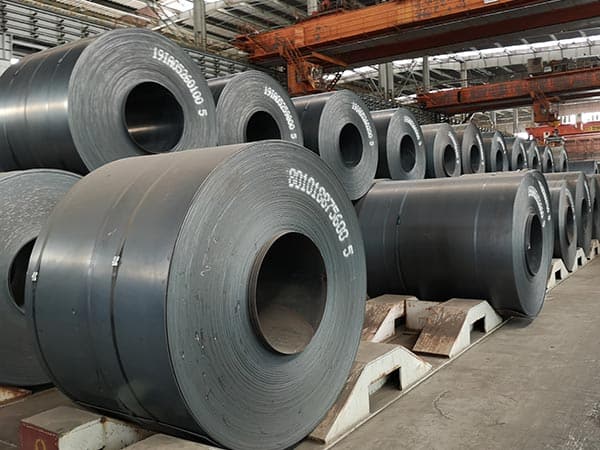
Hot rolled coils naturally develop a layer of iron oxide scale. For EN 10149-2 steels, which are often used in precision cold forming and automated welding, this scale is problematic. The Pickling process involves passing the steel through hydrochloric acid baths to remove the scale, revealing a clean, silver-grey surface. Subsequent Oiling provides a protective barrier against oxidation during transport and storage.
The removal of scale is not just aesthetic. It significantly extends the life of stamping dies and improves the quality of subsequent surface treatments like painting or powder coating. Furthermore, a pickled surface is essential for high-quality laser cutting, as the absence of scale ensures a stable laser beam absorption and a cleaner cut edge. This is particularly relevant for S700MC coils used in complex crane arm components or automotive chassis parts where precision is paramount.
Processing Performance and Environmental Adaptability
The low carbon equivalent (CEV) of EN 10149-2 steels ensures they are highly adaptable to various industrial processes. In Cold Forming, the fine grain structure allows for tight bending radii without the risk of orange-peel effects or edge cracking. This is critical for the manufacturing of longitudinal beams in trucks and trailers where weight reduction (down-gauging) is achieved by using higher strength grades like S500MC instead of thicker S355MC.
In terms of Environmental Adaptability, the clean surface of P&O steel provides a superior substrate for corrosion-resistant coatings. While the base metal is not inherently corrosion-resistant, the uniformity of the microstructure ensures that when a coating is applied, it adheres better and provides more consistent protection compared to standard hot rolled steel. The high yield-to-tensile ratio also means these steels perform exceptionally well under dynamic loading, making them suitable for outdoor machinery operating in harsh climates.
Strategic Industry Applications
The automotive industry is the largest consumer of EN 10149-2 P&O coils. Components such as seat frames, chassis members, and suspension parts require the high strength of S420MC or S500MC to meet safety standards while reducing vehicle weight to improve fuel efficiency. In the heavy machinery sector, the high yield strength of S700MC allows for the design of lighter, longer telescopic crane booms that can lift heavier loads without increasing the overall footprint of the machine.
Agricultural equipment manufacturers utilize these grades for plow frames and harvester components. The ability of the material to withstand abrasive wear—partly due to the fine grain structure—and its high fatigue resistance makes it ideal for equipment that undergoes repetitive stress cycles in soil-engaging applications. The transition from traditional S235JR or s355jr to EN 10149-2 grades represents a significant leap in engineering efficiency and product longevity.
Optimizing Material Selection for Manufacturing
Choosing the right grade within the EN 10149-2 family requires an understanding of the trade-off between strength and formability. While S700MC offers the highest weight-saving potential, it requires more powerful forming equipment and larger bending radii. Conversely, S315MC offers maximum ductility for extremely complex geometries. The pickled and oiled finish should be specified whenever the final product requires high surface quality, precision welding, or automated processing. By leveraging the specific effects of micro-alloying elements, engineers can design components that are not only stronger and lighter but also more cost-effective to produce through reduced scrap rates and faster processing speeds.
Leave a message